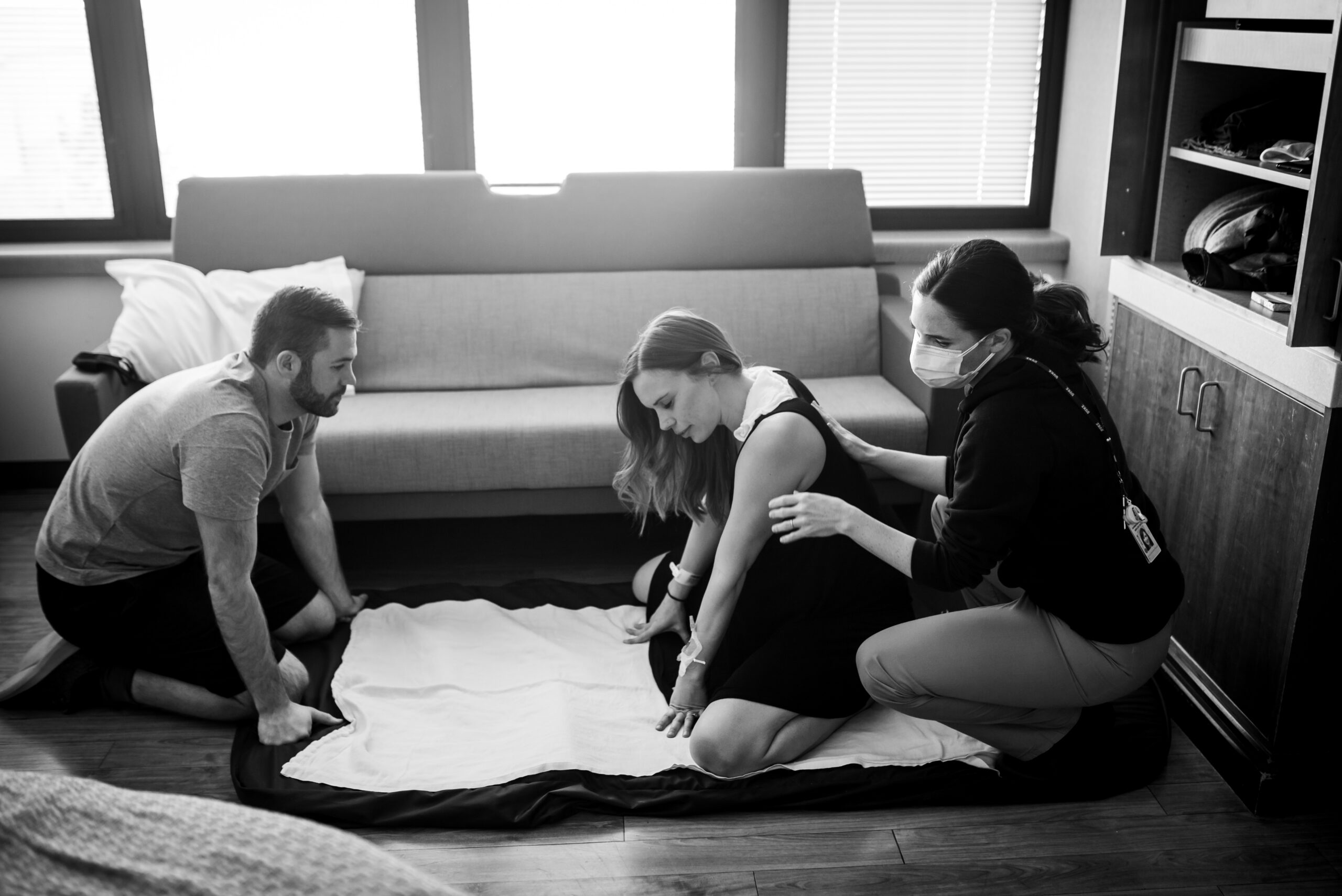


I’m giving you 11 quick and essential things I really wish every mama knew before heading to the hospital – whether it’s your first baby or your fourth. We’re pulling back the curtain on the real-life stuff that doesn’t exactly make it into the textbooks, and honestly? That’s my favorite kind of episode. From the moment you pull into that parking lot to the moment you’re trying to catch a nap postpartum with a revolving door of hospital staff, there are just so many things that can catch you off guard if no one ever tells you about them. And that’s exactly what I’m here for.
We’re covering all of it:
- The check-in process and how to make it less clunky
- Why you might get sent home (and why that’s okay!)
- When to actually sound the alarm with family and friends
- Why things justtake timeat a hospital
- Whether there will even be a room waiting for you
- The two-bag strategy I love for your hospital bag
- Why you should stay home longer than you think
- What your birth partner is and isn’t allowed to do
- How long you’ll actually be there postpartum
- Why that car seat needs to be installednow
- How to actually get some rest when it feels nearly impossible
My goal is always the same – to make the unfamiliar familiar so that when any of this shows up for you, you’re saying “oh yeah, I knew this might happen” instead of feeling thrown off. Let’s get into it!
Mentioned in this episode:
- Grab my Free Third Trimester Prep Pack
- Listen to episode 01: Labor Nurse’s First Unmedicated Hospital Birth with Midwives
- Listen to episode 37: Is it Real Labor: Braxton Hicks Contractions, False Labor & Prodromal Labor
- Listen to episode 38: You’re Contracting! When Do You Go to the Hospital?
- Listen to episode 44: What Happens in OB Triage & Will They Send You Home?
Helpful Timestamps:
- 00:00 11 Things to Know Before Labor
- 03:04 Check In Can Feel Clunky
- 05:46 OB Triage And Getting Sent Home
- 10:49 Hold Off On Telling Everyone
- 12:42 Everything Takes Longer in the Hospital
- 17:21 Pack Two Hospital Bags
- 20:49 Stay Home Longer
- 23:51 Partner Can Step Out
- 25:11 Postpartum Stays
- 28:05 Car Seat Before Labor
- 30:03 Rest And Cluster Care
About your host:
🩺🤰🏻Lo Mansfield, MSN, RNC-OB, CLC is a registered nurse, mama of 4, and a birth, baby, and motherhood enthusiast. She is both the host of the Lo & Behold podcast and the founder of The Labor Mama.
For more education, support and “me too” from Lo, please visit her website and check out her online courses and digital guides for birth, breastfeeding, and postpartum/newborns. You can also follow @thelabormama and @loandbehold_thepodcast on Instagram and join her email list here.
For more pregnancy, birth, postpartum and motherhood conversation each week, be sure to subscribe to The Lo & Behold podcast on Apple Podcasts, Spotify, or wherever you prefer to listen!
👉🏼 A request: If this episode meant something to you, would you consider a 5 star rating and leaving us a review? Yes, we read them, and yes, they help keep L & B going! ♥️
Connect with Lo more on: INSTAGRAM | TIK TOK | PINTEREST | FACEBOOK
Disclaimer
Opinions shared by guests of this show are their own, and do not always reflect those of The Labor Mama platform. Additionally, the information you hear on this podcast or that you receive via any linked resources should not be considered medical advice. Please see our full disclaimer here.
Additionally, we may make a small commission from some of the links shared with you. Please know, this comes at no additional cost to you, supports our small biz, and is a way for us to share brands and products with you that we genuinely love.
Produced and Edited by Vaden Podcast Services
Transcript
We're just talking about some basic hospital things that you just don't really know until you actually go through it.
Speaker:And some of them might happen to you, some of them might not, or you might not be aware of them, however you wanna say that.
Speaker:But if they do or if they show up, you're gonna say, "Oh, cool.
Speaker:Like, I know exactly what's going on here.
Speaker:I knew this might happen." That's the goal for you
:Motherhood is all-consuming Having babies, nursing, feeling the fear of loving someone that much Then there's this baby on your chest, and boom, your entire life has changed
:It's a privilege of being your child's safest space and watching your heart walk around outside of your body
:The truth is, I can be having the best time being a mom one minute, and then the next, I'm questioning all my life choices
:I'm Lo Mansfield, your host of the Lo and Behold podcast, mama of four littles, former labor and postpartum RN, CLC, and your new best friend in the messy middle space of all the choices you are making in pregnancy, birth, and motherhood.
:If there is one thing I know after years of delivering babies at the bedside, and then having, and now raising those four of my own, it is that there is no such thing as a best way to do any of this, and we're leaning into that truth here.
:With a mix of real life and what the textbook says, expert insights, and practical applications, each week we're making our way towards stories that we participate in, stories that we are honest about, and stories that are ours.
:This is the Lo and Behold podcast.
Lo:Welcome back to another episode of the Lo and Behold podcast.
Lo:You get just me today, and let me just tell you, this is one of my favorite type of episodes because, one, I always promise you that it's gonna be short, and then it's not.
Lo:So that maybe is not a good reason for it to be a favorite, but it makes me laugh every time.
Lo:But I am gonna try and be really brief, and not in a I don't want you to have the information way or let's rush through it, but I'm just gonna give you 11, like, quick and dirty, if you will, facts or things to know.
Lo:Let's say things to know about what might happen or what the process might look like before you head into the hospital for your birth and then during the process.
Lo:So kind of a random collection of things that I think are incredibly valuable for you to know, particularly if you run into some of these or some of the nuances of them.
Lo:So as we go through them, I think you'll see why some of these can be pretty important or pretty nice to know before you actually are in that place.
Lo:So we're just gonna get right into it.
Lo:We're just gonna right to this first one.
Lo:This is my favorite stuff to talk about, and you probably know that if you've been listening for the last few episodes or for the last seasons, is that I just love the whole kind of cliche and kind of cheesy, but pull back the curtain type thing, right?
Lo:And that's what we're doing here.
Lo:We're just talking about some basic hospital things that you just don't really know until you actually go through it.
Lo:And some of them might happen to you, some of them might not, or you might not be aware of them, however you wanna say that.
Lo:But if they do or if they show up, you're gonna say, " Oh, cool," like, "I know exactly what's going on here.
Lo:I knew this might happen." That's the goal for you.
Lo:So we're just gonna get right into the very first one, and that is that the hospital check-in process might feel a little bit clunky.
Lo:So what do I mean by that?
Lo:I think we have this idea and maybe even desire that we get to the hospital and everything is just smooth is better, right?
Lo:And in theory, it's going to be, right?
Lo:Like, we have these really good processes and systems for getting you checked in and getting you in the right room and making sure you have a provider and all of that.
Lo:But I just think it's important to think about, like, things like parking, the admitting desk, getting to the actual unit, 'cause typically you get…
Lo:You know, you check in somewhere else before you go to the OB unit.
Lo:Registration questions, things like insurance that are gonna come up.
Lo:Like, it isn't this process where you just show up and you're in labor and you walk through the OB unit doors and they're like, "Great.
Lo:How can we help you?
Lo:Let's get you into a room." So to address some of these things or this clunkiness, right?
Lo:Because the goal is we want you to stay in your birth bubble or this cocoon that you've created or whatever's going on.
Lo:We want the s- Continue to feel safe, right?
Lo:For you to continue to stay in whatever place you are at while you continue to labor.
Lo:' Cause, you know, mostly we're talking about labor checks and the whole, "I think I'm in labor," and so we're going in, right?
Lo:So some things you could maybe do before to address this clunkiness that I'm talking about.
Lo:I highly suggest doing a practice drive to your hospital, particularly if you're far away, and just considering, like, how are we gonna get there?
Lo:How can we make this less clunky or less clumsy-feeling?
Lo:And then, like, where are we gonna park?
Lo:And you can go, "Oh, that's dumb. That's easy. I'm gonna park in the parking lot." But hospitals are often very closed up at night, and you guys know that babies don't come on a schedule, right?
Lo:And so where are you gonna park?
Lo:What doors are you gonna go in if it's 7:00 PM or whatever time and the main hospital doors are closed?
Lo:Typically, you're gonna be rerouted through the emergency room.
Lo:What does that process look like?
Lo:Now, can you just traipse around the hospital, traipse around the OB unit and do whatever you want?
Lo:Typically, no.
Lo:But you can take these practice runs.
Lo:You can ask good questions at any sort of birth tour and kind of figure out how to, let's say, mitigate some of this clunkiness that I'm talking about.
Lo:Another tip for you that I have in this regard, do a pre-admit registration appointment if your hospital offers them.
Lo:Typically, these are some sort of interview.
Lo:We did this kind of full, you could do it in person or you could call in, and we went through kind of all of the s- questions that we're going to ask you on admit.
Lo:Now, we still had other questions that we would ask no matter what, even if you'd just done this pre-admit appointment.
Lo:But we could get a lot of stuff filled out so that when you showed up, let's say, to the ER desk or when they then sent you to the OB unit, there was less of the questions, less of the, " Why do I have to answer this stuff right now?" 'Cause you've got it taken care of before.
Lo:So if your hospital, if your facility has some sort of pre-admit appointment, I highly recommend doing that.
Lo:All right.
Lo:So that is point one, the clunkiness of kind of showing up and figuring out how you can kind of get rid of some of that clunkiness.
Lo:The next tip for you, number two, you actually might get sent home.
Lo:And you might be aware of this because maybe you've had a baby before and they sent you home.
Lo:Maybe you have a friend who got sent home and they were sure that they were in labor.
Lo:Essentially, what this is about is the OB triage process.
Lo:So when you go in for a labor check, I kinda mentioned, let's assume you're going in for labor in these scenarios.
Lo:You think you're in labor.
Lo:So we would call this, like, a labor check.
Lo:And essentially, what you do is you've gone through this registration or you've gone through the ER, right?
Lo:We're on the unit, and you say, "Hey, I think I'm in labor." And they say, "Okay, great.
Lo:Let's go ahead and put you in room, triage room four." Right?
Lo:And then they take you to a room that is very, very likely not the room that you're going to have your baby in, right?
Lo:And this is where they kind of decide, are you really in labor, do some assessing, figure out what's going on.
Lo:Now, if your waters have broken and you are dripping all over the floor, they're keeping you, right?
Lo:You're not gonna get triaged.
Lo:But in general- If we are unsure, maybe all your signs aren't indicating yes, yes, keep me, keep me, then they're gonna stick you in a triage room and kind of assess you and figure out what's going on.
Lo:And there are a lot of little ways that they assess you, and I've actually done a podcast episode on this, so I don't wanna get into all of the nitty-gritty of that.
Lo:But if you listen to episode 44, we go through what is OB triage, will they send you home, what are they doing in there, what does that process look like for you?
Lo:So when you do show up to OB triage, you don't kind of feel, you know, alarmed, scared, nervous.
Lo:You can kind of, again, w- I like to say this a lot, right?
Lo:But you can have that mentality of, "Oh, I expected this, I knew this might happen, and I know what's coming next," right?
Lo:And so that's the goal for you when it, when it comes to this idea of, hey, you might get sent home.
Lo:I want you to understand what's going on, why you're in triage, why they might send you home.
Lo:So that episode is a really great listen.
Lo:Again, that's episode 44.
Lo:I have to tell you, I so clearly remember getting triaged with my very first baby, and I've had all my kids at the hospital that I worked at, right?
Lo:And so I knew these people, and I worked with these people, and, you know, the day before we were doing a shift together or whatever, and I get to the front desk.
Lo:This is with my first baby, right?
Lo:And I will say, I guess the little caveat, you almost always are going to get triaged if it is your first baby.
Lo:Even if you're 10 centimeters , if they can't tell or that baby's not coming out, they're probably gonna triage a first-time mom, let's say 95% of the time, unless there is such an obvious sign, obvious, like super obvious sign that you're in labor.
Lo:And this is because I'm speaking personally right now, anecdotally.
Lo:Sometimes first-timers, like myself in the story I'm gonna tell you, you just aren't, you're not as sure about what's going on, right?
Lo:By the time I had my second, third, fourth baby, like I knew I was in labor, and they did not question me.
Lo:And so there's this kind of wisdom that we pull through with some of these subsequent babies that we might get to have.
Lo:And so sometimes let's say that wisdom is honored a little bit more in OB triage if that makes sense.
Lo:Like when you show up and you think you're in labor, sometimes with a first-timer we'll say, "Okay, great," like, "Let's make sure." And if it's your fourth baby and you say, "I'm in labor and baby's coming," they might be quicker to believe you.
Lo:I don't love that vocabulary.
Lo:It's not that we think you're lying.
Lo:There's just this little bit of, let's just make sure with that first-timer that exists a little bit more than it might with second, third, fourth, et cetera, baby.
Lo:Okay?
Lo:So I'm in my first time, right?
Lo:So I'm that.
Lo:I'm one of you, right?
Lo:First-timer.
Lo:I know they probably aren't gonna really think I'm in labor, but I also know I'm in labor, and you can actually listen to my birth story.
Lo:It's one of the very first episodes if you go all the way back to the beginning.
Lo:It is the first episode, of the podcast, episode one.
Lo:And so I probably get into this.
Lo:I don't fully remember.
Lo:I'm sure I did, 'cause it still makes me laugh.
Lo:But essentially, I got, got there.
Lo:I knew that I was in labor and advanced enough to be kept, because I had checked my own cervix, which I do not recommend, so please don't check your own cervix.
Lo:But because I'm a labor nurse and I knew what I was doing, I did check my own cervix, and I knew I was, quote-unquote, a keeper.
Lo:I always use the vocabulary keeper.
Lo:So I knew I was a keeper, and then they triaged me and told me to go into, I think it was triage room four, actually.
Lo:So they put me in four, and man, when that tech, it was a male, he was a OR tech, and he worked the front desk, and I was just like, "You're so sweet." Let's call him Matthew.
Lo:Matthew Had to work with all these women.
Lo:It was basically like all women on the OB floor, right?
Lo:And he was the best.
Lo:Loved him, loved him, loved him.
Lo:But man, when he told me to go into a triage room, I f- felt like I could crawl over the desk and punch him in the face, and I think he knew that because I was so angry at him, at them, for triaging me because I knew I was in labor and they, I'm air quoting right now, "They didn't believe me," right?
Lo:And so I got to triage.
Lo:My nurse checked me, which I was cool with, right?
Lo:'Cause I'm like, "Yeah, check me. I know you're gonna keep me." And I was 7 to 8 centimeters with a bulging bag of water.
Lo:And there was this little part of me, maybe it came later, but I do remember this feeling of told you so.
Lo:Like, why'd you stick me in this dumb triage room?
Lo:So ultimately, expect to go into triage, and it is very possible, which this was really the point, is that they might send you home if you're not 7 to 8 with a bulging bag of water or whatever.
Lo:It's possible that you might not actually stay, and they'll have you come back in when things change, things get stronger, something like that, okay?
Lo:All right.
Lo:Next tip for you, number three: Don't sound the alarm too soon.
Lo:Now, this is deeply, I would say, deeply personal, but it's just this idea of you may not want to immediately, you know, kind of mass text the family and the friends when you first start contracting or when you head in.
Lo:And again, this is personal, right?
Lo:But sometimes it can be nice to wait to let everyone know what's going on until you have some clarity about what's going on, and this kind of hearkens back to what I just said for tip two.
Lo:But let's say you text everybody and you go into triage and turns out actually it's not time yet, right?
Lo:And maybe, maybe you're one centimeter or two centimeters or just re- in really early labor, whatever.
Lo:And so then you've told everybody, you're getting all the texts, what's going on.
Lo:It's exciting.
Lo:And then it's the, "Actually, they're sending me home. This isn't the real thing." Now, if that doesn't bother you, fine.
Lo:Right?
Lo:And also, if texting and calling is not your job, and that's birth partner's job and they don't care, also fine.
Lo:But I just like the idea of maybe waiting just a bit, just for your own kind of peace of mind and all the people maybe checking and texting and interrupting you, perhaps waiting a little bit until you know that they're keeping you in OB triage.
Lo:So sometimes, you know, I'll see a patient or s- a student, I'm gonna check in with people or let them know after I'm officially admitted, right?
Lo:Or maybe after I get the epidural, depending on what's going on.
Lo:Of course, people have other preferences, like after the baby arrives.
Lo:You know, this is an extra thing, right, that you figured out prior to birth of when you want people to know things, if you want them to visit, et cetera.
Lo:Those are a whole other conversations.
Lo:But in general, maybe thinking through with your birth partner, if you have one, of when are we gonna let people know, who's responsible for it, of course, and then you could even consider letting those people know, friends, moms, sisters, whomever, " Hey, we're gonna let you know once we get admitted or after I get my epidural," one of those scenarios that I mentioned, "and that's when we'll go ahead and let you know."
Lo:And of course, you know, things can change.
Lo:But just something to think through when it comes to the idea of Do you want people to immediately know that you might be in labor?
Lo:That type of thing.
Lo:Tip number four, everything at a hospital probably is gonna take longer than you expect.
Lo:Now, caveat, if it's an emergency or we need to do something quickly, they are going to move like crazy fast to make something happen.
Lo:Okay, so that's true.
Lo:They can move, hospitals, I'm saying, the OB unit, wildly fast to deliver your baby, to take care of something going on, to take care of an emergency.
Lo:So don't think that what I'm about to share with you applies in an emergency.
Lo:When we gotta move, we can move.
Lo:Okay?
Lo:But in general, things just take time, and the reason I think that this really matters is more so for those of you who are thinking, "I definitely want an epidural," or maybe you go flying into the hospital and you, and you're in transition and, and you're wanting that epidural straight away 'cause things are moving fast.
Lo:So just thinking through how long does it take to actually drive?
Lo:I'm sure you've already thought about this, right?
Lo:Parking, triage, admission process, like I just mentioned some of these things, what those can look like.
Lo:Maybe how you actually get to the hospital to the unit.
Lo:And then things like when you do get admitted, they typically are gonna draw labs.
Lo:They're typically gonna go through some more of this admission paperwork, though I mentioned in the first tip that you can maybe do some preemptive questions and pre-admit appointments to get through some of this.
Lo:Starting IVs, the epidural process.
Lo:And so again, all of this stuff just takes time.
Lo:Now, if this is spread out over hours and hours or an induction or something, you might not even notice.
Lo:But I really want you to hear kind of that things can take some time, particularly for if you're wanting an epidural and just thinking about the timing of that.
Lo:Because arrival at the hospital does not immediately indicate, one, that they're gonna keep you, like we've already chatted about, or two, that you could immediately get some pain relief, actually, whether that be the epidural or like IV pain medication or something, because they have to do some of these other things that I just mentioned, like admission assessment, IV, labs, things like that.
Lo:So just keep that in the back of your mind if you feel like you're flying in hot or you think you may be flying in hot, that things may take a chunk of time longer than, "Oh, I have a five-minute drive to the hospital." That's incredible, right?
Lo:But the actual process to get there to become a patient to maybe get something you need or want will be a lot longer than five minutes Okay, tip number five.
Lo:There might not be a room available for you.
Lo:Now, this kind of goes back to that triage tip, right, where I said they might send you home.
Lo:But essentially, this is almost the opposite.
Lo:So labor units fill up kind of without regard for what, what we think should be scheduled, right?
Lo:Now, there are typical ways that labor units schedule based on census, patient census, and, you know, what happened in the prior years and different seasons, right?
Lo:They have loose ways to calculate how many nurses do we need today, how many beds do we need to have available, stuff like that.
Lo:So that is very real, and we also try to stagger scheduled procedures.
Lo:So depending on the unit you are, how big they are, how many ORs, you know, that all depends.
Lo:But there could be, you know, a scheduled C-section at 7:30 AM, 1:00 PM, and then one at, like, 4:00 PM, right?
Lo:And maybe they do three in that 12-hour day shift, right?
Lo:But none of that accounts for people who just show up in labor, people who show up with their water breaking, broken, people who get sent over from the doctor's office 'cause they're worried about preeclampsia or some hypertension numbers or maybe some GDM sugar numbers, and then they become an induction.
Lo:And so we have these kind of scheduled procedures And the hospital has kind of set up to take care of who is coming in, also knowing there will be unexpected people coming in.
Lo:Sometimes you have people laboring in triage waiting for a room when you get there, so you almost have like people in front of you waiting for a room too.
Lo:So it's not typical to have to spend a ton of time in triage or to not have a room and then be actively delivering like wherever there's space available.
Lo:But I think it's nice to know that there might not be a room immediately available to you, maybe someone needs to get transferred to postpartum, that there's some shifting that might have to happen even if you are, "Yep, I'm here, and I'm definitely in labor."
Lo:Now, they're gonna communicate this with you.
Lo:They're gonna let you know these things.
Lo:And if you're a scheduled procedure, like a scheduled elective induction, you could also receive a phone call, you know, the day or the morning of your induction saying, "Hey, we don't actually have a room for you today, or we don't have one right now.
Lo:We will call you back as soon as we do." And so depending on why you come in, when you come in, what's scheduled, what's going on, it is possible that there can be… You need to have a little flexibility related to the unit.
Lo:And again, that's just because they're doing the best they can to staff appropriately for what they think is going to happen that day.
Lo:But as you know, babies are unpredictable, right?
Lo:And so they're not always gonna get it right and/or the universe is just going to send a lot of babies at one time, and they're gonna have to kinda work through that and make space for the next babies coming behind.
Lo:All right, tip number six.
Lo:This is kind of maybe a silly one, but I actually really like it, so hear me out.
Lo:Consider packing two separate bags for the hospital, and what I mean by that is not this idea of bring a ton more stuff but simply separate what it is you're bringing.
Lo:So I love this idea of kind of having a labor bag, and that's like your comfort items, your charger, your camera, your birth plan, your fan, your snacks, like the things you just need to labor with, and then having your postpartum bag, right?
Lo:And so once you move over to the postpartum unit or if you're LDRP, once you just get transferred to kind of, quote-unquote, postpartum care, oh, there's my postpartum bag, and that's like my fresh, clean clothes or PJs.
Lo:Maybe that's the swaddle you want for a baby.
Lo:Whatever it is.
Lo:There- there's typically not a ton in the postpartum bag.
Lo:It, it really just depends, right, on how much you pack.
Lo:But simply, I just love this idea and wanted to put it in front of you of kind of having two separate ones And then you can grab what you need when you need it.
Lo:When it comes to what you actually need, of course, I have a hospital packing list that kind of separates these things out, like the way I've just laid them out, where there's labor stuff, and the postpartum stuff, and the birth, birth partner stuff that they might wanna consider as well.
Lo:And so I can drop the link for that third trimester pack, it has my hospital packing list inside of it, inside of the show notes, and you can kind of take a look at that and see, what does it look like when she says maybe consider having two bags or maybe even, you know, two pouches or two kind of packing cubes within the one bag, something like that.
Lo:Now, why does this even matter?
Lo:First of all, ultimately, I want you to actually hear, it, it doesn't, right?
Lo:Bring whatever you want.
Lo:This is not a conversation about, "Don't bring too much stuff. Please be minim- minimalist." Why I really think it's valuable is because if you get sent home Maybe you haven't schlepped all your stuff inside, right?
Lo:And so I guess a little caveat or a side tip is also, like, you don't have to bring everything when you go into triage unless you are certain, " We're having this baby right now and we need all of our supplies," right?
Lo:So if you do get sent home, it's like, cool, we only have, you know, this little labor bag.
Lo:We didn't grab all our postpartum stuff yet.
Lo:If you're in triage a while, it could potentially be helpful, obviously, post-birth.
Lo:You know, at some point you can bring the labor stuff back outside and just have that postpartum stuff.
Lo:I think it just gives you some flexibility, some space, and you don't feel like you have to go in with all of your things and then leave with all of your things.
Lo:So something to think about.
Lo:Does everyone do that?
Lo:Not at all.
Lo:I don't know that I've even had that many patients do it.
Lo:But I've had some students do it.
Lo:I've maybe seen a patient or two do something like this, and it just seems really practical, honestly.
:Hey friend, quick pause for just a second.
:If you are listening to this podcast because you wanna feel more prepared, more confident, and less freaked out about birth, that is exactly why I created the Your Body Your Birth course.
:This birth course will not tell you what kind of birth you should want, and nobody has the right to do that.
:It is about helping you understand what's happening in your body, what your options actually are, and how to walk into your birth feeling grounded, excited, ready, instead of overwhelmed and scared.
:When you have education like this, everything changes: your mindset, your conversations with your care team, and the birth experience itself.
:No more relying on random opinions, okay?
:Stop scrolling.
:Take intentional action with me and start trusting your body, your voice, and your decisions today.
:Head over to www.thelabormama.com/birth, also linked in your show notes, and be sure to use the code PODCAST at checkout to save 20% and start working towards this better birth for you right now.
:Okay, let's get you back to the episode
Lo:Okay, tip number seven, stay home longer than you think.
Lo:Now, caveat, I feel like we have to caveat a lot of things, right?
Lo:But if there's anything going on medically that indicates you need to go in and be seen, obviously, you go in and be seen, and you don't wait and stay home as long as you want to or think you should, right?
Lo:But assuming all is well, right?
Lo:You're just in normal, spontaneous labor, let's say, and you're just contracting at home.
Lo:This is one of my biggest themes, and I talk about this a lot in the birth class, right?
Lo:And knowing when to go and what types of contractions you're having and what those feel like and what they mean.
Lo:And, you know, there's even a lesson inside of the Your Body Your Birth where it's like, what makes labor start, and just understanding some of the science behind some of that, right?
Lo:And the reason I think this is all so valuable is because typically, the longer we stay home, the more physiologically labor is able to progress.
Lo:And that's not a negative thing about being at the hospital.
Lo:Like I tell you all the time, I had all four children by choice in a hospital, right?
Lo:But you're typically going to just have a lot more comfort at home, more freedoms.
Lo:You can eat.
Lo:You have foods around you, love.
Lo:You have more privacy.
Lo:You have less interruptions.
Lo:Typically, most of us feel more safe.
Lo:And so this is actually all different aspects of the environment.
Lo:We go through this in Your Body Your Birth as well, this idea of how do you cultivate your environment.
Lo:Not so much at home, right?
Lo:'Cause ideally, it's already your safe place.
Lo:But particularly when you get to a hospital, right?
Lo:And all these things I just talked about, comfort, privacy, safety, food, security, all these things, you gotta figure out how to translate them to the hospital, and that's gonna be really crucial to the transition to the hospital.
Lo:But going back to this idea of staying home longer than you think, it's because all of those things are inherently already true, right?
Lo:And so we're giving labor just a chance just to move really physiologically, again, and also this is irrelevant to whether or not you want an epidural once you get to the get to the hospital or you want nitrous or you want IV pain meds, you know, that's all totally fine.
Lo:I'm just saying for as long as you're able to at home and then at hospital as well, giving labor the chance to just move the way it wants to without interruptions.
Lo:The hospital's gonna interrupt you, right?
Lo:I think it's important to recognize that and then know, all right, what am I gonna do to stay in my space, stay in my labor zone?
Lo:And so if we're willing to recognize that and not act like it's not true, and also not act like it's going to ruin your labor, well then we can do better when we face it.
Lo:So stay home longer than you think.
Lo:Typically, that's going to be the right call, especially with first babies, if we go back to that idea of first timers and things that are often and anecdotally true.
Lo:It's often we come in a little bit too early, right?
Lo:I have two great episodes on this.
Lo:I kind of mentioned types of contractions or that idea of when to go to the hospital.
Lo:So episode 37 and 38 goes through those things and can give you a really good foundation for this tip of stay home longer than I think.
Lo:Well, how the heck do I do that?
Lo:I don't even know what I'm feeling right now.
Lo:I don't even know if I'm having Braxton Hicks.
Lo:Like, how do I know when to go?
Lo:Those two episodes, 37 and 38, are going to help you answer some of those questions.
Lo:Okay?
Lo:So tip number seven, stay home longer than you think or as long as you're able.
Lo:Give your body a chance to kind of continue to progress physiologically without the inherent interruptions of the hospital space.
Lo:Okay, tip number eight Your partner, your birth partner is allowed to leave the hospital or the room or your space at any time.
Lo:And I think this maybe is a, is like a pull-over from kind of that COVID era, where maybe some of us had babies and everyone was trapped, right?
Lo:Or no one could come in and out, and there was this idea that, like, once you were in, you were in.
Lo:I think a lot of my first-timers also tend to think this, right?
Lo:Of like, "Once we're here, we're here, and we're trapped."
Lo:There is often, usually, a lot of ebbs and flows in labors and perfectly appropriate times for the birth partner to step out, take a break, go get some food.
Lo:And your nurse, your care team, they're gonna let you know if it's not a good time for them to leave, or if maybe baby's coming soon and they shouldn't step away.
Lo:But, you know, if they wanna step out and get food, if they wanna go grab that postpartum bag, if they wanna go grab some sort of birth tool that you forgot, last-minute, you know, clothing items, there are often some breaks.
Lo:So I just want you to know that they, they have that freedom to kind of go back and forth.
Lo:And this is true also postpartum as well.
Lo:Typically, the two of you are each gonna get some sort of bracelet or something that kind of really ties you to your baby and kind of indicates, " This baby's ours.
Lo:I'm this baby's," right?
Lo:But they're still allowed that freedom.
Lo:They are.
Lo:You're not, as a patient.
Lo:You don't get to just leave the unit and come in and out.
Lo:But they could still come in and out as well.
Lo:So just want you to hear that so you don't think, " Oh, my gosh.
Lo:If we don't bring everything, we just simply don't have what we need." That is not true.
Lo:Okay?
Lo:Tip number nine: You are probably going to stay longer postpartum than you will for labor.
Lo:Okay?
Lo:So vaginal births, you typically stay one to two nights postpartum.
Lo:And when I say typically, that's actually 'cause insurance will cover, like, 48-ish hours or that two-night thing.
Lo:Now, the night that insurance will cover is really all about that midnight timing.
Lo:have your baby, let's say at:Lo:So you'd have your baby, you'd get through your recovery in the early morning, and then you'd have that next night, and then typically you gotta get out of there, right?
Lo:This is for a vaginal birth.
Lo:For C-sections, it's usually up to four nights.
Lo:Again, same rule, kind of depending on when baby is born, and the night really is like any time before midnight, that counts as that first night, you know, when baby's born.
Lo:And so most are going to have, particularly if you end up having a cesarean birth as well, have a much longer postpartum stay than you will your labor stay.
Lo:Now, of course, there are three-day inductions, sometimes really long processes, maybe like a preterm early induction that really does take three to four days, and then you deliver vaginally and you actually are
Lo:You know, your postpartum is shorter.
Lo:But in general, I think it's really helpful to know that you just might spend more time postpartum.
Lo:And so that could maybe help you be a little more thoughtful about What you're packing, what you're bringing, what you want that postpartum to look like, and, and less, don't feel super worried about the labor process, 'cause hopefully that's kind of an in and out, you know, less than 24 hour thing.
Lo:Have that baby, and then get to enjoy that baby, start the recovery process, all of that.
Lo:Now, why postpartum is so long, and Some people love it, right?
Lo:It's that whole vacation idea.
Lo:I will say that 24 hour mark is pretty important to most providers, that you stay at least that long.
Lo:ng, going to discharge you at:Lo:And so I've seen late discharges or been like, " We really wanna go home.
Lo:It's 9:00 PM," and night shift is busting their butt to get you out of there if you just wanna be home in your own bed.
Lo:But a lot of times they want you to stay at least 24 hours.
Lo:There's some different screenings like the PKU, the blood screening, some jaundice screenings, things like that that hospitals, providers want to happen around 24 hours, and then you can go home after that point, dependent on what time it actually is when you hit the 24 hour mark.
Lo:So typically, a cesarean is not going home that early, right?
Lo:I don't, I've never seen a patient go home that early after a cesarean birth.
Lo:But vaginal births often wanna get out of there pretty quickly, especially maybe if it's your second or third or your fourth, and you don't want that vacation from your other children.
Lo:They'll still want you to probably wait at least for that 24 hour mark.
Lo:So just something to think about if you're more of a get me out of here as soon as possible, what that might look like or what conversations you might have to have.
Lo:Okay, tip number 10.
Lo:We have two left.
Lo:Install the car seat before you go into labor.
Lo:And maybe you've heard this and you're already doing it.
Lo:Great.
Lo:That's exactly what we want you to do.
Lo:Don't leave this for after birth, especially if you've never installed a car seat or you have a brand new one.
Lo:They are not all the same.
Lo:They can feel really confusing.
Lo:Obviously, the safety of them is incredibly important, and your postpartum RN is literally legally not allowed to help you.
Lo:Now, will they?
Lo:Have I seen them do it?
Lo:Have I done it?
Lo:I have.
Lo:But we are not supposed to because then it kind of puts the hospital on the hook for some sort of liability, or it can, right?
Lo:Now, if your hospital staffs some sort of CPST, those licensed safety technicians for car seats, then they are allowed to help you, right?
Lo:And sometimes you get lucky in postpartum units, they have these kind of technicians who work on the unit, and they help everyone get ready for discharge.
Lo:We didn't have that, and even if an RN was licensed as that, let's say on the side or an extra license, they weren't necessarily allowed to be practicing in those two capacities, right?
Lo:And so ultimately, the RN really isn't supposed to or allowed to help you a lot, so you really, the two of you really have to figure it, figure this out together So I just think the day of the discharge is not the day you wanna be trying to install the base in the car or figure out how it works.
Lo:A little tip as well is that most car seats typically have newborn settings and then might grow with your baby a little bit, so you're probably gonna wanna have it preemptively set before you come in for that smallest setting for The smallest size that your baby will be.
Lo:So things to do before, get that base installed, as most car seats typically have.
Lo:Set it for that newborn setting or one of its smaller settings, and then just be comfortable with using it.
Lo:My last tip related to that too would also be you don't have to bring it in, right?
Lo:Leave it in the car, and then you can bring it in, you know, after baby's born, maybe when you go get your postpartum stuff, like we keep talking about, knowing you don't have to bring all the stuff in at once, and you can just leave that until it's actually time to bring it in.
Lo:Okay, last tip.
Lo:It is incredibly hard to get rest in the hospital, which is incredibly counterintuitive to your healing and recovery after the baby is born, right?
Lo:Finding peace in a hospital just can be really tough during labor and in that postpartum period as well.
Lo:So this is partly why, you know, going back to that tip of stay home as long as you can, why I love that tip, right?
Lo:'Cause you're just gonna get, hopefully, a little bit more peace, a little m- bit more rest at home for that labor process.
Lo:After delivery, we have to then think about all the people who are coming and rounding on you and your baby, right?
Lo:Because there's two patients in this room.
Lo:So we've got pediatricians, and we've got circulating staff like the OBs and the midwives.
Lo:Of course, you've got all your nurses, people drawing blood work, hearing screening for the baby.
Lo:Perhaps there's like an IV team coming in to take out your IV.
Lo:Maybe they're giving Rhogam, the pediatricians who come and round on the baby.
Lo:There's just a lot of staff in and out of the room, so it can just be hard to get rest postpartum.
Lo:So my big tip for this tip specifically is that you ask your provider about something called grouping cares or just show up advocating for it.
Lo:And what that really means is just having this conversation with your nurse and saying, "Hey, I really, really want to get some sleep.
Lo:It's incredibly important." You will not have to convince them. They know all of this stuff, right? "Can we group some of my cares together and my end baby's cares together?
Lo:And then can we have like two hours to get a nap, to get some sleep?" And kind of stay in touch with them because essentially a nurse can, you know, they can bring your ibuprofen in within a specific kind of broader time range than maybe you think.
Lo:And they can do the 24-hour screen half an hour later if they need to, right?
Lo:Or if there's not a strict order to do something right at a specific time.
Lo:And they could even ask lab or some sort of technician, "Hey, she's sleeping. Can we just give her 90 minutes, and can you please come back or call me before you get in?"
Lo:We can do all of that.
Lo:I have done all of that for patients.
Lo:And so essentially, there's a, "Hey, call me if you need me.
Lo:But if not, I'm able to stay out of your room right now for an hour or two and give you some time, and I'm going to work really hard to keep everyone else out of your room as well." Some hospitals have rules where you have to be rounded on at least once an hour, where we have to look and kind of chart you know, patient sleeping, something like that.
Lo:Now, if that's going on, they can talk to you about that.
Lo:It's very possible they can, like, pop into the room, not say a word, assess your sleep, great, your breastfeeding, great, and have that not even be an interaction that you notice.
Lo:But overall, I just really want you to know you can sit down, talk to your nurse, and talk about this grouping cares.
Lo:It might also be called clustering care, if you want to use that vocabulary as well, and just see how you can figure out ways to get all of you, postpartum partner's probably super tired as well, and that little baby in you are probably trying to heal, recover, breastfeed, all the things, if there's a way to get all of you some rest in the midst of all the stuff that is sometimes going on at a hospital.
Lo:Okay, so those are my 11 very random tips for you, but hopefully you can kind of see how they can apply and just kind of support you at different points in some of this process.
Lo:Mostly, like I told you when we started, I love talking about the real-life stuff because I feel like what happens is then when you show up and some of these things happen that really aren't in a textbook, you're able to say, " Oh, I remember this."
Lo:Like, she mentioned that I expected this or I know what to do or I know what's coming next, right?
Lo:That's always the goal, and you hear that over and over inside of the Your Body Your Birth course as well.
Lo:The goal for you is to say, " Okay, we're making the unfamiliar familiar.
Lo:We're making the unknown known."
Lo:And so that's what this is all about.
Lo:It's just these random tips so that if this is your first time or if it's been a long time or if you're at a new facility, if any of this stuff comes up, it does not feel unfamiliar and that you actually feel very comfortable despite whatever may happen for you and for your babe, both in the labor process and in that postpartum process.
:Thank you so much for listening to the Lo and Behold podcast.
:I hope there was something for you in today's episode that made you think, made you laugh, or made you feel seen.
:For show notes and links to the resources, freebies, or discount codes mentioned in this episode, please head over to loandbeholdpodcast.com.
:If you aren't following along yet, make sure to tap subscribe or follow in your podcast app so we can keep hanging out together.
:And if you haven't heard it yet today, you're doing a really good job.
:A little reminder for you before you go, opinions shared by guests of this show are their own and do not always reflect those of myself and the Labor Mama platform.
:Additionally, the information you hear on this podcast or that you receive via any linked resources should not be considered medical advice.
:Please see our full disclaimer at the link in your show notes