



Getting into that third trimester and thinking, “Okay… I really need to focus on birth prep now?” I’ve been there — four times.
And every single time, as those final months roll in, I shift my focus toward the things that truly help the body prepare for labor. There are a lot of “natural induction” tricks floating around online. But if you ask me what matters most?
Optimal fetal positioning.
Why Fetal Positioning Matters for Labor and How a Birthing Ball Can Help
Research and real-life experience both show us that baby’s position can absolutely impact labor — its length, intensity, and even the likelihood of interventions. So instead of obsessing over how to start labor, I prefer to focus on how to help baby get into the best possible position for birth.
In this post, we’ll cover:
- Why fetal positioning matters for labor
- The different fetal positions (OA, OP, breech, transverse)
- How to avoid persistent occiput posterior (OP) positioning
- Practical third trimester exercises for optimal baby positioning
- How I use a birth ball (specifically the Momcozy BirthEase Maternity Ball Set) for daily labor prep
Who is The Labor Mama and Why Am I Here?
Hey friend! I’m Lo – also known around here and social media as The Labor Mama. I’ve spent my nursing career in labor, delivery, and postpartum, have birthed 4 of my own babies, have labored thousands of mamas at the bedside, have taught thousands of students online, and have even delivered a few speedy little babies with my bare hands (oops).
Here at TLM, I offer online classes to empower you the way everyone should be. The education + support I offer gives you experience, evidence, and empathy; you’re getting all of my years of “clinical” RN knowledge, beautifully combined with my real experiences as a mama and a nurse. These are not your average hospital classes (those won’t do it, I promise), and honestly, birth, postpartum, and breastfeeding don’t follow a textbook or protocol anyway. You need to know so much more than that!
If you want to connect with me further, head to Instagram or Tiktok. There are hundreds of thousands of us over there learning together daily.
A note: This post may include affiliate links. This means if you make a purchase after clicking a link, I will earn a small commission (thank you)! Rest assured, this comes at no additional cost to you. You can read TLM’s full disclosure here.
Understanding Fetal Positions Before Labor
Before you start doing exercises for labor prep, it’s important to understand fetal positions. These are terms you’ll hear at prenatal appointments and during labor too – and knowing them helps you ask smart, informed questions.
Vertex (Cephalic) Presentation
Baby’s head is down near the cervix. This is the most favorable position for vaginal birth.
Breech Presentation & External Cephalic Version (ECV)
Baby’s feet or bottom are positioned to come out first. Some providers may attempt an external cephalic version (ECV) to turn baby. Otherwise, this often requires a C-section.
Transverse Lie and What it Means for Delivery
Baby is lying sideways in the uterus. Vaginal birth isn’t possible unless baby turns (via ECV or spontaneous movement).
Occiput Posterior and Occiput Anterior Babies (OA vs OP)
Ok, let’s zoom in even more. When baby is head-down (vertex), their head can still face different directions.
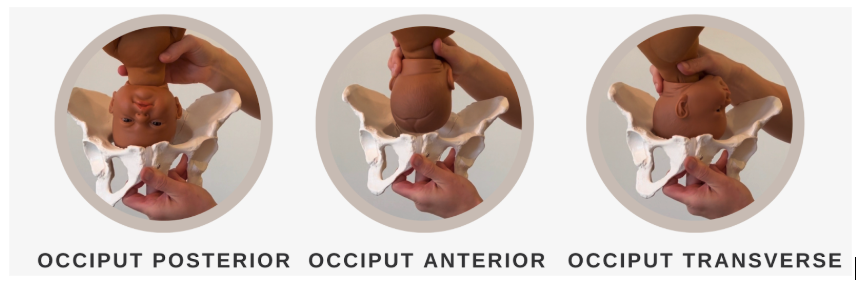
Occiput Anterior (OA): Baby’s head is down with the back of their head (occiput) toward the front of your body. This is the most ideal position for labor.
Occiput Posterior (OP): Baby’s head is down, but the back of their head is toward your spine. This position is associated with back labor, longer labor, and sometimes increased interventions.
Occiput Transverse (OT): Baby’s head is down but facing sideways. You may also see LOA, ROA, LOP, etc. The “L” or “R” simply indicates whether baby is slightly left or right. Technically, LOA is considered the most optimal fetal position for birth.
Why You May Want to Avoid Persistent OP Positioning
First — take a breath. I’ve seen plenty of OP babies deliver vaginally. So if your baby is currently OP, do not panic!
That said, persistent OP positioning can mean:
- More intense back labor
- Longer first stage
- Longer pushing stage
- Increased discomfort
So if there are simple things we can do in the third trimester to encourage occiput anterior positioning? I’m all in and I bet you are too.
The Momcozy BirthEase Maternity Ball Set
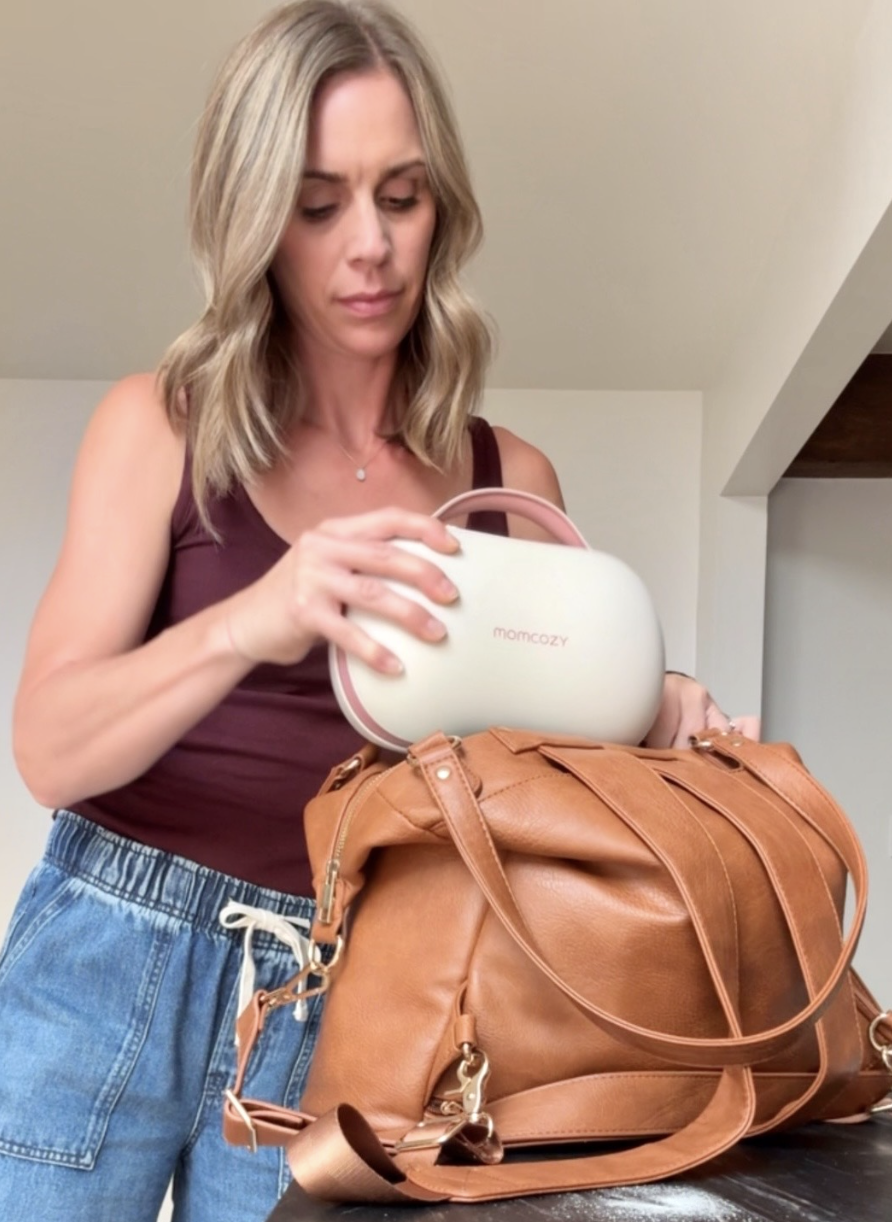
Before we get to different positions and exercises you can be trying for your labor prep, I’d first tell you to invest in a great maternity ball like the Momcozy BirthEase. There are a ton of things to love about this ball while you are incorporating it into your pregnancy and birth prep.
Why I Recommend the Momcozy BirthEase Maternity Ball Set
- It comes with an associated app and all kinds of personalized courses and materials for you!
- The courses inside are designed by maternal movement specialists.
- The app also includes Personalized Training Plans that automatically match your stage of pregnancy to the right course plans.
- It’s been manufactured in an FDA-registered facility to ensure trusted quality and safety.
- It’s well-made, with a textured, non-slip material that uses premium, ECO-friendly BPA-free PVC, and has an anti-burst technology that can support up to 330 lbs.
- If it were to puncture, it’s designed to deflate slowly.
- It comes with a stability base – love this!! – this gives you security when you don’t want to be wobbling around.
- Easy to use foot pump, which is actually so nice when you’re pregnant!
- Cute floral pattern and great colors – it’s nice to look at and use!
What Makes the Momcozy BirthEase Different From Other Birth Balls?
One of the coolest things about this birth ball set are the associated prenatal courses designed by maternal movement specialists. Via the Momcozy app, your purchase unlocks the easy to follow, step-by-step video programs in the course that can walk with you through preconception, labor prep, and postpartum recovery. The stage-based courses are simple to follow, include personalized training plans, and make it easy for you to move confidently and comfortably in your own home.
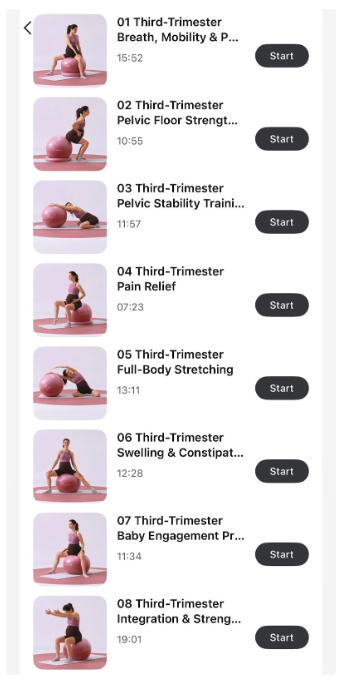
Take a peek at the app interface here – you can see that you can choose your course, and then within that course, there are a variety of programs that you can work your way through.
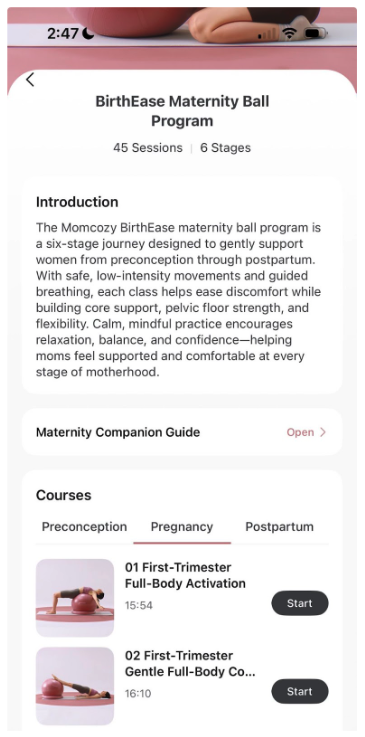
In addition to the maternal movement specialist designed courses, you also get access to personalized planning tools, progress tracking, and community support, as well as the Cozy Mom Lifestyle Guide e-magazine (see Maternity Companion guide in picture above) to give you more tips and tricks for wellness, nutrition, and mom-style.
It sounds kind of silly, but it’s so much more than “just a yoga ball.” The MomCozy BirthEase will help you prep, definitely, but it also opens you up to a fully personalized experience and community for your whole journey.
Best Exercises for Optimal Fetal Positioning in the Third Trimester
Before starting any labor prep exercises, always confirm with your provider that you’re cleared for movement.
Two important principles:
- Baby’s back is the heaviest part of their body — we want gravity helping their back settle toward your belly.
- Baby needs space in the lower uterus to rotate — so we stretch and move to create that space.
Below are some favorite exercises for encouraging OA positioning. You will see that the Momcozy Birthease Programs incorporate many of these in their third trimester courses! The lessons inside your course modules include videos, timers, text how-tos, and more.
Third Trimester Baby Engagement Preparation
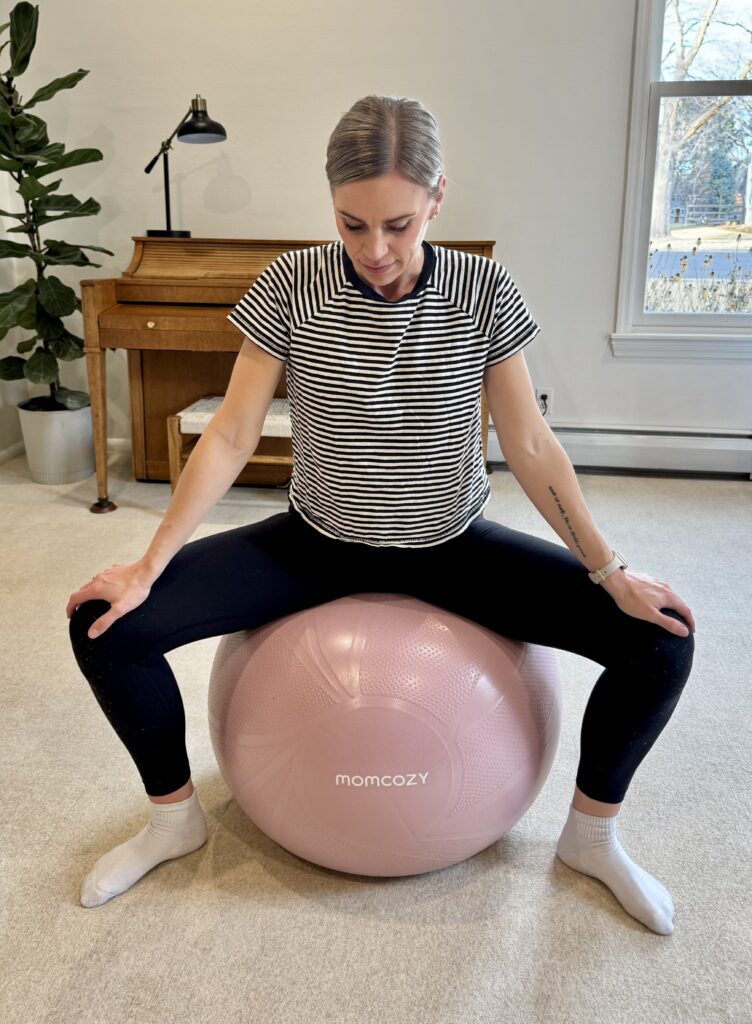
Front to Back Pelvic Tilts: There are a variety of ways to do pelvic tilting. These help align the pelvis and create space for the baby to move into the ideal position. You can easily do these on the Momcozy BirthEase ball. Sit on the front third of the ball, feet wider than shoulder width apart. Inhale and tuck the pelvis forward (the ball will roll under you) and then exhale, rolling the hips/ball back, with a slight arch to the lower back.
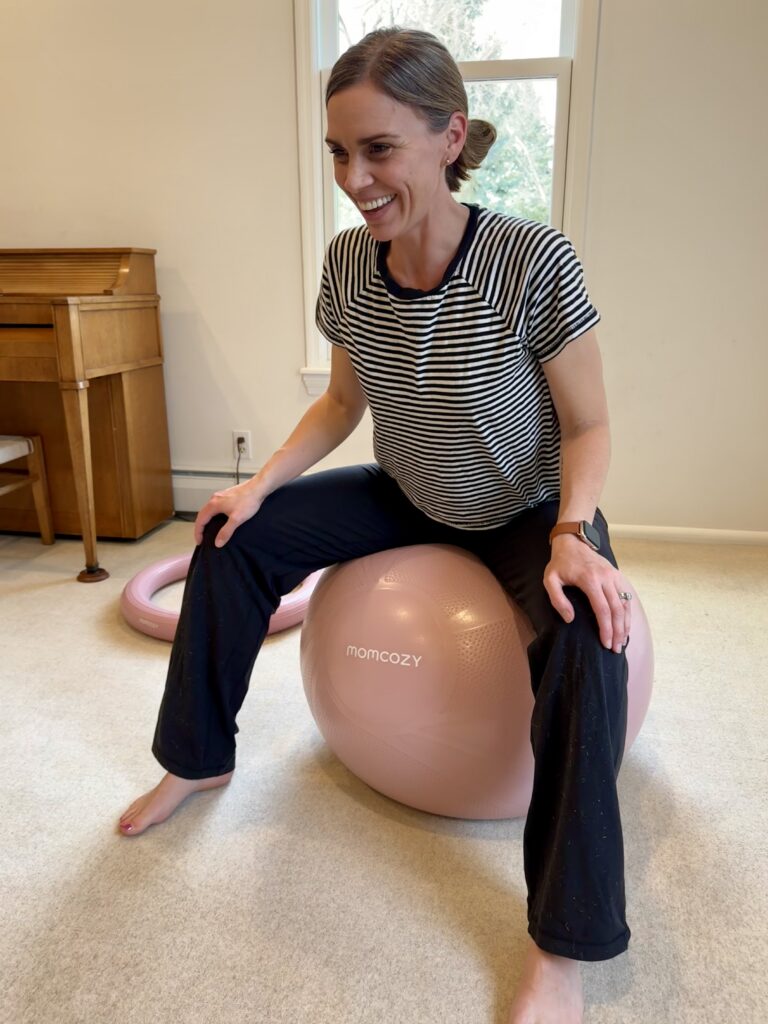
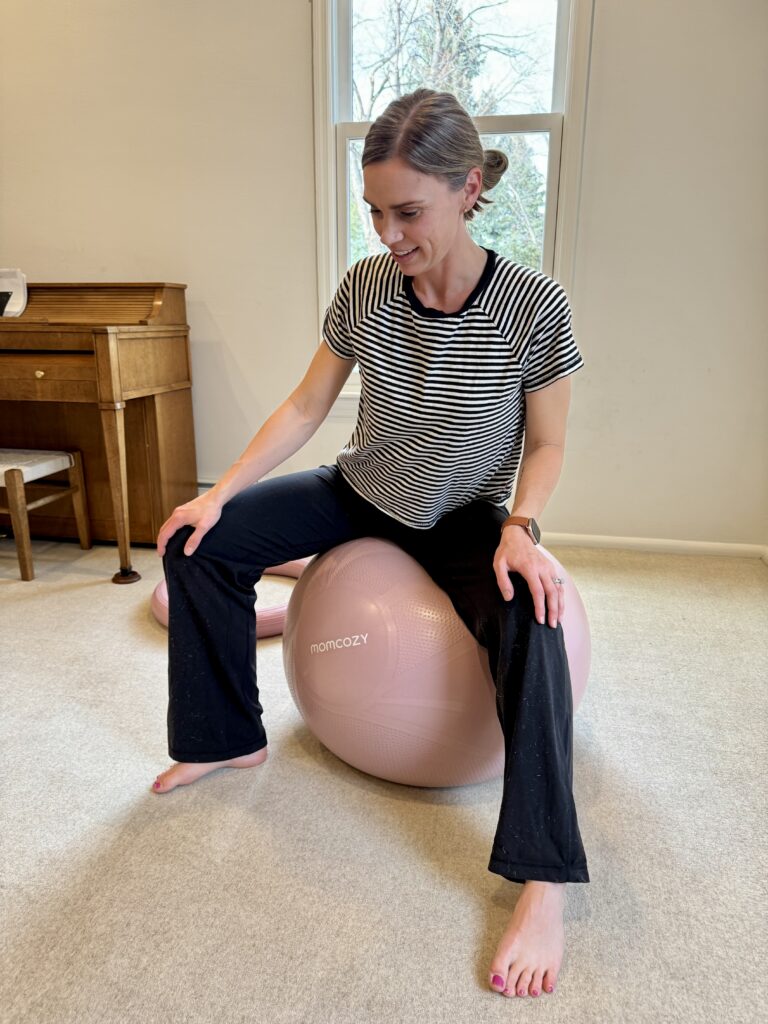
Side to Side Pelvic Tilts: Like front to back pelvic tilts, this move is all about creating space in the lower uterine area and pelvis. This space helps baby rotate and settle into the best position for your labor.
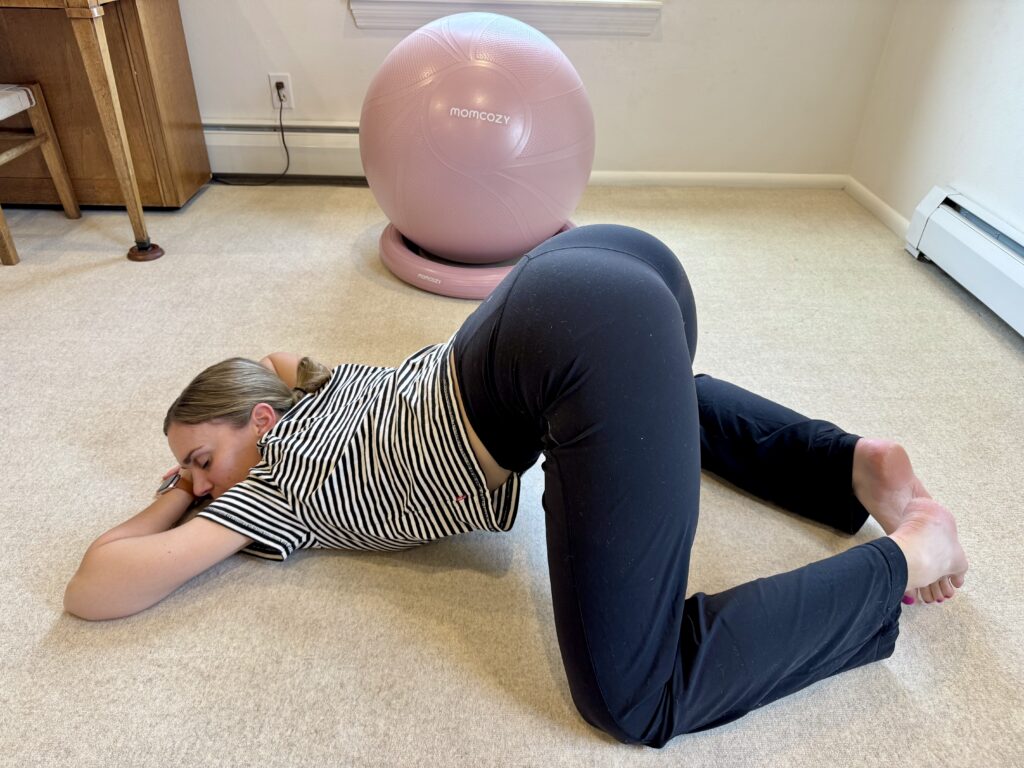
Open Knee-to-Chest Exercise: This position encourages the baby to rotate into the best position for labor. Lie face down with your knees under your hips and your chest resting on the floor. Then move the chest and shoulders forward, slipping a pillow under your chest if needed. This “opens” the move up more – that’s good!
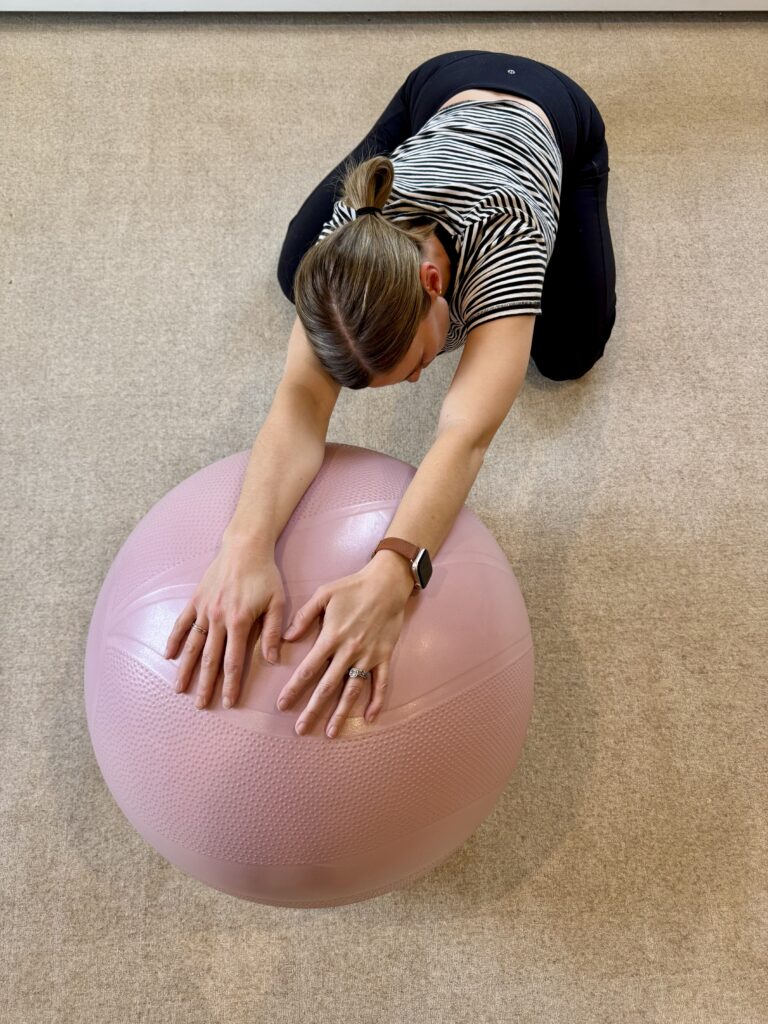
Thoracic Rotation: Start in hands and knees position and bring your toes together and make sure your knees are wider than your hips. Then you can stretch your arms forward onto the birth ball while you rest your bottom on your heels. Gently rotate your chest to the left, breathe, then back to center, rotate to the right, breathe, back to center.
Pelvic Circles & Figure 8’s: Sitting on the MomEase, rotate your hips in circular motions and figure 8’s. This can help loosen the hips, create space in the lower uterine area, and encourage the baby’s rotation and descent!
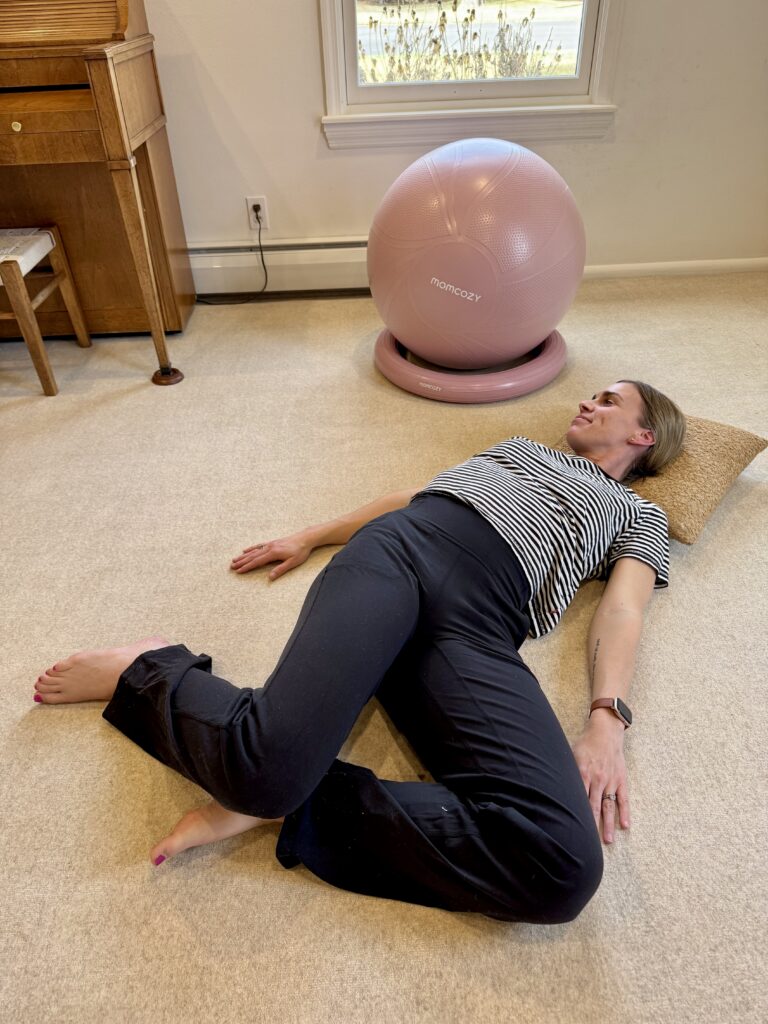
Supine Windshield Wiper: Like I keep saying, so much of this is about creating space. This move helps stretch the hips and sacroiliac joints, as well as encourage alignment in this space (great for baby to settle in)!
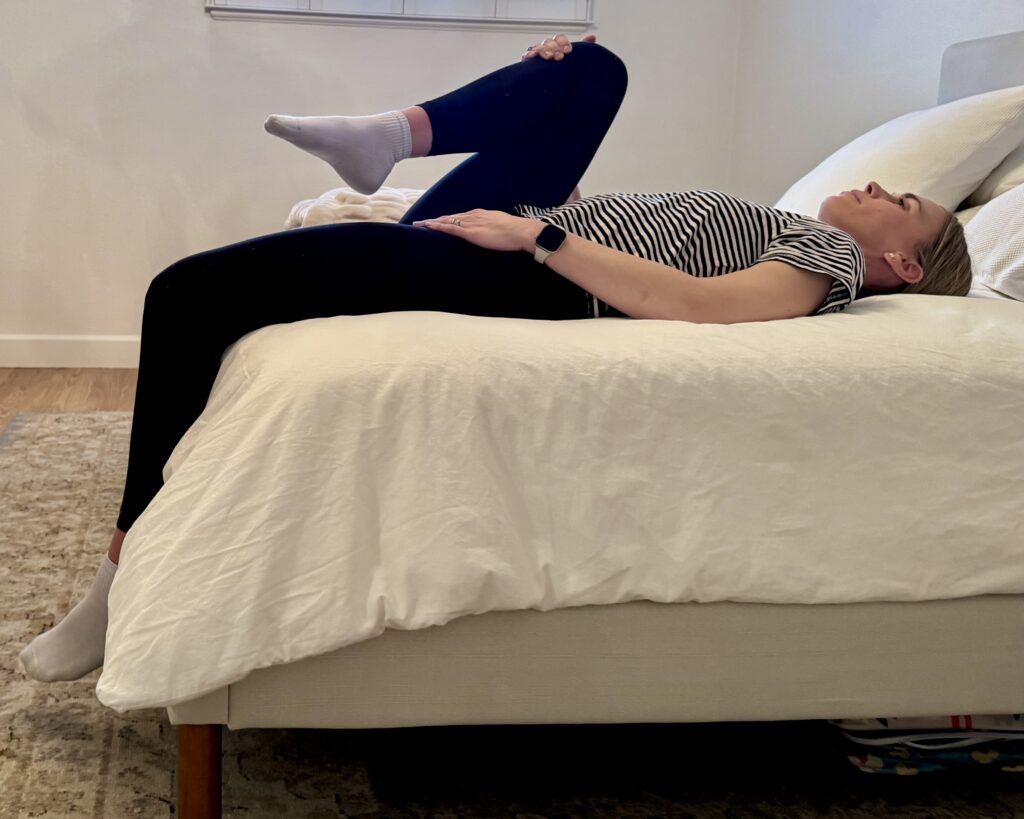
Psoas stretching: Lie back on your bed, pulling on knee to chest while the other hangs freely off of the end of the bed. Hold for 1-2 minutes or as comfy, release, and do the other leg. This can also help align and center your pelvis and hips.
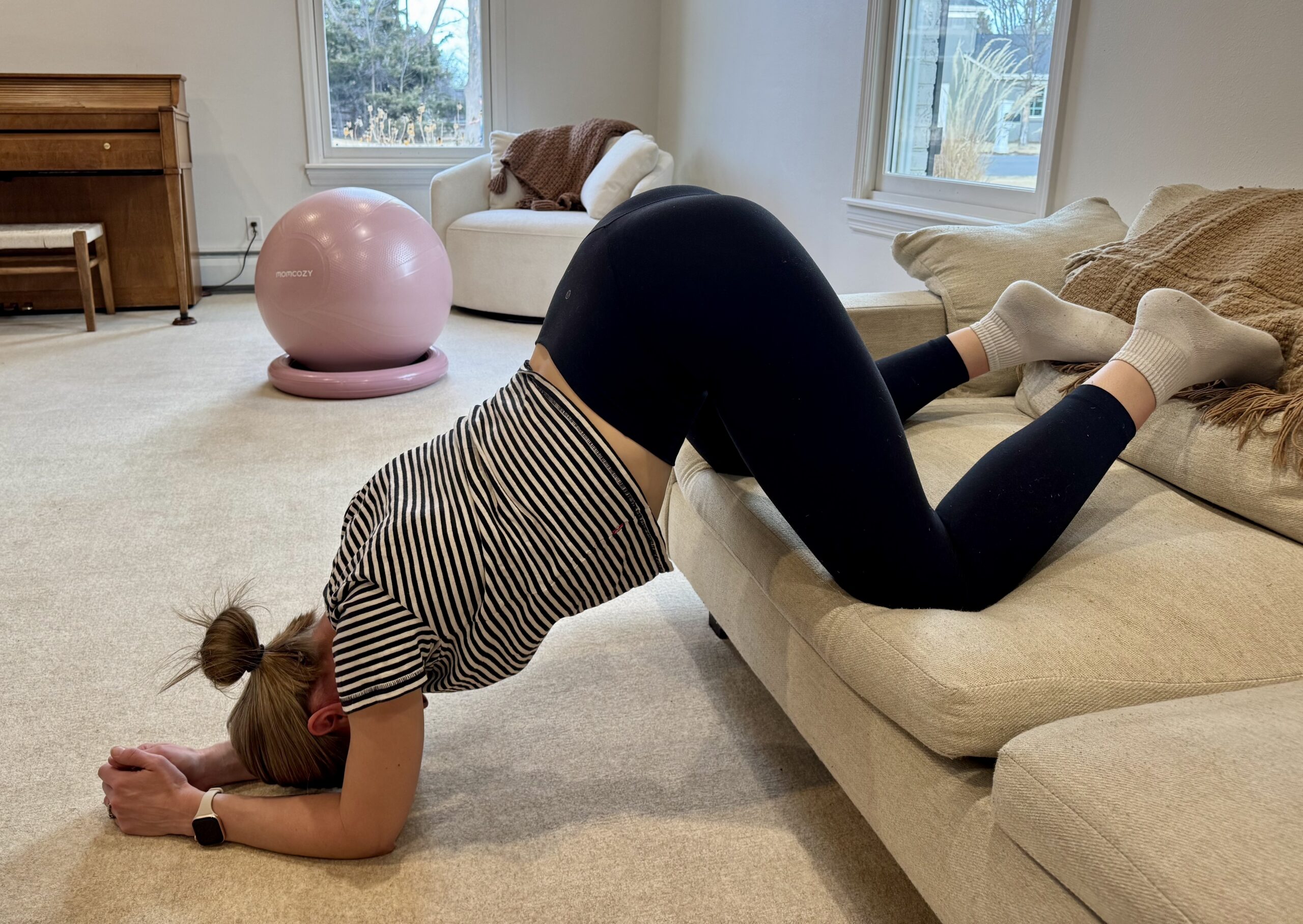
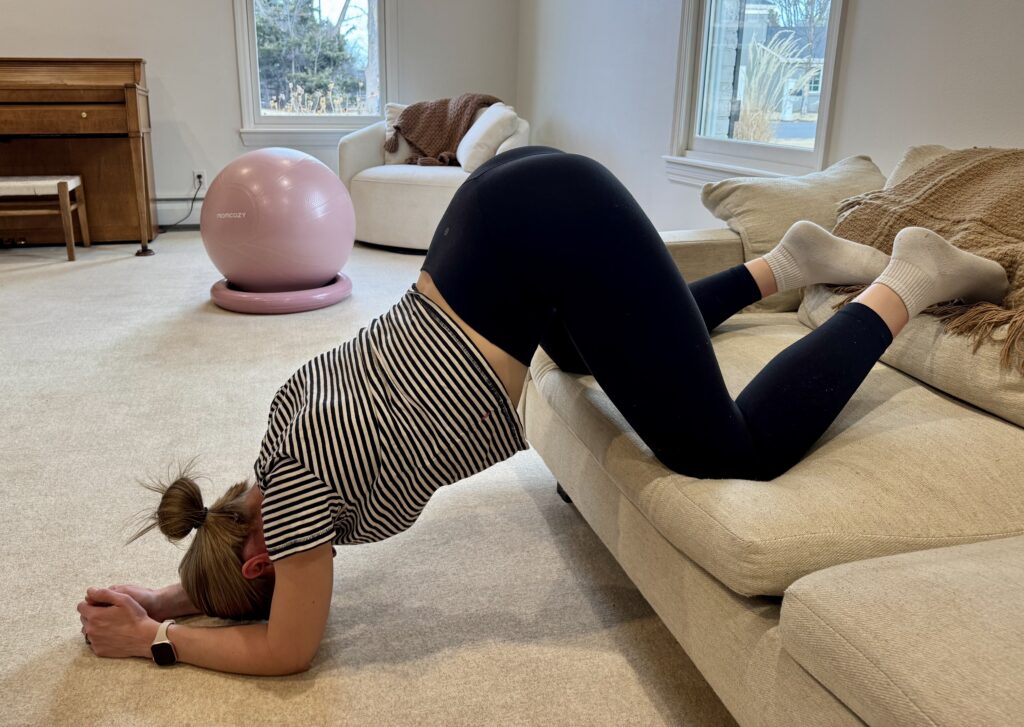
Forward-leaning Inversions: This technique involves leaning forward, usually off the edge of a bed or couch, and resting your arms on the floor while your head and belly hang. Most hold for about 30 seconds, then carefully come back up.
Incorporating Birth Prep into Your Daily Routine
I know it can feel like you never get a break with all of the birth prep, but so much of this is easily incorporated into your daily routine! To make these techniques work, consistency is key. Here’s how you could incorporate this into each day.
Morning: Start with some psoas stretching and pelvic tilts, then spend a couple minutes on the BirthEase ball in figure 8’s and hip circles.
*I sit on the birth ball all day, did my charting there, etc. so you could as well if you’ve got a sit down job! It became my office chair!
Lunch Break: Try some forward leaning inversions or open-knee chest to create some space again after sitting through the morning.
Evening: Incorporate hands and knees and side-lying while you relax and watch TV or a favorite show. I loved to lean over a birth ball while I wound down at night, watching a favorite show while also doing pelvic tilts, child’s pose, and kneeling lunges. Honestly, the end of day stretching and opening always felt so nice!
Final Thoughts on Optimal Fetal Positioning and Labor Prep
As your due date approaches, there’s a lot to think about.
But if you focus on one thing? Focus on baby’s position.
Encouraging optimal fetal positioning in the third trimester can:
- Support smoother labor
- Reduce likelihood of persistent back labor
- Improve pushing efficiency
- Increase confidence going into birth
The Momcozy BirthEase ball really is a great addition to your birth prepping, both as a practical tool and for all of the app benefits that it offers as well. The ball itself is something you can utilize in many of these daily labor prep routines — and the app removes the mental load of trying to figure out what to do each day.
I truly believe positioning is one of the most important (and most overlooked) parts of unmedicated birth prep.
If you have favorite stretches I didn’t mention, drop them in the comments! I love to hear how others prep. xx – Lo