

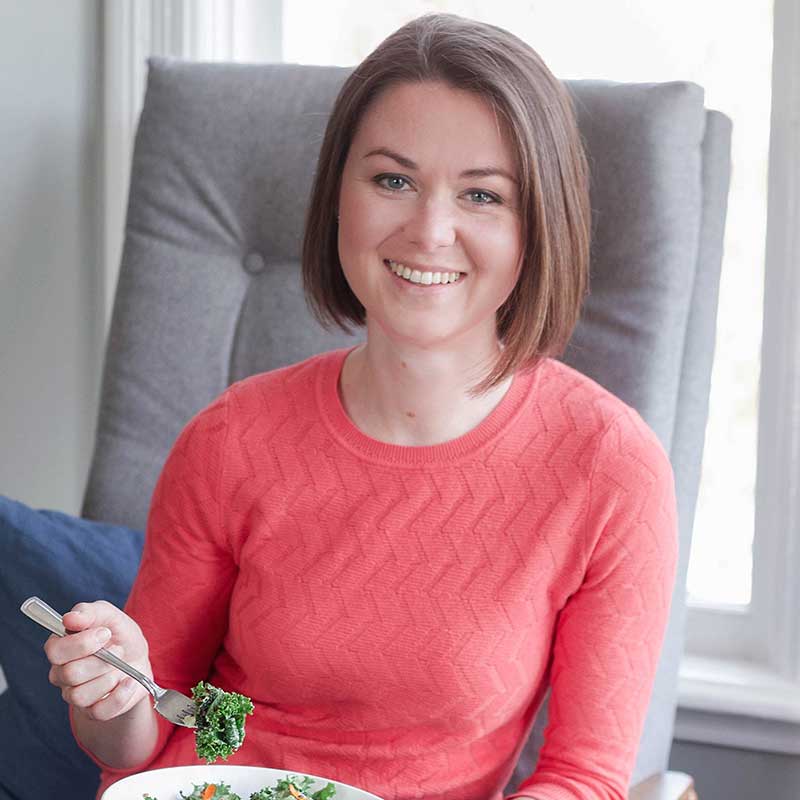


I’m so excited to welcome back Lily Nichols – registered dietician, certified diabetes educator, and honestly one of my favorite people to talk about nutrition with. We’re diving deep into postpartum recovery, and specifically the things I don’t think we talk about enough like the fact that your protein needs after baby are actually higher than a female athlete’s, that a standard “extra 500 calories a day” while breastfeeding is probably not cutting it, and which supplements are actually worth your time versus what is just really smart marketing targeted at exhausted moms scrolling Amazon at 2am.
We also get into the postpartum hair loss conversation that I have been wanting to have for a while now – because I found Lily’s blog on this topic years ago and thought, this is the education everyone needs. We break down why it happens, why it’s actually normal and expected, when you should and shouldn’t be concerned, and why that hair growth supplement you’re eyeing probably isn’t doing what you think it is. If you’re in the thick of postpartum recovery, or preparing for it, or even just a year or two out and still trying to feel like yourself again – this one is for you.
More from Lily Nichols, RDN:
- Listen to episode 19: Why Choline Matters in Your Pregnancy and Postpartum (and how to get enough) with Lily Nichols, RDN
- Visitlilynicholsrdn.com
- Check out her books:https://lilynicholsrdn.com/books/
- Follow her on Instagram:@lilynicholsrdn
Helpful Timestamps:
- 00:00 Postpartum Recovery
- 01:49 Meet Lily Nichols
- 04:20 Which Book To Read
- 09:56 Higher Nutritional Needs After Birth
- 13:24 Warming Foods Tradition
- 17:17 Prenatals And Add Ons
- 20:57 Testing And Repletion
- 26:42 Postpartum Hair Loss
- 35:27 Marketing Myths And Supplements
- 38:25 HTMA Testing Explained
- 46:34 Postpartum Resources
About your host:
🩺🤰🏻Lo Mansfield, MSN, RNC-OB, CLC is a registered nurse, mama of 4, and a birth, baby, and motherhood enthusiast. She is both the host of the Lo & Behold podcast and the founder of The Labor Mama.
For more education, support and “me too” from Lo, please visit her website and check out her online courses and digital guides for birth, breastfeeding, and postpartum/newborns. You can also follow @thelabormama and @loandbehold_thepodcast on Instagram and join her email list here.
For more pregnancy, birth, postpartum and motherhood conversation each week, be sure to subscribe to The Lo & Behold podcast on Apple Podcasts, Spotify, or wherever you prefer to listen!
👉🏼 A request: If this episode meant something to you, would you consider a 5 star rating and leaving us a review? Yes, we read them, and yes, they help keep L & B going! ♥️
Connect with Lo more on: INSTAGRAM | TIK TOK | PINTEREST | FACEBOOK
Disclaimer
Opinions shared by guests of this show are their own, and do not always reflect those of The Labor Mama platform. Additionally, the information you hear on this podcast or that you receive via any linked resources should not be considered medical advice. Please see our full disclaimer here.
Additionally, we may make a small commission from some of the links shared with you. Please know, this comes at no additional cost to you, supports our small biz, and is a way for us to share brands and products with you that we genuinely love.
Produced and Edited by Vaden Podcast Services
Transcript
Relatively newer research showing that postpartum moms at three to six months out who were, were exclusively breastfeeding, their protein requirements were higher than a typical female athlete.
:Postpartum hair loss, I'm sorry to inform you, is actually a natural process.
:You are not going bald.
:It was just all the extra hair that you kept during pregnancy did not all shed during pregnancy, and you're now shedding a lot of that right now
:Motherhood is all-consuming.
:Having babies, nursing, feeling the fear of loving someone that much.
:Then there's this baby on your chest, and boom, your entire life has changed.
:It's a privilege of being your child's safest space and watching your heart walk around outside of your body.
:The truth is, I can be having the best time being a mum one minute, and then the next, I'm questioning all my life choices.
:I'm Lo Mansfield, your host of the Lo and Behold podcast, mama of four littles, former labor and postpartum RN, CLC, and your new best friend in the messy middle space of all the choices you are making in pregnancy, birth, and motherhood.
:If there is one thing I know after years of delivering babies at the bedside, and then having, and now raising those four of my own, it is that there is no such thing as a best way to do any of this, and we're leaning into that truth here.
:With a mix of real life and what the textbook says, expert insights, and practical applications, each week we're making our way towards stories that we participate in, stories that we are honest about, and stories that are ours.
:This is the Lo and Behold podcast.
Lo:Lo and behold has a return guest today, you guys.
Lo:I have Lily Nichols with me.
Lo:She's a registered dietician, nutritionist, a certified diabetes educator, a researcher, and an author who has a passion for just evidence-based nutrition information and figuring out ways, honestly, to share it with you guys in free ways, through her books, through her blog, in a lot of different ways.
Lo:Our first conversation, I brought Lily on, and I wanted to talk to her about what we're gonna talk about today.
Lo:That conversation got sidetracked in a very good way, and so episode 19 is a conversation about kind of pregnancy nutrition.
Lo:We deep dive choline, which is not talked about enough, and so I w- I wanted her to come and talk about that, and we got on that very good, very helpful rabbit trail related to choline.
Lo:So, if you are in kind of that season of approaching pregnancy, thinking about pregnancy, I just, I highly encourage you to listen to episode 19 as well with Lily.
Lo:Get a taste for her, her advice, her support, who she is, and also dive into that pregnancy nutrition and that choline conversation because I think it is so, so valuable.
Lo:I know I mentioned Lily is an author as well.
Lo:She has three books: Real Food for Fertility, which she co-authored with Lisa Hendrickson-Jack, Real Food for Pregnancy, and Real Food for Gestational Diabetes.
Lo:We talk about in our conversation which one of her books might be best for you depending on the season you're in.
Lo:So tune into that.
Lo:Her books are fabulous, and those three books are definitely gonna cover really any of us wherever we might be in this pregnancy, fertility, or postpartum journey.
Lo:When Lily is not writing, when she's not sharing information online, when she is not influencing international nutrition policy, so cool, right?
Lo:You can find her with her husband, her two kids, and very likely in her kitchen or spending some sort of time outside in her garden.
Lo:We will get into that a little bit more, too.
Lo:Lily, thank you so much for coming back and joining me again.
Lo:Just in case someone hasn't listened to maybe our prior episode before or doesn't know you from online or one of your books, will you just give us a little brief intro again to who you are, what you do, all of that?
Lily:Yeah, sure thing.
Lily:So, um, Lily Nichols, you already said my name.
Lily:My- … background is as a dietician, a more real, food-focused dietician, also a diabetes educator, and my work centers around nutrition, really across the childbearing years, so fertility, pregnancy, postpartum, and I also have a specialty in gestational diabetes.
Lily:So my work really looks at, where are the gaps in where the research is and what the guidelines tell us to eat and kind of looking deeper at how can we really optimize outcomes for fertility, pregnancy, postpartum recovery.
Lily:Yeah.
Lo:So your postpartum kind of, I know you've got the books kind of addressing some of those different seasons, and this comes up a lot.
Lo:I've seen it online or maybe even have seen these questions in my own community too.
Lo:Which one of your books is for those who are not necessarily trying to conceive, but do want… Is it the postpartum, for fertility one?
Lo:Which one is it that, like, really anyone could read at any point in their life
Lily:Yeah, we're trying to work on a resource to make it simpler for people to figure out- Right
Lily:which book is right for which things.
Lily:Yeah.
Lily:I thought it would be obvious, but it, it, it's apparently not.
Lily:So, if you are pregnant and if you are, I would say, pretty early postpartum, arguably up to maybe the first year or so, I would get "Real Food for Pregnancy." It has a very detailed chapter on, postpartum recovery, breastfeeding nutrition.
Lily:As you kind of get beyond those early stages of recovery, probably your best bet would be to go with "Real Food for Fertility," certainly if you wanna have another baby at some point.
Lily:But even if you're consider yourself done having babies and are, or are not planning to conceive any time soon, it's really the book for hormonal health.
Lily:You know, fertility is simply or I don't wanna say simply 'cause it's, it can be quite complex.
Lily:But to some degree, fertility is a reflection of optimal health, so if we're doing all the things to support optimal health, we will also have a pretty regular, predictable, less painful menstrual cycle, be ovulating regularly, be able to conceive if we wanna conceive.
Lily:Whether we choose to do that or not is another story.
Lily:So after about a year or so postpartum, I would say get the fertility book.
Lily:That'll put you in a good place for hormonal health, menstrual cycle health, and again, if you choose to, you know, wanna have another baby, you'll be in a good place for that.
Lily:And it's hard to, like, give an exact time point 'cause, you know, somebody who wants information on breastfeeding nutrition, that's, that's in the postpartum chapter of "Real Food for Pregnancy." But for the most part, I would say most women at about a year or so postpartum, you've kind of, like, gotten the breastfeeding thing figured out.
Lily:And so you're, you're beyond that initial postpartum recovery phase and that information, I think, is less, immediately applicable to the stage you're in.
Lo:Yeah.
Lo:That's perfect.
Lo:Thank you for that.
Lo:I just think a lot of the people in my community are probably in that the fertility thing makes sense, right?
Lo:Like, they wanna have a baby or they wanna have more, or they're recent- they're currently pregnant or postpartum.
Lo:But I know there's certainly people who are done having babies who still are interested in you or want that nutrition-
Lily:Yeah … kind of overlooked If you're not
Lo:currently pregnant- So that-
Lo:… " Lily: Real Food for Fertility."
Lo:Yeah.
Lo:Yeah.
Lo:Yeah.
Lo:And then I would s- or it sounds like that's what I was leading to as well is maybe even if you're done having babies, but you still want that kind of optimal health- hormone health that
Lily:you talked about.
Lily:Also that one as well Even, even when you're dipping into perimenopause, and I get a lot of questions, "Are you gonna write a book on perimenopause?"
Lo:I'm
Lily:sure.
Lily:Hold your horses, people.
Lily:I really like to write from a place of I have, like, lived personal experience with things as well, and so just give me some time.
Lo:Just we're not there yet, and we're glad about
Lily:it.
Lily:Not there.
Lily:Dipping my toe.
Lily:Dipping my toe, right?
Lily:Yeah.
Lily:But even when we're thinking about perimenopause, a, a lot of the metabolic shifts that are happening in the body are kind of leaning you a bit more insulin resistant over time.
Lily:It happens with age.
Lily:We need to work a little harder to maintain lean body mass.
Lily:We might need to work a little more for optimal blood sugar levels.
Lily:And at the end of the day, we want to try to maintain our own endogenous hormone production as long as we can.
Lily:This makes for a much easier transition into menopause.
Lily:So I really think if I was to write a book on, on menopause or perimenopause at some point, a lot of the core concepts that are covered in Real Food for Fertility probably would carry over- Right … for perimenopause as well.
Lily:Right.
Lily:It's like the intricacies on supplementation and lab testing and things like that certainly would be different, but this sort of whole foods approach, it is appropriate for all life stages.
Lily:Just like when you're feeding babies and toddlers and kids, you're preparing the same foods for the whole family.
Lily:Maybe it takes a little more gentle encouragement with the kids and, you know, different proportions, but the core concepts still apply.
Lo:Okay.
Lo:That's perfect.
Lo:So now y'all know what you need and when you need it.
Lily:That's what I wanted
Lo:for you guys.
Lo:Okay.
Lo:Last time you were here, episode 19 if you guys wanna listen, we talked a lot about more about this pregnancy nutrition conversation.
Lo:We talked a lot about choline, which you have done, like, extensive work and education around, and I had felt and maybe continue to feel there's not enough information about that for us during our pregnancies and during our postpartum as well.
Lo:So again, episode 19 if you wanna hear that first conversation that I got to have with Lily, a little bit more about pregnancy, and then that gets into the postpartum conversation a little bit as well.
Lo:Today, I wanted to talk to you a little bit more about this postpartum season, and then we're gonna get specifically into hair loss like we chat about before we started.
Lo:But one thing I think just over… I mean, you kind of even just alluded to it as an answer to this, but this kind of overall how do we approach some postpartum, like, some basic nutritional needs?
Lo:Or where are some places where we can all say, "We know we're gonna maybe be deficient here or have more caloric needs in this way."
Lo:Like, what are some of those kind of basic guidelines for that postpartum recovery stage and, you know, potentially for a lot of us breastfeeding as well?
Lily:Yeah.
Lily:So, you know, especially in early postpartum, you've, you've just had your baby, I'd say through at least the first couple of months, your nutrient needs are gonna be substantially higher.
Lily:We're looking at higher caloric needs.
Lily:We're looking at higher protein requirements.
Lily:The higher protein requirements, by the way, are not necessarily in the guidelines.
Lily:That's relatively newer research showing that postpartum moms, the study looked at women at three to six months out who were, were exclusively breastfeeding.
Lily:Did I say three to six weeks?
Lily:I meant three to six months, if I didn't say
Lo:that
Lily:right.
Lily:Six months.
Lily:Okay.
Lily:Three to six months out, their protein requirements were higher than a typical female athlete.
Lily:So, you really wanna go, go ham, pun intended-
Lo:Literally.
Lo:… Lily: on, on the protein.
Lo:But then there's a number of vitamin and mineral needs that also increase in the postpartum period.
Lo:Choline is one of them, vitamin B12, vitamin A increases substantially, iodine.
Lo:There's a whole slew of them.
Lo:So, you, you wanna kind of expect that you're gonna need a lot for repletion.
Lo:And, you know, the typical increase in, in calories that a lot of people talk about of about 500 calories a day if you're exclusively nursing, that really is only accounting for the energy you're excreting in your milk and in the production of that milk.
Lo:It's not accounting for that immediate wild postpartum recovery time when you're recovering from birth.
Lo:So- Depending on how birth went down, right?
Lo:You may have had a physiologic birth, maybe it was a short labor, maybe it was a long labor, maybe you had a long labor followed by C-section, maybe you had a planned C-section.
Lo:Regardless of how it went down, if you had a long labor in particular, or if a C-section was required, you're gonna require a lot more energy for repletion.
Lo:You either ran a marathon, ran a marathon, and then had major abdominal surgery, or had planned major abdominal surgery, and there's significant wound healing, and whatnot for recovery.
Lo:Like, if we're, you know, working as a hospital dietician, you have somebody with a wound, you give them a lot of extra nutrition to help them heal.
Lo:We need to also be thinking about that for postpartum, and our current guidelines don't really encompass that very well.
Lo:Like, I don't know.
Lo:For me, with my two kids, in that early postpartum recovery time, an extra 500 calories a day was definitely not enough.
Lo:Like, I swear I was eating double or maybe even triple for a period of time.
Lo:And I think a lot of that is coming from just the recovery from birth itself.
Lo:And then of course, you have the ongoing, if you're nursing, that ongoing higher energy requirement, for producing breast milk as well.
Lo:So, in a nutshell, more food, highly emphasize protein.
Lo:I mean, all the macronutrients do have a place, but really focus in on the protein.
Lo:If you're not obsessively, taking the fat out of, like all y- your protein-rich foods, you'll naturally be eating more fat from that, and then high quality carbs, as the complement.
Lo:And if we approach postpartum from a more, you know, sort of traditional lens of what a lot of cultures have practiced, you really emphasize warming foods, foods that have a lot of liquid in them, like soups and stews and porridges, things that are a bit easier on the digestion, and just warming as a whole.
Lo:Like, there's this big emphasis on, on warming foods- Yeah … that you see really across the globe.
Lo:It's very interesting.
Lo:So question about that, because I've seen, you know, there's some beautiful cookbooks that are so specific to this postpartum season and what you should be eating and, like you said, lots of soups, lots of warm things, stews, et cetera.
Lo:Do you know how long that idea of eating Warmer foods and Susan such, like how long you're supposed to be doing that?
Lo:And again, I know some of this is cultural as well, but is that like the first two weeks or is this like a continued thing throughout those six months or whatever timeframe that that type of food is thought to be helpful and valuable for that
Lily:recovery?
Lily:Yeah, this, this really comes down to kind of the cultural practices, but it's, it's interesting.
Lily:There's actually a lot of, similarity across the world on the timeframe they give.
Lily:It's like 40, 41, 42 days, first six weeks approximately.
Lily:Oh, yeah, I've
Lo:seen that before.
Lily:Okay.
Lily:So, you know, and there's no…
Lily:People sometimes I think take things to an extreme and they're like, "Oh, well, you, you can't eat a salad," or, "You can't have-" Right.
Lily:"… fresh fruit." Like, we have to remember that some of these practices are coming from, you know, centuries of what these people did, and this is at a time when we didn't have heating and air conditioning, and maybe your house was really drafty.
Lily:And, you know, if you're kind of in this delicate place of recovering from childbirth, it's kind of like In a way, it's kind of like when you're recovering from being sick, you don't wanna get cold and chilled, and so a lot of these things are kind of a carryover from that.
Lily:That's why, you know, in some practices you, you don't shower or bathe, or you don't go outside, or you don't, you know, definitely don't be out in the wind.
Lily:And we're now in climate controlled houses.
Lily:Food is, more reliable to obtain.
Lily:Some of us maybe are not living in the same climates as where some of those practices came from.
Lily:So I don't think you need to be like scared to eat a salad or to eat some fresh fruit.
Lily:But you just may find it easy, especially on your digestive system, you know, all your organs had to move out of the way, for baby to grow.
Lily:And so there's a lot of, you know, you feel a little bit unstable in your midsection, and sometimes your digestion is a little more sensitive, and we wanna keep the bowel movements easy to pass, especially post-birth.
Lily:So having a lot of fluids on board and warm, easy to digest, high gelatin broths and things like that, it, it makes a lot of sense.
Lily:Even for the hydration component, these broths are not only the fluids, but you have the electrolytes with them 'cause they're all salted and seasoned and have, you know, potassium rich vegetables in there, and mineral rich bones in there.
Lily:That's all supporting lactation as well.
Lily:So it, it makes sense, but I don't think we need to be extremely rigid about, about the rules either.
Lo:That's what I need you to say, Lily.
Lo:'Cause I think I love that we have some of these, I, I don't know, to me it feels like these ideas or cultural norms for some cultures, like, coming back, right?
Lo:And we can say, "Okay, what can we learn from this?" Like, it's not like they did something that doesn't make sense and we shouldn't apply it.
Lo:But I also think there's this rigidity sometimes of, of this like, " Well, can I have some watermelon?
Lo:Like, that sounds so good right now." And it's like, "Oh, that's cold.
Lo:Like, that's not what your body needs." And it's like, "Hmm." I just don't know if that's true either.
Lo:Yeah.
Lo:You know?
Lo:And so this postpartum period when people are like, "I'm gonna do it really well," right, and I have the resources, support, the help, the people around me to, to do lying in and to eat the right food.
Lo:I just think, yeah, it's also like, "Hey, what feels good to you today, and what sounds good to you today?" Like, those things have value, too, as opposed to just following some sort of kind of strict regiment for the best, you know, air quoting a little bit- Right … the, the best way to heal postpartum.
Lo:But-
Lily:Absolutely
Lo:there's some fluidity there, for sure.
Lo:I mean, if,
Lily:if you're in like 105 degree Texas summer heat, you absolutely should be eating watermelon.
Lily:Yeah, don't bring me any soup.
Lo:Exactly.
Lo:Exactly.
Lily:Yeah.
Lily:Okay.
Lo:Okay, so you mentioned really quickly, some basic, nutrient needs.
Lo:Obviously, we all know we have lots of those postpartum and- All our other days as well.
Lo:But do you think a standard, 'cause often the recommendation is, "Hey, just keep taking your prenatal, you know, through your recovery. Make sure you're getting those nutrients and vitamins." Do you taking that standard prenatal, whatever you took during… I'm using the word standard almost like a negative.
Lo:Just taking the prenatal you took during pregnancy, continuing to take that postpartum, can that fill the kind of common nutrient needs that we have for postpartum, or is that totally dependent on the person and what's going on in their recovery and in their own body?
Lily:It probably more depends on what was the quality of the prenatal that you were taking during your pregnancy to begin with.
Lily:So, you know, if you were on a pretty comprehensive prenatal, that, that same one would also be highly beneficial to continue postpartum.
Lily:If your prenatal was like a, a one-a-day or a two-a-day formula, it's probably not gonna have the Nutrient density needed to support you postpartum.
Lily:Also prenatals don't necessarily cover every single nutrient need, so there are a handful that you might need separately.
Lily:I actually favor prenatals that don't have omega-3s built in.
Lily:They don't have DHA in them because it's a very unstable, delicate, fat, and some of the nutrients and vitamins in there can essentially make it spoil and go rancid, and you're not gonna get the benefits from it anymore.
Lily:Now you're just taking in something that's gonna cause inflammation in your system, 'cause the fat's now, now rancid essentially.
Lily:So I always do that separately.
Lily:Now, not everybody needs that separate.
Lily:If you are one of the unicorns who eats, 16 ounces or more of seafood per week, which is rare, average intake in the US is about three ounces a week, among women of childbearing age.
Lily:If you're doing that, 16 ounces approximately or more, you might not need the separate DHA, but most people do.
Lily:So, a fish oil or an algae-based DHA would be a good thing to add on.
Lily:Depending on your sun exposure, you might want an extra vitamin D. Even some of the best prenatals on the market that have 4,000 IUs of vitamin D per day, that is great, and there are some studies on that amount in lactation showing that it's, you know, it…
Lily:potentially enough for some groups.
Lily:But the most reliable way to make sure that you and baby are both getting enough vitamin D, so enough is passing through your milk, is 6,400 IUs per day.
Lily:So you might need to tack on a little extra vitamin D, or maybe you had your baby in the summer months and you're out in the sun a, a decent amount without sunscreen, and you might be making that from the sun.
Lily:Like, it just is kind of gonna depend.
Lily:And then of course, there are always gonna be, like, an array of supplements that you can do as add-ons, but those would be, like, the top three, a really high quality prenatal, potentially extra vitamin D, potentially extra omega-3 or, specifically I should say a DHA source, 'cause you can't take a flaxseed oil or chia seeds that's not, that doesn't have DHA and your body can't convert enough of that type of omega-3 into DHA.
Lily:So it needs to be a fish oil or an algae-based, DHA supplement.
Lily:Some form of DHA.
Lo:Okay.
Lo:So, I mean, to some degree it sounds to me like doing the work with your prenatal to ensure that that's, like, a high quality prenatal that's covering you in a lot of ways, really, I mean, we know this to be valuable, right?
Lo:But then can carry through here as well, 'cause you know, "I'm still getting this really comprehensive kind of vitamin support." I know- In my postpartum as well, and then you can kind of go from there.
Lo:It's so interesting to me that I don't know, we don't get some sort of blood work included as part of our postpartum recovery process that says, "Hey, just so you know, like, here's your vitamin D level.
Lo:It's incredibly valuable to both of you.
Lo:Now you know how much to supplement." I… And we don't need to have that conversation about we don't get postpartum, but like this, a lot of this would be so much easier for us if someone just simply included that in our basic standard postpartum plan of care, and then you could, you don't have to guess.
Lo:It, like, am I getting- Yeah … enough?
Lo:How's, how are things looking?
Lo:It's just such a frustrating part of postpartum here in the United States.
Lily:Well, and I, I mean, the healthcare system as a whole, we're not exactly the most proactive about everything, so It's hard because you could request a vitamin D postpartum.
Lily:What's interesting, and I'm actually glad you mentioned that specifically, is the vitamin D, the form of vitamin D that transfers through the milk is actually vitamin D3.
Lily:So it's what you consume, and it's what you make from the sun.
Lily:It's not your circulating vitamin D levels.
Lily:postpartum, if they take that:Lily:Like regardless, and baby specifically gets enough regardless of the mom's vitamin D status.
Lily:Say she's super deficient- And are you saying 'cause that's a- … and you're repleting, well, because it's D- That's a different
Lo:form of vitamin D, the D3
Lily:that they're getting?
Lily:Vitamin D3, vitamin D3 is what transfers through the milk.
Lily:The circulating type of vitamin D in your system that they measure to check your vitamin D status, 25 hydroxy vitamin D, that barely transfers through the milk.
Lily:So if mom is just getting a consistent intake or, and/or consistent sun exposure, 'cause vitamin D is one of those weird nutrients that we, we don't just get it from food, we also make it from the sun.
Lily:Majority of what we have in our bodies is actually what we get from the sun or supplements.
Lily:You can ensure baby has enough without even knowing your vitamin D status, and that's like a- Interesting … a very odd little tidbit of information that-
Lo:Yeah
Lo:… Lily: might be reassuring to a mom.
Lo:If you can't get your vitamin D tested, it's okay.
Lo:Yeah.
Lily:The other part with checking micronutrient status is that is just so not a part of conventional medicine at all.
Lily:And even if you were to test in early postpartum, you'd probably be so low in everything- In
Lo:everything.
Lo:… it might
Lily:just add to your stress levels.
Lily:It'd be terrifying.
Lily:Yeah.
Lily:So I usually reserve that to about, unless there's something like some reason we need to check earlier, I usually reserve that to about six months out or so, because we're gonna do the same thing.
Lily:Like, we have to focus on repletion.
Lily:Your body can only absorb so much each day.
Lily:Let's just get you on like a good, you know, supplement regimen, get you on, you know, really high quality nutrient dense foods, especially for hitting your protein goals.
Lily:That, that hits a lot of your micronutrients and then, you know, your, some of your plant foods, vegetables, legumes, other things kind of fill in any of the potential gaps that for nutrients we wouldn't get as much from animal foods.
Lily:And you're, you're good.
Lily:You're gonna be doing as good as you can, and we're just gonna keep focusing on this nutrient repletion over time.
Lily:But testing early would probably just be
Lo:Terrifying
Lily:Like a sucker punch to the gut, you know?
Lo:For sure.
Lo:For sure.
Lo:No, I know.
Lo:I can't even actually imagine, like logically speaking, like you just said, if someone was like, "Hey, here you are four weeks postpartum, and here's all these places you're deficient."
Lo:It would, it would just be a space of, not terror, that's a little dramatic, but overwhelm for sure of like- Yeah … I'm just trying to recover and take care of this baby, and now you're also telling me that, you know, I need to check this, this, this box.
Lo:And I think like you said as well, the focus remains the same really in all of these seasons of how are you eating, how are you feeling your body, like those choices are largely going to stay the same- Yeah
Lo:or put you in a really good place to- Yeah … then later address this stuff, so.
Lo:And there's
Lily:like, there's a handful of them, just to throw a bone to the, the concept of testing things early.
Lily:There are a handful that you actually might be warranted to check earlier, like maybe at your six-week checkup.
Lily:Like check your vitamin B12 levels, especially if you're somebody who doesn't eat a whole lot of animal foods, or you're feeling really low energy or yucky.
Lily:Check your iron status.
Lily:See where that's at.
Lily:If you're anemic, that can play into, well, as we're gonna talk about, postpartum hair loss.
Lily:It can play into, thyroid function.
Lily:It can play into so many things.
Lily:So if you're feeling really lousy, low energy, those are some that a, a conventional provider absolutely can order, and it's not a huge lift, and it's not completely out of their wheelhouse.
Lily:And you can take some action, supplement extra, adjust your, your diet a little bit to accommodate those increased needs.
Lily:So sometimes.
Lily:Sometimes we test things earlier.
Lo:I'm currently two years postpartum, which sounds silly to say, but I just was with my PCP, and I felt like I s- and I'm like, "I'd like to check those things you just mentioned.
Lo:Like, can we just start here?
Lo:I'm still pretty tired.
Lo:I don't feel like I should be "" It's just interesting that, uh, she almost was like, "I need you to give me a reason." You know, like, "Why would we be looking-" Right … "for those things?" Which, again, that's this whole conversation about our healthcare system and how it works, but it was like, "Okay, then I'm really tired.
Lo:I'm having headaches.
Lo:Like, put down whatever so that we can just start baseline, start looking at some of these things." So I mean, that kind of harkens back to this idea of you don't need all of that stress in the postpartum of having to fight for these things and/or deal with, you know, whatever it might say.
Lo:But it's also worth asking your provider when you do get to a place and saying, "Hey, like I do wanna make sure some of these baseline things are well as I continue to explore, yeah, how I'm doing, how I'm recovering, how I, you know, how I'm feeling a year out or whatever." So yeah.
Lo:Okay, so you just segued us perfectly into the postpartum hair loss conversation.
Lo:Basically, and I shared this with you before we started, I found your blog article on this years ago and just thought, This is the education everyone needs to see on the postpartum hair loss conversation," 'cause essentially I just love the way you laid out the science.
Lo:This is why it happens.
Lo:This isn't necessarily something you can make not happen with a certain supplement or, a certain test that can tell you what is or isn't going on.
Lo:So would you first just kind of lay out for us, like you kind of do in that article, just the science of, "Hey, this is what's going on. This is a normal process that's occurring because of these reasons."
Lo:Will you share that with us?
Speaker:Hey friend, quick pause for just a second.
Speaker:If you are listening to this podcast because you wanna feel more prepared, more confident, and less freaked out about birth, that is exactly why I created the Your Body Your Birth course.
Speaker:This birth course will not tell you what kind of birth you should want, and nobody has the right to do that.
Speaker:It is about helping you understand what's happening in your body, what your options actually are, and how to walk into your birth feeling grounded, excited, ready, instead of overwhelmed and scared.
Speaker:When you have education like this, everything changes: your mindset, your conversations with your care team, and the birth experience itself.
Speaker:No more relying on random opinions, okay?
Speaker:Stop scrolling.
Speaker:Take intentional action with me and start trusting your body, your voice, and your decisions today.
Speaker:Head over to www.thelabormama.com/birth, also linked in your show notes.
Speaker:And be sure to use the code podcast at checkout to save 20% and start working towards this better birth for you right now.
Speaker:Okay, let's get you back to the episode
Lily:Yes, for sure.
Lily:So yes, postpartum hair loss, I'm sorry to inform you, is actually a natural process.
Lily:They call it postpartum alopecia.
Lily:It typically starts approximately two to five months postpartum.
Lily:There are, there are differences in the exact timeframe that it's gonna hit different women, that's why there's a range, and it continues usually for a minimum of about six weeks for some women, it goes on for a full, like, 24 weeks.
Lily:That's, that's many months of, of loss.
Lily:And oftentimes you'll see it most pronounced in the templ- above your temples, like the area where you see men have male pattern baldness.
Lily:You'll see it up there.
Lily:I mean, some women get hit harder than others, and they'll, they'll notice it everywhere.
Lily:There's just, like, an overall thinning.
Lily:For me, I know it was most pronounced up here, and, uh- Oh,
Lo:yeah … yeah.
Lo:Mine's crazy.
Lo:I'm like, "I can't believe it looks like this." I know.
Lo:Everyone knows what you're talking about, I'm sure.
Lily:Yes, and even though it's annoying, those little flyaway hairs that start to grow in, and you look a little bit like a porcupine for a while, that's very reassuring.
Lily:This means all systems are working well, and your hair is regrowing, and I know it's annoying, and you might wanna go with a shorter haircut, or… It's annoying 'cause you wanna wear your hair up because you're postpartum- Yeah, and then it- … but then you're
Lo:like, "I can't wear my hair up because" Exactly.
Lo:It looks like this.
Lily:So, you know.
Lily:Anyways, the reason, though, that it happens is that your hair follicles naturally go through different cycles of growth.
Lily:There's a growth phase, and then there's sort of a pause, they call it a catagen phase, and then there's a telogen phase, where your hair actually falls out.
Lily:And what happens in the postpartum period, so during pregnancy, your hair cycle changes a little bit and you just retain hair for a lot longer, and in the postpartum period, as your hormones come back online and the hormones of pregnancy are gone, it's all these hair follicles that stuck around for the pregnancy all hit that it's time to exit phase around the same time or, you know, within a couple of months.
Lily:It might be staggered a little bit, but you usually notice a fairly substantial amount of shedding in a short period of time.
Lily:It's like, what the heck?
Lily:You are not going bald.
Lily:It was just all the extra hair that you kept during pregnancy did not all shed during pregnancy, and you're now shedding a lot of that right now.
Lily:It is unfortunately hormonally driven.
Lily:Yes, to some degree, if you're coming in, you know, better nourished, you, you might have slightly less hair loss.
Lily:But I mean, I would say I was pretty optimally nourished, and I still had noticeable hair loss as well, so the, the reassuring point should be that your hair does grow back.
Lily:There are some signs that maybe you, need to be looking deeper at is this actually a problem?
Lily:So if the hair loss is continual and you're not seeing… Like I said, for someone-- in women, it goes on for 24 weeks.
Lily:This is like on average from the research, so there's probably some outliers in there too.
Lily:But if you're having continual loss and you're not seeing the baby hairs start to sprout back up in those areas, that to me is a sign that you might wanna get checked out for things like anemia, check your iron status, check on your thyroid health, and also just take a deeper look at your nutrition, right?
Lily:Hair takes nutrients to regrow.
Lily:Of course, iron's one of them.
Lily:That's why I mentioned anemia.
Lily:But protein as well is some of your protein high collagen sources.
Lily:We need like an array of amino acids to grow our hair.
Lily:So if you're having signs that it's not coming back, those would be things that I'd probably check on.
Lily:But for the vast majority of women, you do in fact regrow your hair.
Lily:It just takes a little bit of patience and some, you know, creativity maybe with how you wear your hair for a while.
Lo:Right.
Lo:I think it's interesting because I, I mean, before I had, got pregnant with my first, I knew that there was this concept of pregnancy hair, right?
Lo:Like, you have this, some people have this thicker, let's say more beautiful hair during pregnancy.
Lo:And so y- people think, "Okay, this is true. I've heard this before," and then almost wanna push back on the fact that your hair can change and fall out postpartum.
Lo:And it's like, well, obviously, if something ch- changes your hair during pregnancy, there's probably then something going on postpartum to change your hair as well.
Lo:Like, I just think the two make sense, but sometimes the messaging now seems to be, like, if you eat really well, and if you do this, like, here's how you prevent postpartum hair loss.
Lo:And so that's why I think it's so important for us to hear, no, this is a normal cycle that the body will go through in the postpartum period.
Lo:And so that's, I think, I, you know, the science-y terms aren't that necessary, but just understanding your hair sits in this pause phase during pregnancy.
Lo:Yeah.
Lo:And so we have this… Some people, I don't know that everyone thinks they have amazing pregnancy hair, but you do often have more hair.
Lo:And so it's not that you're even losing hair, it's that you're losing that hair that didn't fall out during pregnancy.
Lo:Exactly.
Lo:Is that too dumbed down?
Lo:'Cause I think essentially like- No, that's accurate … you're actually not losing hair, you're losing the hair you should have lost during pregnancy that kind of just linger- stays around for a little while.
Lo:And so it feels, like, horrifying because you think, "Oh my gosh, all my hair's falling out."
Lo:But it's kind of like you got a little extra, now we're just taking it back.
Lily:Yeah, the part that I can't explain is why you seem to lose more at these little widow's peak- In those
Lo:places
Lo:… Lily: areas.
Lo:Yeah.
Lo:So-
Lo:Yeah
Lo:… Lily: it's odd.
Lo:And, you know, I guess it's just like pregnancy, everybody's experience is different, so you can have, like, " Oh, just wait till you get to the-" You can't wear your wedding rings anymore, or just wait until this phase when this happens.
Lo:And in parent land too, there's all the things, just you wait.
Lo:And not everyone experiences the same things or to the same degree or at the same time.
Lo:So I, I do have some people who are like, "I actually didn't experience hair loss." And my guess is they did, but maybe theirs happened a bit more gradually, or maybe they started out with really thick hair already, so it's not as noticeable.
Lo:Somebody who has a super thick ponytail and they lose 10% of their hair, I'm just throwing that out there, not saying everybody loses 10%, it's not gonna be as noticeable as somebody who already is starting with pretty thin, fine hair, and then you're losing 10% of it.
Lo:Like, that's going to be very, very obvious for that person.
Lo:Or if you happen to fall in the category where you do lose it in a localized kind of area.
Lo:So just yes, it's going to be normal.
Lo:There is an array of what is normal, and I think we should withhold our freaking out over the hair situation, until you have a bit of time to notice the regrowth.
Lo:So give yourself a good month and a half or so.
Lo:I mean, at minimum, you're looking at probably a six-week period of hair loss, and then it takes a bit for those hairs to start growing back in.
Lo:But don't, don't freak out.
Lo:Focus on your nourishment.
Lo:Do as best as you can.
Lo:You don't need a special hair regrowth supplement.
Lo:That's all marketing garbage.
Lo:Your high quality prenatal that you're now taking as a postnatal vitamin again, things marketed as postnatals is also just a marketing thing.
Lo:Just like prenatal is a marketing thing.
Lo:It's just a comprehensive multivitamin.
Lo:But nonetheless, those are probably gonna give you more than a lot of these hair regrowth, supplements and serums and all this other stuff.
Lo:I think they just know, marketers know that women are the ones who spend the most money, and they're also self-conscious about their looks, and we're also exhausted and up at 2:00 a.m. maybe scrolling our phone when we're feeding baby and nervous about our hair and impulse buying things on Amazon.
Lo:Try not to fall for the trap.
Lo:It's marketing.
Lo:, Lo: I mean, that's… I think almost like that's what I wanted to hear you say, and not that I had like some sort of specific thing directed at me, but just this idea of there's all these solutions offered for things in postpartum, and I think hair loss is really one of them.
Lo:And so I really just want people to understand Yeah, take a beat, like you said.
Lo:Expect this.
Lo:Don't be shocked by it.
Lo:Don't necessarily start buying all these things to fix it when it's you know, quote unquote "supposed to happen." And then if it's been 24 weeks, or if it's been a few months and you're not seeing some of these signs of the cycle continuing in a healthy way, okay, then you can start to look for solutions or consider, some testing or whatever.
Lo:But to allow ourselves to kind of sit in that, specific to this topic, and go, "Okay, this sucks. It's annoying, but also I don't need to be panicking right now about another postpartum thing."
Lily:Yes, and ironically, due to the timing of that cycle of like, okay, you might have kind of like a mass exodus of hair for a period of time, and then start to see regrowth, that will often,
Lily:The placebo effect is strong.
Lily:So say you do start taking something, and you're like, "This made my hair regrow."
Lo:Yeah.
Lo:Like, "It's working." Yeah.
Lily:I mean- You're like,
Lily:" Lo: No, your
Lily:body" … your hair was probably going to regrow.
Lily:Exactly.
Lily:Unless the thing you started was like you were not taking any supplements whatsoever, and now you started back on a multivitamin.
Lily:Or hey, maybe you weren't taking a multi or prenatal, and you start taking this hair supplement.
Lily:Sure, maybe you started filling some gaps in your nutrient requirements.
Lily:But if you've been decently well-nourished and taking care of yourself, you had the hair loss, you started some sort of hair product, it was probably just the natural timeframe for your hair to regrow, not the product.
Lily:But it's very easy, especially when you're, like, really zeroing in on it and obsessing, it's really easy to sort of trick yourself into, "Oh, that's the product that solved the…" No.
Lily:Your hair is probably- This makes me
Lo:think of- … gonna
Lily:regrow.
Lily:… Lo: the, the whole, like, correlation doesn't equal causation type thing.
Lily:Yes.
Lily:And it's like, "Oh," like, "What else is going on?" You can't say this equals that, particularly in that season.
Lily:Yeah.
Lily:Okay.
Lily:Well, that is perfect.
Lily:I have one question.
Lily:I don't know that they're necessarily related, but, particularly in my last postpartum, I saw more of this, the hair mineral tissue analysis testing.
Lily:Is that just another way to kind of look at your- Kind of nutrient and like an overview of your nutrient, outlook that is just an alternative to blood testing.
Lily:Well, how does that kind of factor in when you see someone saying, "Hey, we can do this hair analysis on you and use that to, you know, help you make more optimal choices moving forward"?
Lily:Yeah, my answer on this probably won't be popular, but, and I know a lot of practitioners that I highly respect who use HTMA in their practice.
Lily:And full disclosure, I have had an HTMA done on myself and had several different practitioners who I know and trust and I think do great work analyze my results.
Lily:All of them gave me very different answers about what they were observing.
Lily:So I think the idea is that-- So HTMA, hair tissue mineral analysis, you're looking at the minerals that are in your hair.
Lily:So you cut off a bit of hair pretty close to the scalp.
Lily:You send it off to a lab.
Lily:They analyze it for minerals.
Lily:This includes like beneficial nutritive minerals and also, heavy metals and, things that would be considered kind of like toxins.
Lily:The idea is that it can give you a sort of different picture, more of like a long-term storage picture of your mineral status and/or how much your body is excreting too, because it might be excreting excess into the hair.
Lily:This is where I got very different interpretation on- Okay … my results because my, the levels of toxic heavy metals looked pretty good, and one practitioner was like, "Well, that's great," and the other practitioner is like, "No, that's horrible.
Lily:You're probably extremely toxic, and your body's not excreting it.
Lily:We need to test this over time and see how it changes." And my challenge with the HTMA is there's different labs.
Lily:They're using different benchmarks, different reporting levels.
Lily:There've been some studies that have analyzed, you know, HTMA results where they send the same person's hair to different HTMA labs and, and the readouts are all very different.
Lily:I'm just not convinced it's as reliable as some people make it out to be.
Lily:That said, and this holds true for a, a lot of testing actually, and a lot of testing in the functional medicine space, not to call anybody out specifically, but- A lot of times the tests are just a way as a practitioner to encourage the client to take the issue seriously and take action.
Lily:Now, I understand some HTMA practitioners really do seem to have, like, some specific supplementation or repletion protocols.
Lily:"Hey, because we're seeing this low, we need to give you more of this, and this mineral works in tandem or antagonistically against this mineral." And they seem to have some sort of a system on, "Okay, because of your HTMA results, we're gonna treat your supplementation and mineral repletion strategy differently."
Lily:I think to some degree, some of it is just that people are going to be more consistent with a protocol when you're being guided by lab tests.
Lily:It feels like you have something in black and white So again, my answer's probably not gonna be very popular, again, I love and appreciate a lot of practitioners in my sphere who do HTMA.
Lily:I'm personally not convinced.
Lily:it's not going to replace blood testing, but it'll give you different information that you might not get on blood tests, right?
Lo:Okay.
Lily:I think the concept of the hair being sort of a long-term storage or an excretion, you know, pathway for things certainly has some validity in that, like, if you're testing serum electrolytes, right?
Lily:Electrolytes are minerals, so you're looking at like, you know, sodium and calcium and magnesium and potassium.
Lily:Your body is very obsessively trying to maintain those in a very good range unless you're critically ill or something's wrong with your kidneys or whatever.
Lily:So you're not seeing, potassium depletion necessarily on a blood test unless it's at a critical level 'cause you're borrowing from your tissues.
Lily:So I think to that degree, I can see how it can be helpful.
Lily:I just-- It gives me a lot of pause when I have very well-trained, respected colleagues giving me completely opposite interpretations of my HTMA.
Lily:So I always… I use myself as a guinea pig a lot, and yeah, I'm just-- I'm not convinced yet, so.
Lo:That's okay.
Lo:I appreciate
Lily:you sharing.
Lily:Feel free to go on the internet to cancel me, but I'm not convinced.
Lo:I don't think so.
Lo:I mean, I actually did a quick Google of this last night just 'cause I was like, "You know, I'm gonna ask Lily about this." And it said, like, top of the AI search return.
Lo:But basically that, like, it wasn't necessarily denigrating it or saying it's not a good thing, but it still said, like, blood work is kind of a gold standard to get these baselines, that there's more of, yeah, that continuity of what these parameters are and kind of indications of them.
Lo:So again, that's just a Google search that I didn't g- do deep, deep digging in.
Lo:Cool.
Lo:But it was kind of what you're saying of blood work still has a ton of value too.
Lo:Like, one is shouldn't replace the other.
Lo:Totally.
Lo:But are there-- Is there possibly more information to be had?
Lo:Certainly.
Lo:And I just-- What, what I hear is you're not saying like, "Throw this out."
Lo:Like let's-- We don't even need to consider this.
Lo:I think
Lily:I would use it in if you're going to use it, and I think the practitioners that do it well and find it valuable in their practice, they're using it in tandem with other testing.
Lily:So they're also testing blood markers of- Iron and anemia and maybe some markers for copper, like ceruloplasmin.
Lily:Maybe they're also testing, red blood cell magnesium levels.
Lily:They're also testing other things.
Lily:They're taking in a full complete picture, like clinical picture.
Lily:I just think using them as a single snapshot and not having anything else along with it, I just don't know how much utility that really has.
Lily:Like at the end of the day, like my takeaway from these very different interpretations of my HTMA was like, you might be a little stressed.
Lily:I either have like, very limited toxin exposure and that's great, or my body's holding onto toxins- Or you're horrible.
Lily:Yeah … and it's not excreting them and- Like
Lo:great
Lily:you might die and you need to like get your liver up to speed or who knows.
Lily:And to focus on, you know, nutrient dense foods, whole food sources of minerals, continue liberally sea salting my foods as I do.
Lily:There wasn't really a whole lot of like, aha, I've like uncovered- Mm-hmm … some mystery.
Lily:It just seemed, fairly straightforward.
Lily:Now maybe somebody with-- I know there are some patterns that you can observe on HTMA results showing like very significant depletion and indicative of like adrenal fatigue and things.
Lily:Like maybe there are some indications that are much more clear cut.
Lily:Mine really wasn't.
Lily:It was kind of just meh.
Lily:Okay.
Lo:Yeah.
Lily:That wasn't that helpful.
Lo:Yeah.
Lo:Well, my brain says 'cause you were probably in like a pretty good place, so there probably wasn't that much to be extracted from your test.
Lo:But I mean, I'm just making that up in my head.
Lily:No, it could.
Lily:So anyway.
Lily:I didn't really go into it with like I have some severe symptoms.
Lily:I was like, I'm curious- Right … because I hear so many practitioners talking about it.
Lily:Like let me see.
Lily:Maybe I'm gonna uncover some really unusual thing that I didn't know and, that wasn't the case.
Lily:So, you know, that's just my N of one anecdote, but I think you could probably achieve pretty similar beneficial results by simply focusing on nutrient repletion, including mineral repletion, especially emphasizing mineral rich foods 'cause we're getting other minerals with it and with their cofactors, and we're usually not gonna push things way out of balance with, you know, food sources.
Lily:Yeah, without spending the money on, on the test necessarily, but, you know.
Lo:I like it.
Lo:I rest my case.
Lo:You bring us back to where we started- … which is just eat, eat well, my friends.
Lily:Get your protein, get your minerals.
Lily:Yeah, that's really good.
Lo:Okay, Lily, I know we kind of mentioned your books briefly when we started.
Lo:Just tell us your website, remind us where we can kind of find you, find some of those resources, and then I have one other question for you after that.
Lily:Okay.
Lily:Yeah, you can find me online at lilynicholsrdn.com.
Lily:There is a tab on my website for my books, Real Food for Pregnancy, Real Food for Fertility, and Real Food for Gestational Diabetes.
Lily:I also have some e-books over on my shop, like Twin Pregnancy Guide, an e-cookbook, and some things.
Lily:For practitioners, I do mentor practitioners via the Institute for Prenatal Nutrition, so if you're a practitioner listening, you can check out… That link's out from my services page.
Lily:My site has tons of free articles.
Lily:You mentioned the postpartum hair loss blog.
Lily:That's on there.
Lily:There's an article on, real food postpartum recovery meals that's very popular.
Lily:There's a little search bar at the top, so just search my site for keywords, and you'll usually find an article on it.
Lily:There's no paywall.
Lily:There's no substack.
Lily:I'm like a dinosaur in the-
Lily:blogging space.
Lily:People don't have blogs anymore, but I leave all of that content free still, so, you know, do take advantage social media-wise, you can find me at, mostly on Instagram, but I'm on the other platforms, and my handle's the same as my site, so lilynicholsrdn.
Lo:Okay, perfect.
Lo:And if you remember from last time we spoke, at the end I always like asking you guys, what is one thing in your life that's just bringing you a ton of joy right now?
Lily:Ooh, you're catching me at a good time of year 'cause it's June.
Lily:I wonder if I said the same thing last year since I joined in the group.
Lo:I'll tell you after you answer me.
Lo:I double-checked 'cause I wanted to know.
Lo:Go ahead.
Lily:Oh, I'm so curious.
Lily:My fruit trees are in harvest season right now, so we're harvesting plums and peaches, which is a lot of fun.
Lily:The garden is, starting, but I don't yet have, like, tomatoes to harvest or anything yet, just, just leafy greens and stuff.
Lily:So I love being outside growing things.
Lily:I'll just have to… I have, I don't know, probably 100 plums sitting on my counter right now and another couple hundred on the tree if the birds don't eat them all.
Lily:So I'm gonna have to get in the kitchen, make some plum cobbler and plum sauce and plum jam and
Lo:plum whatever.
Lo:Plum all, all the things.
Lo:My brain's like, "What do you make with plums besides jam?" But there you go.
Lily:Yeah.
Lo:Okay, last time you said your garden, so you're very close.
Lo:Did I?
Lo:Okay.
Lo:I think we must have maybe- It's that time of year.
Lo:I know.
Lo:We must have recorded a little later in the summer 'cause it was garden, tomatoes, all of that.
Lo:Which I feel like you planned that.
Lo:I know you didn't, but being, like, a nutrition queen and you're loving your garden and your fresh foods, I'm like-
Lily:Isn't that funny?
Lily:… Lo: makes perfect sense, Lily.
Lily:There we go.
Lily:So that's good.
Lily:There we go.
Lo:Okay.
Lo:Well, thank you so much for your time.
Lo:You guys, again, episode 19 is choline and more pregnancy nutrition.
Lo:I think you have a blog on choline as well because I've read through that as well.
Lo:But I highly encourage you guys to listen to that as well, particularly if you're stepping into pregnancy soon or want to.
Lo:But Lily, thank you so much for coming back and for having this honest hair conversation with us too.
Lily:Yes.
Lily:Thank you.
Lily:It's, it was fun.
:Thank you so much for listening to the Lo and Behold podcast.
:I hope there was something for you in today's episode that made you think, made you laugh, or made you feel seen.
:For show notes and links to the resources, freebies, or discount codes mentioned in this episode, please head over to loandbeholdpodcast.com.
:If you aren't following along yet, make sure to tap subscribe or follow in your podcast app so we can keep hanging out together.
:And if you haven't heard it yet today, you're doing a really good job.
:A little reminder for you before you go, opinions shared by guests of this show are their own and do not always reflect those of myself and the Labor Mama platform.
:Additionally, the information you hear on this podcast or that you receive via any linked resources should not be considered medical advice.
:Please see our full disclaimer at the link in your show notes