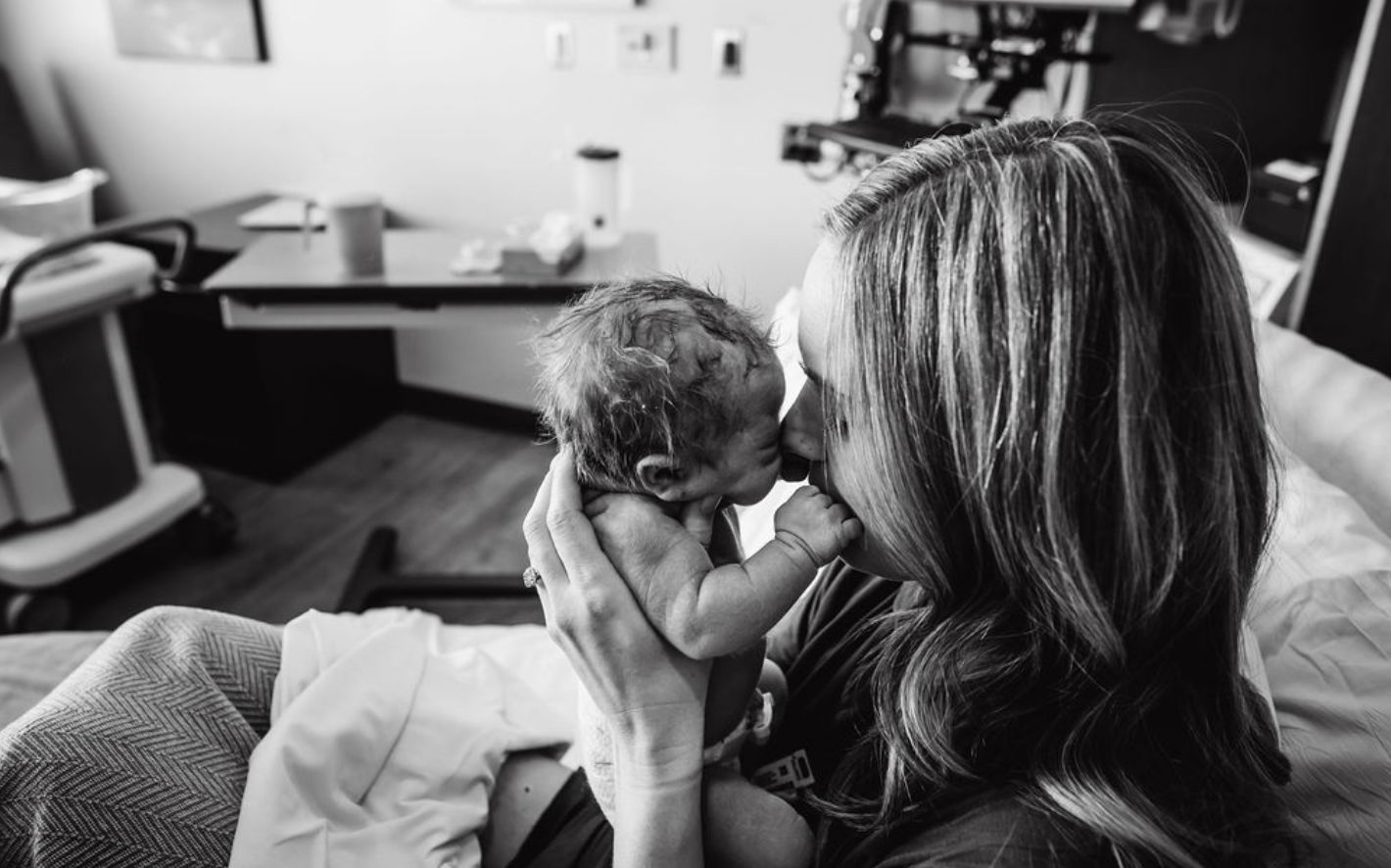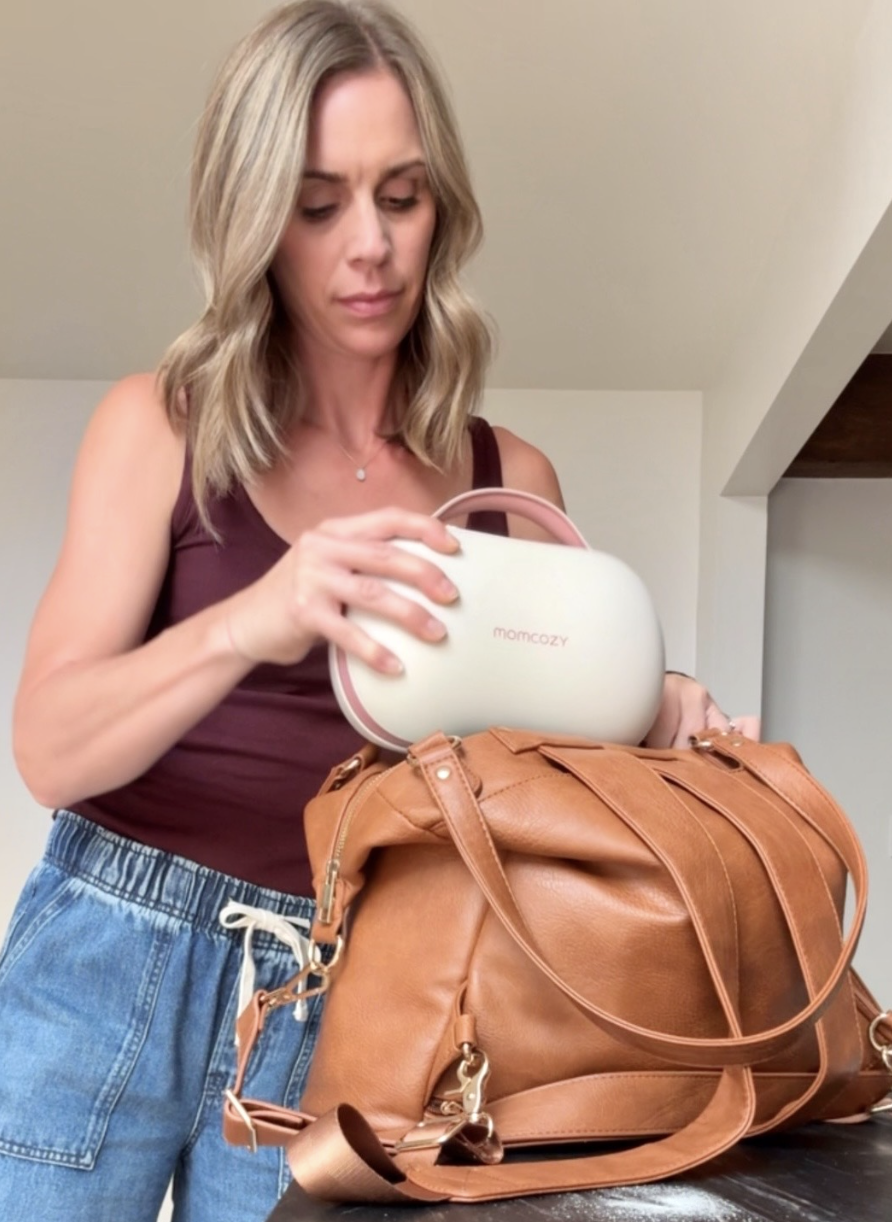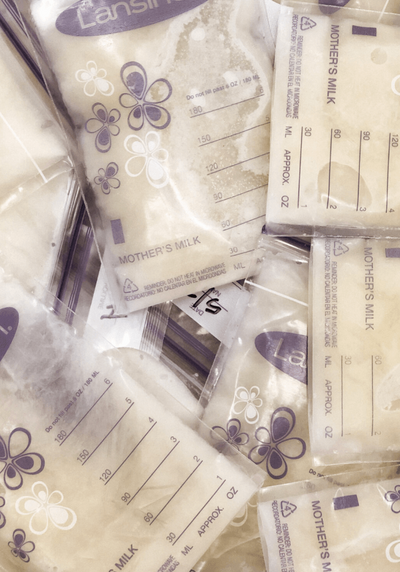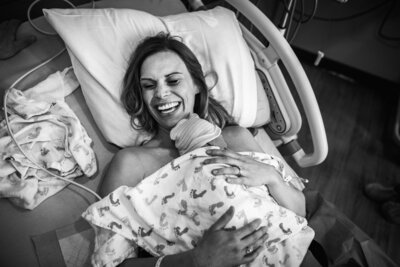


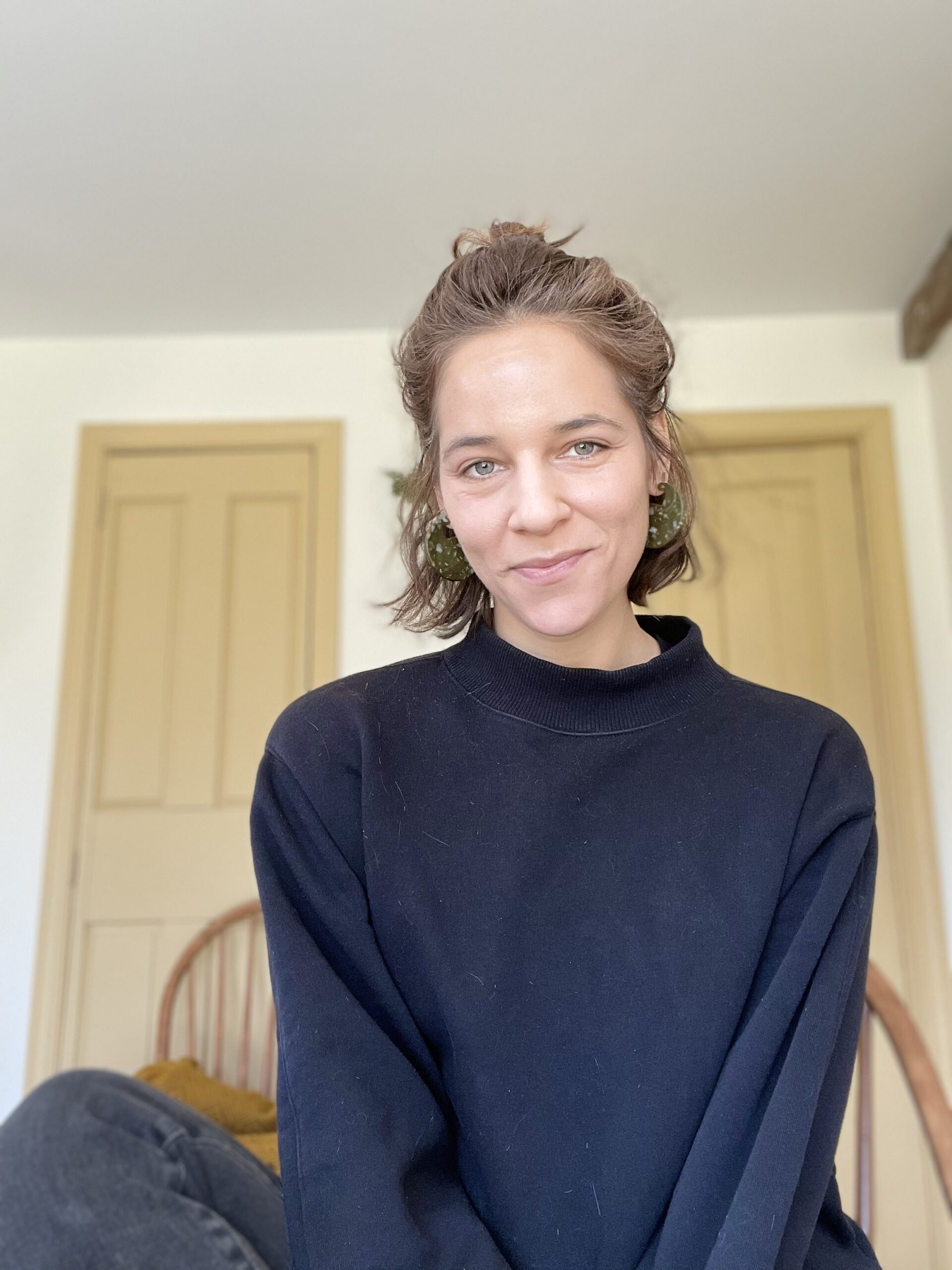


In this episode, I’m sitting down with Emily to walk through a birth & breastfeeding story that truly took some unexpected turns – from a super fast-moving labor that started out feeling empowering and intense, to a shift in momentum that led to more interventions than she had planned. She shares what it was like navigating that experience in real time, including the emotional and physical challenges of labor stalling, making decisions around pain management, and ultimately bringing her baby girl into the world after a 24 hour labor and unpredictable journey. But where this conversation really deepens is in the postpartum period.
Emily opens up about her breastfeeding journey and the confusion, frustration, and heartbreak she experienced when things weren’t working the way she expected. After 8 weeks of trying everything and not getting clear answers, she was eventually diagnosed with breast hypoplasia, also known as insufficient glandular tissue (IGT), a primary cause of low milk supply that’s not often talked about. We discuss the gaps in education and support around low supply, the emotional weight of feeding struggles, and what it looks like to redefine your expectations while still maintaining a meaningful breastfeeding relationship.
More from Emily Shapiro:
Connect with Emily on IG: @n.ight.garden or you can email her at emilyshapiro1@gmail.com
Her birth + breastfeeding resources include:
Helpful Timestamps:
- 00:00 Low Milk Supply
- 01:46 Welcome Emily Shapiro
- 04:25 Birth Plan and Hospital Reality
- 09:56 Arriving at 7 Centimeters
- 12:45 Water Tub Relief and Transition
- 14:59 Labor Stalls & Making Decisions
- 25:49 Postpartum: Low Supply Challenges
- 32:45 Breast Hypoplasia Diagnosis Explained
- 44:51 Takeaways on Low Supply
- 47:04 Resources and Where to Connect
About your host:
🩺🤰🏻Lo Mansfield, MSN, RNC-OB, CLC is a registered nurse, mama of 4, and a birth, baby, and motherhood enthusiast. She is both the host of the Lo & Behold podcast and the founder of The Labor Mama.
For more education, support and “me too” from Lo, please visit her website and check out her online courses and digital guides for birth, breastfeeding, and postpartum/newborns. You can also follow @thelabormama and @loandbehold_thepodcast on Instagram and join her email list here.
For more pregnancy, birth, postpartum and motherhood conversation each week, be sure to subscribe to The Lo & Behold podcast on Apple Podcasts, Spotify, or wherever you prefer to listen!
👉🏼 A request: If this episode meant something to you, would you consider a 5 star rating and leaving us a review? Yes, we read them, and yes, they help keep L & B going! ♥️
Connect with Lo more on: INSTAGRAM | TIK TOK | PINTEREST | FACEBOOK
Disclaimer
Opinions shared by guests of this show are their own, and do not always reflect those of The Labor Mama platform. Additionally, the information you hear on this podcast or that you receive via any linked resources should not be considered medical advice. Please see our full disclaimer here.
Additionally, we may make a small commission from some of the links shared with you. Please know, this comes at no additional cost to you, supports our small biz, and is a way for us to share brands and products with you that we genuinely love.
Produced and Edited by Vaden Podcast Services
Transcript
I was pumping around the clock and I was only pumping maybe about a third of an ounce.
:It wasn't until she was about eight weeks old that I finally went to another lactation consultant I had seen previously, and she suggested that I might have IGT, which is insufficient glandular tissue.
:Mm-hmm.
:For breast hypoplasia, which I had never heard of before.
:Motherhood is all consuming.
:Having babies, nursing, feeling the fear of loving someone that much, and there's this baby on your chest, and boom, your entire life has changed.
:It's a privilege of being your child's safest space and watching your heart walk around outside of your body.
:The truth is.
:I can be having the best time being a mom one minute, and then the next, I'm questioning all my life choices.
:I'm Lo Mansfield, your host of the Lo and Behold podcast, mama of four Littles, former labor and postpartum RN, CLC, and your new best friend in the messy middle space of all the choices you are making in pregnancy, birth, and motherhood.
:If there is one thing I know after years of delivering babies at the bedside and then having, and now raising those four of my own, it is that there is no such thing as a best way to do any of this.
:And we're leaning into that truth here with the mix of real life and what the textbook says, expert Insights and practical applications.
:Each week we're making our way towards stories that we participate in, stories that we are honest about, and stories that are ours.
:This is the lo and behold podcast.
Lo:Welcome.
Lo:Welcome to The Low and Behold Podcast.
Lo:You are back today for another birth story episode.
Lo:I have Emily Shapiro with me today.
Lo:She is a farmer, she's an artist, she's an educator.
Lo:She lives in Providence, Rhode Island, which you will hear kind of impacted her birth story too, and what was available to her, which is always interesting to hear.
Lo:Emily is going to share the birth story, like I said, but she is also going to get into some significant postpartum and breastfeeding challenges, and I really would ask and encourage you to stick around and hear the postpartum part as well.
Lo:The birth story is beautiful and actually incredibly unique and had a lot of things go on that maybe were unexpected.
Lo:then her breastfeeding journey was also unexpected.
Lo:And I think what she has to share, not, I think, I know that what she has to share is incredibly valuable for all of us.
Lo:And as she found in her own story, it is just not spoken about enough and, and we need to change that.
Lo:So I know Emily and myself both are just hoping that this episode can be a source of information for any moms moving forward who go through any type of breastfeeding challenges like she did in her own fourth trimester.
Lo:Emily, thank you so much for being here with me today.
Lo:I am super excited to hear your story, especially 'cause you kind of reached out on Instagram and I felt like yes, we need to hear your story.
Lo:You have some stuff that's really important and really valuable to share.
Lo:So why don't you go ahead and introduce yourself to everyone real quick, and then we will get into that story.
Emily:Fantastic.
Emily:I'm Emily.
Emily:I live in Providence, Rhode Island and I'm a, a farmer and an educator.
Emily:And yeah, my birth story.
Emily:Just to jump right in.
Emily:Yeah, please.
Emily:I had actually a super hard pregnancy.
Emily:Everything was healthy the whole way through, and you know, it looked good.
Emily:But, I was really, really sick, for kind of the majority of the pregnancy I was dealing with.
Emily:Some like really, bad abdominal pain like, but GI related.
Emily:And that was really a bummer.
Emily:And so I just.
Emily:Did not enjoy being pregnant at all.
Emily:Mm-hmm.
Emily:Until kind of the very end.
Emily:And then I was almost, I was almost two weeks late.
Emily:41 weeks and five days was when I went into labor.
Emily:And yeah, the last couple of weeks, like after, once I passed my due date, actually felt really nice.
Emily:Like, I think I was just feeling.
Emily:Pretty close to the baby at that point.
Emily:Mm-hmm.
Emily:And, just kind of enjoying being gigantic and like, just continued to get bigger, you know, past my due date, of course, until the very end.
Emily:And, you know, just felt like really in my body in a nice way that I, I hadn't felt throughout the pregnancy.
Emily:And it was a really nice end cap for that kind of difficult.
Emily:Almost 10 months.
Emily:And throughout my pregnancy, and I think especially because throughout my pregnancy I'd had a lot of fear around labor and delivery and, I was hoping to have an unmedicated labor and I did a lot of research around just the physiological.
Emily:Experience, experience of labor and delivery.
Emily:One person that I leaned on really heavily was a midwife called Wao, Diane Bartlett, who writes about the holistic stages of labor and just what happens, you know, in your body if you are unmedicated and there are, fewer interventions.
Emily:I had actually hoped to give birth at home, but that ended up not being.
Emily:A possible for us in Rhode Island, there are very, very few home birth, midwives.
Emily:Mm-hmm.
Emily:So I delivered at a very tiny little hospital called Landmark Hospital with a midwifery team.
Emily:And, yeah, it was just a, a whirlwind.
Emily:I worked on the day that I went into labor.
Emily:I'm a farmer, as I said, and I was planting chamomile, and it was, you know, April 30th.
Emily:Today I went into labor.
Emily:My baby was born on May 1st.
Emily:So it was really, if, you know, if you're a gardener or a farmer, like that is a very busy moment.
Emily:So I was working right up until the day that I went into labor and I had my first contraction around 6:15 PM I was, yeah, sitting on the stoop with my husband and a friend of ours and,
Emily:I figured, you know, we went upstairs.
Emily:I didn't say anything while my friend was there because I was like, nah, I dunno, you know?
Emily:Yeah.
Emily:And we just hung out for another 20 minutes or something and I had maybe one or two other contractions while she was at, while she was there.
Emily:And I told my husband when we went upstairs and you know, those few first contractions were maybe 10, 15 minutes apart.
Emily:I was like, I think maybe something's happening, but like, it's my first baby and I figured I would have, you know, 12 hours before things ramped up or, or longer maybe.
Emily:Especially because I was so late, you know, I had convinced myself I would have this like very long, latent labor stage and,
Emily:instead, things like really, really quickly ramped up.
Emily:I think within an hour or so, my contractions were about five minutes apart.
Emily:And, within two hours, like we went on a walk around dusk, which was a little before 8:00 PM and my contractions were coming every like.
Emily:Two to two and a half minutes and lasting, you know, 60 seconds or so.
Emily:So things just like really ramped up way, way quicker than I had imagined.
Emily:Which was exciting.
Emily:And I think I had kind of psyched myself out thinking, okay, I'll have this like long.
Emily:Time.
Emily:And I had told friends, you know, because I had wanted to deliver at home, part of what I wanted was a kind of like community experience.
Emily:And like I would invite my friends over, or my mom over.
Emily:And I actually had been lucky enough to witness a friend of mine, give birth at home.
Emily:So in my head I was like, oh, I'll labor all night, and then tomorrow during the day, I'll like invite my friends over and you know, Joseph and my husband will cook a big meal.
Emily:You know?
Emily:But instead I just like really went so fast, into like just the kind of altered state of, of labor and, so by maybe nine or 10, I was like laboring pretty hard at home and god bless my husband.
Emily:He was just like so wonderful and helpful and just like, yeah, with me the whole time.
Emily:And I did want a lot of kind of like close hands on support, which I wasn't sure I would want that.
Emily:But, we called my doula.
Emily:I had a wonderful doula who we'd worked with throughout my pregnancy, and she was at another birth.
Emily:That's the worst.
Emily:Which was really sad.
Lo:It's
Emily:sad.
Emily:Yeah, it was sad.
Emily:I think.
Emily:In the moment, I was like, I don't care.
Emily:Mm-hmm.
Emily:But kind of looking back, I do wish that she had been able to be a part of it because I think our, you know, postpartum meetings with her might have been a little more, I don't know, integrated or meaningful or something.
Lo:Mm-hmm.
Lo:Mm-hmm.
Emily:But in any case, it's not her fault she was at another birth and that woman.
Emily:I think she was like three weeks early and I was two weeks late.
Emily:Yeah.
Emily:So she was like, I never thought you would go into labor on the same day.
Emily:Yeah.
Emily:And she had like just gone into labor or just gotten to the hospital with this other mother, you know, a couple of hours before.
Emily:so that was unfortunate.
Emily:But, very luckily, actually my beloved midwife who we had worked with, um, throughout my pregnancy.
Emily:Was, did happen to be on call because one thing I was worried about at the hospital was if she wasn't there and she, she was, happened to be there on Wednesday nights and I happened to go into labor on a Wednesday evening.
Lo:Yeah.
Emily:And I would've, you know, maybe not even been with a midwife.
Emily:I might have been with an ob, someone not even from the practice that I worked with.
Emily:So I was really grateful and I think that that made the fact that my doula couldn't be there.
Emily:A lot easier to swallow.
Emily:Mm-hmm.
Emily:Because I did have, Jen, so, yeah, labored, like really fast and hard at home.
Emily:And, I had thought that my husband would be like, all right, babe, we gotta go to the hospital.
Emily:Mm-hmm.
Emily:And I would be like, no, no, no.
Emily:We can wait a little longer.
Emily:But it was totally the other way around.
Emily:Like I, I was like, we are gonna go to the hospital now, and everything I had read and kind of prepared, was, you know, of course you hear first time moms often go to early.
Emily:And then you get there and you're disappointed to hear you're only, you know, two centimeters dilated, or they're like, you should go home.
Emily:And I really didn't want that to happen.
Emily:And also, I don't like hospitals very much.
Emily:And there, you know, I wanted to spend as little time in the hospital as possible laboring.
Emily:I was pretty, I just have some fear around being in the hospital and, I think by the end of my pregnancy I'd read so much about interventions and like how much women get.
Emily:Sort of push on them in the hospital often if they're not able to advocate for themselves or they're not educated about what is going on.
Emily:And heard enough stories from friends that I was feeling very like defensive or something about being in the hospital and being like, I need to be in charge or something.
Lo:Right?
Emily:but at the end of the day I was like, we gotta go to the hospital.
Emily:We, we drove, yeah, I think we got there around one 30 in the morning.
Emily:There was construction on the road.
Emily:So it was a, it was a rough, drive, but, we made it there and I was already like about seven centimeters when we got there.
Emily:Which was amazing.
Emily:Yeah, that was my goal.
Emily:I was like seven or eight, seven meters I hope.
Emily:Yeah.
Emily:So that was like exciting to hear and felt really good.
Emily:And you know, I think I was laboring really hard and when we got there I was like.
Emily:You know, tell me about the morphine.
Emily:Tell me about the nitrous.
Emily:Like, I was already sort of like, okay, how much longer?
Emily:And I knew I wanted to not to get an epidural if possible.
Emily:But I was kind of open to exploring other pain management options.
Emily:And I had a tens unit and I had little like, texture, wooden textured balls to speed to spike.
Lo:Yeah, yeah,
Emily:yeah.
Emily:Do they have a name?
Lo:I sometimes literally see them marketed as like spiky labor balls.
Lo:So I don't really think they do, but I could be wrong.
Emily:Well, that's what they're, so they're
Lo:great.
Emily:Yeah, so I had those and those were helpful.
Emily:The most helpful thing honestly was just like my husband, I think like, I was getting a little panicky at points and he was really helping me just like slow down and breathe.
Emily:And that was the most helpful thing.
Emily:But at the little hospital where I did deliver, there is a, a tub that is shared by the whole labor floor, and I was lucky enough that no one else was using it that night.
Emily:So my midwife suggested getting in the tub and.
Emily:That was really amazing.
Emily:Like by far the sort of high point of my labor.
Emily:I got into the tub, I'd been checked, I was, yeah, I was, I think I was seven centimeters at that point.
Emily:I had been laboring in the little hospital room for a bit.
Emily:And so I, I got in the tub and.
Emily:I was just like elated.
Lo:Mm-hmm.
Emily:To be in the tub.
Emily:It was so, it felt so good.
Emily:I'd had a lot of, back pain, back labor and it just sort of went away.
Emily:It really dissipated in the tub and I remember just being like, everybody should get in the, do you guys.
Emily:And just feeling like it was just like so comfortable.
Emily:It was so warm.
Emily:The lights were low and Joseph put on some music and, it was just really amazing.
Emily:And I stayed in the tub for just a couple of hours and I was progressing really, really quickly at that point.
Emily:And I remember that before I got in the tub.
Emily:When I kind of first got there, I had said to my midwife.
Emily:I'm very scared about transition because I'm already feeling like this is really, really intense.
Emily:I don't know how I'm gonna make it through that.
Emily:That was like something that I just had in my head and I was like, I don't know how long it's gonna last.
Emily:Like, I'm really scared about that.
Emily:And she checked me while I was in the tub and I was nine centimeters dilated.
Emily:And she was like, Emily.
Emily:You're, I know you were really scared about transition, but like, this is it, you're already doing it, you're doing it, you're it like, you're okay because I, you know, and I was like, all right, I'm okay.
Emily:I'm in the tub.
Emily:Like, I feel okay.
Emily:You know, it was hard, of course.
Emily:But it felt like the benefits.
Emily:Really helped bolster me, I think, and like give me energy and comfort.
Emily:And it felt a little bit like homeier or something than being in the hospital room, which felt kind of uncomfortable and sterile.
Emily:But unfortunately at this hospital, you are allowed to labor in the tub, but you're not allowed to deliver.
Emily:And so she had checked me, I was like nine and half centimeters and I was feeling pushy, and just kind of like had that reflex and was starting to push even though the baby was pretty high up, I think, negative one or zero station at that point.
Emily:But, I was feeling like I had to push and so I was pushing and, my midwife said, you know, I think we have to get you out of the tub, because it was maybe three 30 in the morning at this point.
Emily:She was on call until 7:00 AM We really thought the baby was gonna be there before she left.
Emily:Spoiler alert, she was, she didn't come fly before my midwife left.
Emily:But we thought that she would, because everything was going so quickly and, you know, my husband did say like, maybe let's try like another few contractions in the tub.
Emily:And Jen, you know, my midwife was like, all right, another few contractions.
Emily:And you know, the one thing my husband and I of course have like debriefed.
Emily:My labor many times.
Emily:And the one thing that he says every time is like, man, I wish I had pushed harder for you to stay longer in the tub.
Emily:Because basically what happened was, you know, I was in 9, 9, 9 and a half centimeters dilated in the middle of transition.
Emily:And I was, I had to like, stand up, get out of the warm tub.
Emily:And they wrapped me in towels and I had to like walk down the hallway of the hospital to my little room, which was at the end of the unit.
Emily:And I think that it was just sort of like too big of an ask, for my body in that moment and sort of threw my hormones off, or I don't, I don't know, just like took me outta the.
Emily:The natural progression I had been and like the, yeah, the momentum, just kind of got like stopped because I was just like, whoa, I'm in now in a totally different environment.
Emily:Like this sort of like warm womb, like dark tub environment is gone.
Emily:And, so we went back to the room.
Emily:And, I just basically stopped progressing.
Emily:I was just laboring really, really hard and I stayed at nine and a half centimeters and zero station for the next, I think two or three hours, just like having the most intense.
Emily:Contractions I had had to that point, like, and really fast, like very little, little break.
Emily:I basically like stayed in transition for a really long time, which was like what I was afraid of.
Emily:What you
Lo:were scared of?
Lo:Yeah.
Emily:Um, and I tried, you know, various positions.
Emily:I tried going in the shower, which I didn't like.
Emily:I tried, you know, I tried the nitrous oxide.
Emily:Which I didn't care for.
Emily:And kind of nothing was really offering me any relief and I just couldn't get comfortable.
Emily:I couldn't find a position that felt like I could, continue to manage mm-hmm.
Emily:What I was experiencing.
Emily:And finally around 6:00 AM I think.
Emily:I turned to my husband and I was like, I think I need the epidural, because I just was feeling like, I don't know how much longer.
Emily:I just didn't think I could continue.
Emily:And I was getting, like I said, I was getting panicky and just feeling like I was suffering.
Emily:And.
Emily:Yeah.
Emily:I mean, one reason why I had wanted to labor at home or in a birth center, and there actually are no birth centers in the state of Rhode Island, unfortunately.
Lo:Really?
Emily:Yeah.
Emily:Was because I didn't want the option of an epidural.
Emily:Yeah.
Emily:Because I, I thought, well.
Emily:I might get to a point where I want one and if I have the option, and I had made a plan with my husband, like if I started asking for it, he would push back a little bit and we had like a code word.
Emily:And, but I was just at the point where I was like, I, I need it.
Emily:Like I, I'm suffering.
Emily:I can't, like this is not, nothing is changing.
Emily:And it's been like hours at this point.
Lo:Yeah.
Emily:And I, you know, I spoke with my midwife about it and, and she was really like, helpful and reassuring and kind of just like, I think that this is the right sort of therapeutic decision because you need a break.
Emily:It's, you know, it's been only been 12 hours at that point mm-hmm.
Emily:That I'd been in labor, but I had been in like very, very intense labor basically the whole time.
Emily:Like for 10 hours, 10 of those 12 hours.
Emily:And,
Emily:and, you know, everything was like almost all the way open.
Emily:The baby was still pretty high and she, she said, you know, I think if you get the epidural you'll be able to rest a little bit and then like baby will come real quick.
Emily:So we asked for, the epidural is about 6:00 AM.
Emily:And because of the size of the hospital, there was not an anesthesiologist, on the premises.
Emily:So I get finally got to the point where I was like, okay, gimme the drugs.
Emily:And they were like, cool.
Emily:It'll be about an hour.
Emily:Until he gets here.
Emily:Mm-hmm.
Emily:Because he was just on call from somewhere.
Lo:Yep.
Emily:And so that was probably like the most difficult.
Emily:That was a very difficult hour.
Emily:And in that time, my midwife also who she, her call ended at seven.
Emily:So, there came a new midwife.
Emily:The anesthesiologist did finally get there.
Emily:I actually had a really, unfortunately, like a very bad experience with this anesthesiologist, which was kind of the low point.
Emily:And the only man that I interacted with, throughout, besides my husband of course, throughout my stay in the hospital was this anesthesiologist.
Emily:And he, was just really unprofessional.
Emily:Unfortunately, but I got the epidural and instead of the baby like coming then quickly because I had some time to rest and relax, my labor just like really stalled and slowed down.
Emily:So then it was sort of many hours of kind of waiting around and, the midwife who came in, Kirsten eventually suggested we try some Pitocin.
Emily:Because I had at that point been at nine and a half centimeters.
Emily:You know, this is maybe around noon.
Emily:So it's been nine hours or something that I'm like fully efface and almost fully dilated, like pretty much fully dilated and, which is not typical.
Lo:No, it's
Emily:not.
Emily:And
Lo:not at all.
Emily:Yeah.
Emily:And, there was a little bit of deceleration of the baby's heart rate.
Emily:Mm-hmm.
Emily:Some contractions also, because I was two weeks late almost.
Emily:She was concerned, my placenta like wasn't up to the task of mm-hmm.
Emily:You know, continuing.
Emily:So first I had IV fluids to kind of like hydrate my placenta basically.
Emily:Mm-hmm.
Emily:And then she suggested we try Pitocin.
Emily:Which I really didn't wanna do, but, and then of course I had like lots of feelings about, oh, well if I hadn't have gotten the epidural, then I,
Lo:yeah.
Emily:Wouldn't need the Pitocin.
Emily:And, that I try not to go down that road obviously, but, so that was present with me and I was like, well, if I turn that epidural off.
Emily:You know, maybe will things kind of kick up.
Emily:And she just, she basically told us that she thought there was a 0% chance of the labor, progressing quickly enough to, for her to be comfortable with.
Lo:Mm-hmm.
Emily:Without.
Emily:More intervention.
Emily:So we did
Lo:Were you still contracting on your own or had that spaced out?
Lo:Like were they farther apart?
Lo:Post epidural, all that too.
Lo:You said everything kind of just stopped.
Lo:Stopped.
Lo:Were stopped.
Lo:They
Emily:were farther apart.
Emily:Yeah.
Emily:Mm-hmm.
Emily:They were farther apart and less, intense.
Emily:Mm-hmm.
Emily:And they had been, and I think because the baby's heart rate had gone down with a couple of the contractions.
Emily:The midwife, although she then, then we sort of hydrated the placenta and that stopped her heart rate stabilized.
Emily:Mm-hmm.
Emily:So there wasn't too much worry, but, I think the midwife was worried, just didn't wanna wait that long.
Emily:Yeah.
Emily:Or that much longer.
Lo:Yeah.
Lo:And,
Emily:You know, she was like, it's really not typical that you would be in this stage of labor for this long.
Emily:And we just like wanna get things going and like Yeah, your body is like tired and probably won't be, I mean, eventually you'll have this baby without it, but you know, not in.
Emily:Not at a rate with which she was comfortable with.
Emily:And she, she was like, you know, and I think it's true at another hospital or with another provider, I might have ended up, getting a C-section mm-hmm.
Emily:Because of how slow things had gotten.
Emily:And so, but we did the Pitocin, we started really, really low.
Emily:And I think, I don't know what the units are that you get, but I think I got like three, that's low.
Emily:Eventually, and we started at one and then I kicked it up a little bit and, so that kind of kicked my contractions up and I did actually turn the epidural down because I had wanted to be able to move around.
Emily:And, it took a long time to get things kind of like back in motion but.
Emily:Eventually they did get started again, and I think, you know, by about 4:00 PM I felt the baby descend.
Emily:Like I had turned the epidural down.
Emily:Not that I was able to like have more sensation.
Emily:And I. I was like, oh, call the midwife in because like, I'm gonna push the baby out.
Emily:Like I can, I like think the baby's like ready to come out.
Emily:And so I pushed for a couple of hours, almost two hours.
Emily:And I will say this midwife, Kirsten was her name or is her name.
Emily:I hadn't worked with her.
Emily:I'd met her once in, during my pregnancy.
Emily:She was really amazing.
Emily:Like she was just such a, like soccer coach of a midwife and it was just really like very strong energy.
Emily:And like really helped me.
Emily:Yeah, shout out to Kristen or, but anyways, so.
Emily:Baby was born around, oh.
Emily:Oh, just before 6:00 PM
Lo:Okay,
Emily:so about a 24 hour mm-hmm.
Emily:Labor.
Emily:And I will never know.
Emily:I had my suspicions that had I been able to deliver in the tubs, I would've had a 12 hour labor, like with no intervention.
Lo:Right.
Emily:But I will never know if that would actually have happened or not.
Emily:But it was about a 24 hour labor and, and it's really like sort of my postpartum journey and specifically my breastfeeding Journey that I wanted to share.
Speaker:Okay.
Speaker:Quick pause for a second.
Speaker:I just wanna talk to you about breastfeeding.
Speaker:If this is something you are really hoping works out for the two of you, but you are also kind of low key.
Speaker:Wondering why so many moms say it was so much harder than expected.
Speaker:This is for you.
Speaker:I created the breastfeeding blueprint because I saw too many patients with a new baby on their chest and zero breastfeeding education to support the two of them in what was coming next.
Speaker:This is not something that you wanna walk into without information.
Speaker:Resources and a place to go to when you hit those inevitable bumps in the road.
Speaker:Successful breastfeeding stories start before birth, and good education means you walk into those first hours, those early days, and all the weeks and months that you are wanting to follow.
Speaker:Aware of what's normal, best steps, what's next, and how to handle challenges that might come your way.
Speaker:This course will help you understand your body.
Speaker:Your baby's body, how the two of you work together and what to do, look for or change when things are just not right.
Speaker:Milk supply, latching routines, pumping, sore nipples, C clogged ducks, bottles, it's all in here.
Speaker:And so much more if you want clarity, confidence, and education and support that will stick with you and your baby through all of it.
Speaker:The breastfeeding blueprint is it.
Speaker:Head to the labor mama.com/breastfeeding.
Speaker:It's also linked in your show notes.
Speaker:And use the code podcast at checkout to save 20% and get started right now.
Speaker:Alright, let's get you back to your episode.
Emily:But basically, you know, we had our beautiful golden hour baby latched perfectly right away.
Emily:And you know, I had thought during my pregnancy, like my goal was to exclusively breastfeed, probably, you know, for a couple of year, two to three years I would guess, like
Lo:mm-hmm.
Emily:You know, I was definitely like, we'll see how things go.
Emily:Hopefully it works well.
Emily:But she latched like beautifully right away.
Emily:It felt really good.
Emily:It felt really natural to me.
Emily:It wasn't very painful.
Emily:You know, and when we brought her home.
Emily:Continued to be just working really, really well and felt really easy and really good.
Emily:And we kept saying, my husband and I kept saying to each other like, thank God this is not, this is working so well.
Emily:Mm-hmm.
Emily:Like, I think this is going great.
Emily:And because we know, you know, many people have various kinds of issues, start learning how to breastfeed and the baby learning how to breastfeed.
Emily:Yeah.
Emily:So it just felt like.
Emily:Serendipitously, like so easy.
Emily:And, you know, maybe three or four days later brought her to the pediatrician for the first time and she hadn't lost a ton of weight, but, you know, a whatever, a normal amount enough that the pediatrician was like, you might wanna give her an ounce of formula, like.
Emily:If you don't want to, she's fine, but mm-hmm.
Emily:You know, I probably would.
Emily:And so we were like, we were worried a little bit, you know, it was like the very vulnerable first pediatrician.
Emily:Yeah.
Emily:First baby moment.
Emily:And called my doula.
Emily:And the doula, told me to.
Emily:Try hand expression, try all these things.
Emily:And I started to, to do that.
Emily:I had done some research, actually had your, breastfeeding course and that I had like, skimmed through before the baby was born.
Emily:But I hadn't really done a ton of preparation mm-hmm.
Emily:Preparation.
Emily:I tried hand expression and at that point it was maybe four days after the baby.
Emily:I born was born and my milk hadn't really like come in.
Lo:Mm-hmm.
Emily:Or at least it hadn't, it hadn't transitioned.
Emily:If, and, and I hadn't got that like full feeling.
Emily:Like I had colostrum.
Emily:I knew I was making something, but my breast just never like that.
Emily:I had expected something to happen.
Lo:Yeah.
Emily:And it didn't happen.
Emily:And we met with one lactation consultant about.
Emily:Eight days after the baby was born who did a weighted feed and baby was only getting, you know, maybe a half an ounce or something at that feed and.
Emily:She kind of told us we should start supplementing with formula.
Emily:I should start pumping and do this whole routine.
Emily:She like fitted me for flanges and, and everything.
Emily:And that was really emotional and to not really know what was going on or like why my milk hadn't come in.
Emily:And I was kind of just waiting and being like, okay, maybe tomorrow and every day that went on.
Emily:I felt like, you know, it had, my milk had kind of transitioned, but I just wasn't like engorged at all.
Emily:Mm-hmm.
Emily:And the baby didn't seem like super hungry or fussy.
Emily:She's a really mellow, mellow, chill little one.
Emily:But, and she wasn't losing weight, but she wasn't gaining, mm-hmm.
Emily:Quickly.
Emily:And, I saw, I think in the span of a week or something, I saw like three different lactation consultants and nobody could really tell me what was going on.
Emily:Everyone was like, just keep pumping, just keep trying, you know, and it was.
Emily:Like, surprisingly so, but incredibly heartbreaking for me just to feel like I didn't know I was pumping around the clock.
Emily:So I was working really hard.
Emily:We were triple feeding, so I was pumping, I was trying to nurse and then I would pump and my husband would give her a bottle.
Emily:And I was only pumping maybe about a third of an ounce.
Emily:Total every time.
Emily:And I was trying so hard to nurse and like very scared that she would reject the breast or, you know, start preferring the bottle.
Emily:So I was like keeping her at the breast and it, it kind of became this like, struggle, because she was hungry and unhappy and I was like, every time I would have to give her formula, I would feel.
Emily:I would just feel like sad and bad and like I was not able to provide for her.
Emily:And it was really, really heartbreaking.
Emily:I mean, and, and continues to be.
Emily:And we sort of just kept trying to figure it out and, trying to prioritize breastfeeding as much as possible.
Emily:While of course, like feeding her what she needed to be fed with supplementation.
Emily:And it wasn't until, I think she was about eight weeks old that I finally went to a lactation, another lactation consultant I had seen previously, but I had.
Emily:She just did a breast exam and up until then, like none of the lactation consultants say, I'll listen to my, the story.
Emily:And none of them had even really looked at my breasts.
Emily:And she suggested that I. I have IGT, which is insufficient glandular tissue.
Emily:Mm-hmm.
Emily:Or, breast hypoplasia, which I had never heard of before.
Emily:And I think.
Emily:some people might assume, if you haven't heard of IGT or breast hypoplasia, you can, I mean, basically the way you diagnose is a visual diagnosis.
Lo:Mm-hmm.
Emily:After, you know, if you don't make a lot of milk and then you have the visual characteristics, it's also called tubular breasts.
Emily:But I think there's an assumption that, it's like really, really obvious.
Emily:There are some visual characteristics like breast might be wider at the base.
Emily:So there's sort of like chronicle rather than round and like the nipple.
Emily:Mm-hmm.
Emily:A little bit bigger.
Emily:And often there's some asymmetry, which I don't have.
Emily:But I've since like done a ton of research
Lo:mm-hmm.
Emily:About it because.
Emily:That's just my personality.
Emily:And, almost all of the research on breast hypoplasia or tubular breasts is in the field of plastic surgery.
Emily:Because women come in with breasts that look a certain way and they're, they're like, well, they don't look.
Emily:Typical, like the typical beauty standard for breasts.
Emily:And so they want plastic surgery and, it turns out that these women also make less milk when they lactate.
Emily:And it was not obvious to me.
Emily:Like I, I, once I started researching and saw the images, I was like, oh yeah, okay.
Emily:I guess my breasts do look like that, but.
Emily:I never felt like they were there, there was anything wrong with them or, right.
Emily:Like, they were so different than other breasts that I would seek plastic surgery or, you know
Lo:Right, right.
Emily:Feel embarrassed about them or anything.
Emily:You know, they, I just thought they, that was what my breast looked like.
Emily:Um,
Lo:yeah.
Emily:And, so, and I even had a, another one of the lactation consultants I saw.
Emily:I reached out to her to be like, Hey, I have breast hypoplasia.
Emily:And she was like, Hmm, I don't think you have that because like, that looks crazy.
Emily:Like is basically what she said to me.
Emily:Like, that looks like very weird.
Emily:And, and I was like, okay, that's doesn't make me feel good.
Emily:And also,
Lo:yeah,
Emily:Like I think that I do like I do fit the characteristics.
Emily:And essentially what it is, is in, when I was in utero, the way that my chest wall developed, ended up restricting glandular development mm-hmm.
Emily:When I went through puberty.
Emily:And it, you know, it's a spectrum and will vary.
Emily:Person to person, person, how much glandular tissue you have and therefore how much milk you can make.
Emily:And I think because of my personality and I'm like a researcher and I'm like, really?
Emily:I really tried to get as.
Emily:Well resourced as I could around breastfeeding because I felt so strongly about maintaining the breastfeeding relationship with osi, my daughter, And I was able to maintain that relationship because I was like, okay, here's how I'm gonna do it.
Emily:I'm gonna use the slowest flow nipple.
Emily:I'm gonna like, you know, do what comes naturally to me.
Emily:I'm gonna nurse her to sleep like every time.
Emily:So she still associates the breast with comfort and we do have a breastfeeding relationship.
Emily:But I probably make, you know, between.
Emily:Five and 10 ounces a day, probably somewhere around eight ounces a day instead of, you know, the 30 or so ounces, she would need or she does need.
Emily:And she is about four months now.
Emily:So where, you know, mostly she's getting bottles of.
Emily:Formula, and some donor milk.
Emily:But, we're still nursing.
Emily:I'm still nursing her for comfort and I give her a pump throughout the day and give her a bottle of breast milk, at the end of the day.
Emily:So it's been like very long journey.
Emily:But the thing, you know, the kind of most important point and the thing that.
Emily:I wish I had heard, you know, when I was at first doing research about low supply, so many people, I mean, secondary low supply issues are so common and primary low supply issues are often hormonal.
Emily:And IGT is relatively uncommon, although I've learned, I think it's actually more common than, than people think.
Emily:And I actually know personally two other women who, one of them was diagnosed with IGT, one of them was not, but was just told like, you're not gonna be able to breastfeed.
Emily:We don't know why.
Emily:And she kind of gave up.
Emily:But I just wish that, you know, the first lactation consultant that we had seen at eight weeks, or sorry at eight days.
Lo:Eight days, yeah.
Emily:Had looked at my breast and said, maybe this could be something you should look into, you know, and, or perhaps, you know, my midwife or any of the doctors that I've seen for the past.
Emily:You know, almost
Lo:10 months, year,
Emily:20 years as I've had breast exams, you know, had ever been like, oh, you might have trouble breastfeeding, like just based on this visual diagnosis, you know?
Lo:Mm-hmm.
Emily:But certainly 10 through, through my pregnancy.
Emily:And, I don't think, because so much of the research is done in the field of plastic surgery,
Emily:oB GYNs and midwives aren't necessarily trained to, to see,
Lo:right.
Emily:Or to, to be able to diagnose this.
Lo:Yeah.
Emily:And lactation consultants, I mean, I saw three before one looked at my breast and I couldn't, I was, you know, googling.
Emily:The whole time, you know, my milk hasn't come in and dah, dah, dah, and I wasn't really able to find much of anything, and I've since learned that that's also a sign of IGT.
Emily:So if your milk doesn't come in right away and your breast might look a certain way and you can sort of look up online what it looks like.
Emily:But, I guess.
Emily:I was just told continuously, like, just keep pumping.
Emily:There's no reason why this isn't gonna work for you.
Lo:Mm-hmm.
Emily:And, that actually comes at a pretty high cost.
Emily:And like adds a lot of stress and a lot of like, feelings of failure or, you know, everyone says this should be working and it's not working.
Emily:And like I. Why or what I'm doing wrong.
Emily:And even though, you know, when I finally did get the diagnosis, it was emotional and I had to sort of grieve like, okay.
Emily:And I, and I continued to obviously mm-hmm.
Emily:Like.
Emily:Okay.
Emily:The reality is that I am not going to be able to make as much milk as my daughter needs.
Emily:But there was also a lot of relief because I was like, oh, okay.
Emily:I can't, the pumping isn't gonna make a difference.
Emily:Or like, you know, and they're like, like pharmaceuticals that I had tried that, you know, have maybe helped a little bit, but like not that much, you know?
Emily:I think, yeah, I don't know.
Emily:The moral of the story is sort of like, well, I really wish that there was more information about this out there.
Emily:And when I was doing my research and I, I listened to other podcasts and, you know, lots of people talking about how pediatricians aren't trained in lactation and they push formula and like.
Emily:The only indication that you're not making enough milk is if your baby's not having enough wet diapers or if they're losing weight.
Emily:And my baby was having enough wet diapers and she wasn't losing weight, she was not staying on her curve.
Emily:She wasn't gaining quickly enough, but she wasn't losing.
Emily:And so I could kind of be like, well, maybe I am making enough film.
Emily:Like I just didn't
Lo:mm-hmm.
Emily:Know because I couldn't see, and I think IGT.
Emily:Oftentimes is sort of brushed over when talking about low supply issues.
Emily:If you're, yeah, I, I just hadn't heard anything about it until I was eight weeks postpartum and,
Emily:it feels like there was a dearth of information or like voices that I could turn to.
Emily:In those very early, like very vulnerable weeks that would give me any kind of information about what I was going through.
Emily:And I have since found, someone else on Instagram, low supply mom.
Lo:I love her.
Emily:Yeah, she's great.
Emily:Who's really wonderful.
Emily:And, I ended up talking to her a little bit, And she was just, yeah, just really great and really, really knowledgeable and had had a similar, experience to me where she didn't have a lactation consultant that looked at her breast until mm-hmm.
Emily:You know, 10 weeks or something.
Emily:And she ended up becoming an I-D-C-L-C.
Emily:Like based on that experience, to, primarily to help other women with IGT or other supply issues.
Emily:So she was really wonderful.
Emily:But, you know, I, I, I think there, there is a kind of a dearth of voices out there and, it remains to be like a pretty emotional journey for me and.
Emily:I, we are like maintaining our breastfeeding relationship and I hope to continue breastfeeding for as long as my daughter will take the breast.
Emily:And while also supplementing of course.
Emily:And, yeah, I just, I felt like at this point as I sort of synthesize.
Emily:The last four months and how the journey has gone.
Emily:And my hopes about breastfeeding and having to adjust my expectations and kind of just like get comfortable with the fact that I have had to supplement and like that's what's best for my child.
Emily:And so of course I'm not gonna not do that.
Emily:But,
Lo:yeah.
Emily:I just wish that there had been more voices that I could have turned to, and I am feeling now kind of like this is probably more common than people realize, and it's not like the only podcast I could find that had real information about.
Emily:Hypoplasia and what it is and how you diagnose.
Emily:It was, this podcast, which is intended for, um, lactation counselors in training, and they interviewed a woman who's a breast expert and a doctor, and she also was like, oh, you can tell right away because people with IGT, like their breasts look unattractive.
Emily:Which also I think the language is complicated and like, yeah, really, and also not true necessarily.
Emily:And like, I had no idea.
Emily:And you know, the lactation counselor who diagnosed me, it was like, I think that you might have this.
Emily:It wasn't like, oh, I walked in and she was like, oh, you have igt, you know.
Emily:I think you might have this.
Emily:And so I think there's a lack of information about the kind of gradient of visual presentation, that might be helpful for people to know as they kind of like figure out what's going on, with them.
Lo:Thank you for sharing all of that.
Lo:I know it's really vulnerable and you're still in it.
Lo:Your girl's only four months old, so obviously, like you said, this relationship is ongoing and so I'm sure it still comes with some highs and lows while you're still right in the middle of it.
Lo:So thank you.
Lo:I did wanna, I know you said I don't know what the moral is.
Lo:I think one, the moral is just talking about this more because I found in my own education.
Lo:Into low supply, just learning as ACL C. And I love low supply mom Kaya, by the way, she's wonderful on this topic.
Lo:I have learned so much from her about this.
Lo:But low supply in general is wildly like underdiagnosed.
Lo:Like a lot of stuff says oh three to 5%, and it seems like numbers really could be more like 10 to 15 depending on kind of what you're looking at.
Lo:So that right there is kind of a problem, I think with prevalence versus, how much it's being spoken about.
Lo:Like that's a big number, a big potential number if you will.
Lo:And so we need to be talking about a lot more.
Lo:And then you did mention the words, primary causes and secondary causes of low supply.
Lo:I think that's actually a really valuable thing for those of you listening out there and getting ready to breastfeed as well.
Lo:If you're gonna meet with someone, if you're going to do an online course, like see if that kind of stuff is included, that there's a low supply discussion, a whole, like a comprehensive one.
Lo:And that if they get into that, because those primary and secondary causes, there's quite a few different ones, and sometimes we have two at the same time.
Lo:And all of this can, be an indicator for why we maybe don't have enough supply.
Lo:And so I think sometimes it's just like baby doesn't have a tongue tie or you're not pumping enough.
Lo:Like there's some big things that we jump right to and the rest kind of trickles away.
Lo:But there's quite a few things on those lists of what can lead to low supply and they don't really get spoken about a lot.
Lo:Which is what you found IGT is on that list of causes because I think it's less common, it just.
Lo:Doesn't really present at the forefront of a lot of the supply conversations, but it's obviously a part of the supply conversation.
Lo:So to me, the moral is take some of this vocabulary, take some of this awareness and use it to educate yourself.
Lo:Just not in, not from a place of fear of it's.
Lo:X, Y Z's gonna happen to me, but more just that awareness.
Lo:So you know, maybe you go to an appointment and if this were to be you and you can say, Hey, could it be this, could it be this?
Lo:And just not feel like you're shooting in the dark and have no idea why something everyone said should be working isn't working right now.
Lo:So I just, yeah, I'm grateful to you and I agree.
Lo:I think this needs to be out there and so I appreciate your vulnerability For sure.
Lo:It's needed.
Lo:I know you mentioned a couple different, we'll include low supply mom in the show notes 'cause she's excellent.
Lo:And then the midwife that you talked about related to your birth stuff, book materials, anything specific you loved or anything else in your education.
Emily:She is on a bunch of podcasts and I can look up the names and send you the details of that.
Emily:Or do you want me to look them up now so we can have them on the recording?
Lo:No, you can.
Lo:Yeah, you can send them over.
Lo:Okay.
Lo:To me
Emily:whenever, yeah.
Emily:Wao, Diane Bartlett is her name.
Emily:And I read a blog post that she wrote called The Holistic Stages of Labor.
Lo:Mm-hmm.
Emily:Or the Holistic Stages of Birth, I think.
Emily:That was really kind of transformative and also just kind of comforting to me.
Emily:Mm-hmm.
Emily:When I was in the later stages of my pregnancy, and that you can just Google, but then I, I kind of found her name and she's spoken on a few podcasts and she has some like YouTube videos as well.
Lo:Okay.
Emily:So she's just kind of floating around out there.
Lo:Okay.
Lo:That sounds great.
Lo:We can dig into some of that too.
Lo:'cause it sounds, yeah, it sounds like right up my alley too, and I've not heard of that.
Lo:So
Emily:yeah, it's really amazing.
Emily:It's very, like, it's a little like woo woo, and really up my alley, but, a lot of it is about just kind of like.
Emily:The altered state of labor and kind of like crossing the veil to go somewhere and get your baby and then bring them earth side.
Emily:And it, it felt just really like magical and an antidote to a lot of what I was experiencing clinically when I would go, like for my appointments and stuff.
Lo:Okay, that's perfect.
Lo:And then if someone wants to reach out to you and ask you questions or just get your input, support, love, whatever, is there a specific place they could reach you online?
Emily:Always.
Emily:Instagram is great and that, I'll put it in the, is there a chat?
Emily:Yeah.
Emily:That is at Knight Garden.
Lo:Okay.
Emily:N IHT Garden or, okay.
Emily:My email, um, which is, uh, Emily Shapiro one at gmail com.
Lo:Okay.
Lo:That works.
Lo:We can add those to show notes too, just in case.
Lo:And then last question can be about anything.
Lo:It doesn't have to be about what we talked about today, but it can be, what's something in your life right now that's just sparking a ton of joy for you?
Emily:Oh, just my baby girl.
Emily:Your
Lo:girl?
Emily:Yeah.
Emily:She's so sweet and.
Emily:Just, I feel like this is such a fun stage now we've, you know, passed the fourth trimester and she is just, every, every day I'm like, oh, you are doing something new today.
Emily:And more aware of, you know, and just interacting in a new way.
Emily:And, also comes with a twinge of sadness.
Emily:'cause I. I feel like every day I am also like, okay, goodbye OSI that I knew and hello new baby.
Emily:You know?
Emily:So that's, that's really fun.
Emily:And yeah, just like learning, learning her what makes her laugh and, and like what we like to do together.
Emily:It's really fun.
Lo:That's perfect.
Lo:Well, thank you for your time today.
Lo:Thanks so much.
Lo:And go enjoy that girl.
Emily:Yeah.
Emily:Thank you.
Emily:Thank you so much.
:Thank you so much for listening to the Lo and Behold podcast.
:I hope there was something for you in today's episode that made you think, made you laugh or made you feel seen.
:For show notes and links to the resources, freebies, or discount codes mentioned in this episode, please head over to lo and behold podcast.com.
:If you aren't following along yet, make sure to tap, subscribe, or follow in your podcast app so we can keep hanging out together.
:And if you haven't heard it yet today, you're doing a really good job.
:A little reminder for you before you go, opinions shared by guests of this show are their own, and do not always reflect those of myself in the Labor Mama platform.
:Additionally, the information you hear on this podcast or that you receive via any linked resources should not be considered medical advice.
:Please see our full disclaimer at the link in your show notes.