




Join YBYB: www.thelabormama.com/birth & use the code PODCAST to save 20%
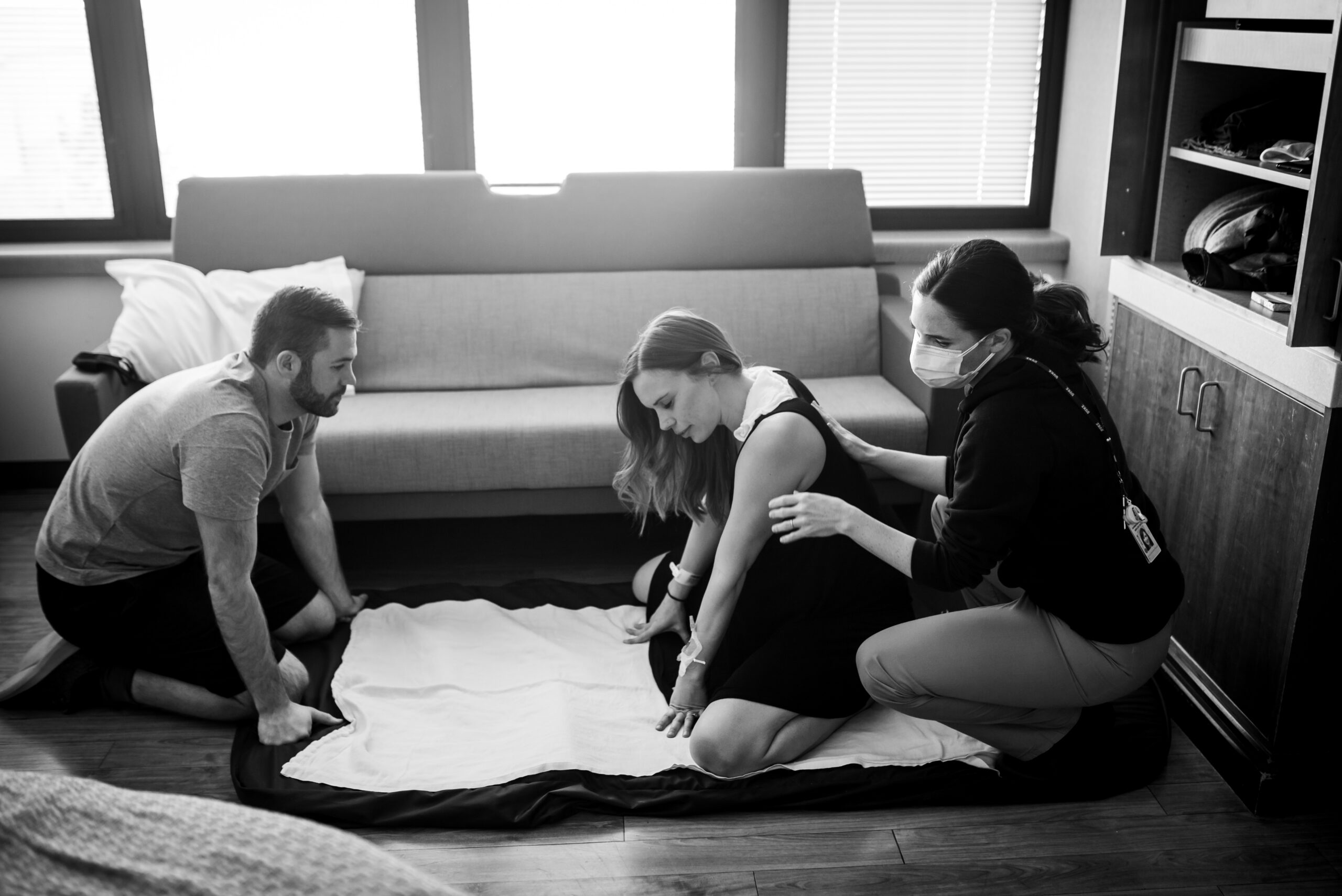
In this special Q&A episode, I’m joined by a very requested guest – my husband, Kelvin! We’re talking all about birth partner prep, postpartum prep, parenting, and what it’s really looked like for us to navigate birth prep for four babies, marriage, and family life together. We share how we prepared for our first birth, why taking a birth class together was so valuable, what Kelvin thought about unmedicated birth, and how he learned to step into the birth partner role with confidence. We also talk through practical ways partners can show up during labor, why flexibility matters so much, and how preparing together can completely change the birth experience.
We also get honest about postpartum life, bringing home your first baby, learning how to communicate in a new season, and figuring out roles as your family grows. Kelvin shares his perspective on fatherhood, what he’s loved most about becoming a dad, and some of the harder parts of parenting in the trenches right now. This episode is full of laughter, real talk, and encouragement for couples who want to feel more connected, more prepared, and more confident heading into birth and beyond.
More from this episode:
Listen to Episode 10: The Emotional Signposts of Labor (an Episode for Every Birth Partner to Hear)
Grab the book: Go the F to Sleep
Helpful Timestamps:
- 00:00 Q & A with Kelvin
- 07:48 Birth Prep Questions Begin
- 08:14 Early Birth Preferences
- 12:20 Unmedicated Plan and No Doula
- 15:51 Dad’s Role in the Room
- 18:06 Boundaries and Showing Up
- 27:17 Labor Roles That Help
- 33:53 Postpartum Expectations
- 39:22 Would You Change Anything
- 41:23 Gaining Confidence With Each Birth
- 43:20 Dad Life
About your host:
🩺🤰🏻Lo Mansfield, MSN, RNC-OB, CLC is a registered nurse, mama of 4, and a birth, baby, and motherhood enthusiast. She is both the host of the Lo & Behold podcast and the founder of The Labor Mama.
For more education, support and “me too” from Lo, please visit her website and check out her online courses and digital guides for birth, breastfeeding, and postpartum/newborns. You can also follow @thelabormama and @loandbehold_thepodcast on Instagram and join her email list here.
For more pregnancy, birth, postpartum and motherhood conversation each week, be sure to subscribe to The Lo & Behold podcast on Apple Podcasts, Spotify, or wherever you prefer to listen!
👉🏼 A request: If this episode meant something to you, would you consider a 5 star rating and leaving us a review? Yes, we read them, and yes, they help keep L & B going! ♥️
Connect with Lo more on: INSTAGRAM | TIK TOK | PINTEREST | FACEBOOK
Disclaimer
Opinions shared by guests of this show are their own, and do not always reflect those of The Labor Mama platform. Additionally, the information you hear on this podcast or that you receive via any linked resources should not be considered medical advice. Please see our full disclaimer here.
Additionally, we may make a small commission from some of the links shared with you. Please know, this comes at no additional cost to you, supports our small biz, and is a way for us to share brands and products with you that we genuinely love.
Produced and Edited by Vaden Podcast Services
Transcript
Motherhood is all consuming.
:Having babies, nursing, feeling the fear of loving someone that much, and there's this baby on your chest, and boom, your entire life has changed.
:It's a privilege of being your child's safest space and watching your heart walk around outside of your body.
:The truth is.
:I can be having the best time being a mom one minute, and then the next, I'm questioning all my life choices.
:I'm Lo Mansfield, your host of the Lo and Behold podcast, mama of four Littles, former labor and postpartum RN, CLC, and your new best friend in the messy middle space of all the choices you are making in pregnancy, birth, and motherhood.
:If there is one thing I know after years of delivering babies at the bedside and then having, and now raising those four of my own, it is that there is no such thing as a best way to do any of this.
:And we're leaning into that truth here with the mix of real life and what the textbook says, expert Insights and practical applications.
:Each week we're making our way towards stories that we participate in, stories that we are honest about, and stories that are ours.
:This is the lo and behold podcast.
Lo:I am so excited for today's guest, you guys, for the first time ever, Kelvin.
Lo:My husband is joining me on the podcast.
Lo:I have been begging him to join me forever.
Lo:I've dropped questions and Instagram stories like, Hey, what would you wanna know?
Lo:What would you wanna hear from him?
Lo:And we've got a lot about birth prep that people wanna hear about parenting stuff, roommate's, parents, postpartum stuff, raising kids, all the things.
Lo:So today I really just want you guys to get to know him.
Lo:And then we're gonna get into some of the birth prep stuff and some of that kind of birth.
Lo:Stuff that the birth partner can be thinking about.
Lo:His experiences is with us having kids, all of that stuff, we're gonna start there and then depending on how it goes, I'm gonna make him come back and join me again.
Lo:So, Kelvin, why don't you go ahead and just kinda introduce yourself.
Lo:I mean, everyone knows you're my husband, but whatever else you wanna share, and then we'll just get into it.
Kelvin:Yeah.
Kelvin:Maybe I'll start by saying, I guess I'm just mad that I'm not the first male guest.
Kelvin:Apparently somebody beat me to the punch.
Kelvin:but yes, so happily married to Laura for over 13 years and yeah, my name's Kelvin and some people call me the labor daddy.
Kelvin:Actually one person, just star friend
Lo:writer from college.
Kelvin:He a shout out, shout out writer from college.
Kelvin:I think he probably has the handle saved on Instagram, for when I jump into the business.
Kelvin:But yeah.
Kelvin:I've worked for the same company since college, which is maybe rare these days.
Kelvin:It's called Accenture Consulting Company, and right now I, I help hyperscalers to deliver digital infrastructure.
Kelvin:So where this video and this podcast will ultimately be hosted, is kind of the, the world that I live in.
Kelvin:But really, yeah, it means.
Kelvin:Lots of conference calls, working with clients.
Kelvin:I often have to travel for work, going to visit my customers wherever they are, which is a challenge for our family.
Kelvin:Something that we've been able to navigate, hopefully somewhat well.
Kelvin:We do our best.
Kelvin:Don't have a ton of family, here with us in Colorado, but, we have a, a really strong community, that we're, that we're surrounded with.
Lo:So we met at UDub.
Lo:Some of you guys know that, kind of the classic.
Lo:Just got to know each other in college.
Lo:Ended up getting married, moved from Washington State to Colorado.
Lo:Like Kel said, don't have a lot of family.
Lo:We don't have any, we have some cousins here, which we love dearly getting to spend time with them.
Lo:So have cousins here in Colorado with kids the same age as our oldest two.
Lo:Yeah, which was fun.
Lo:We kind of were having babies together, which was fun.
Lo:And then, yeah, done a lot of traveling too.
Lo:So I know y'all have heard me talk about that on Instagram or in my stories just.
Lo:Sometimes the struggles of parenting alone or traveling alone or jumping on flights alone.
Lo:So that's definitely been part of our parenting story, I think you would say that.
Lo:And something that we like to speak to sometimes that I like to speak to, travel stuff with kids.
Lo:We got to live abroad.
Lo:Some of you guys know that.
Lo:So, you know, we could, how we could share a lot about travel tricks, tips, things that we've done well, things that we haven't done well.
Kelvin:Yep.
Lo:Like all that stuff.
Lo:So.
Lo:I think in terms of parenting, I don't know if you would say, I, I would not say we're experts.
Lo:I think there's a lot of times where you and I both would say, Hey, we're not doing this perfectly, but we like recognize that there's, you know, an X, Y, Z way to do this and we're gonna keep working on it like that.
Lo:There's a lot of that that's been true for us in birth, certainly when we were prepping for all of that.
Lo:And then in our postpartums as well, repeating Postpartums as well.
Lo:And now with the kids, like I don't ever feel like.
Lo:If someone came to us and said like, y'all are so good at X, Y, Z, tell us how you do it.
Lo:I feel like our answer genuinely would be.
Lo:We're doing the best we can.
Lo:We're actually not doing it super well, but we recognize like that this is something we can keep working on.
Lo:Does that make sense?
Lo:You know what I mean?
Kelvin:Oh yeah.
Kelvin:So I mean, the nature of my work, I'm a consultant, so I'm always looking to make things more efficient, improve things, continuous improvement.
Kelvin:And I think that just kind of, that pours into our, our life in certain ways too.
Kelvin:And I think, one thing that I would give us credit on is yeah, that we were continually growing, moving forward and we're okay giving each other grace, saying like, alright, we, we screwed that one up, but we've got a chance.
Kelvin:Like each day is a new right.
Kelvin:And so, that's been probably one of the, the strengths of our relationship and our parenting journey is just being able to say.
Kelvin:Oof.
Kelvin:We messed that one up.
Kelvin:We've got four kids, so hopefully with one of them we will, they'll, they'll turn out.
Kelvin:Okay.
Kelvin:But yes, I think that's, for us it's always being okay, learning, trying new things.
Kelvin:And even when we do try new things, if it doesn't work, saying, okay, that was, that was a bust or that was a fail, but that's fine.
Kelvin:Like, let's just continue on that journey knowing that there's, there's no.
Kelvin:One, you know, Hey, we finally made it, or, or we're here.
Kelvin:Like we've committed for the long haul, that this is gonna be a process and a continual, journey for us.
Lo:Yeah.
Lo:So ultimately, not experts, but certainly have done some of the things well done.
Lo:Some of the things not well, and I think, and this really applies to postpartum if we get into that today or in a different episode, but just that idea of like having grace, recognizing what we're good at, recognizing what we are not good at.
Lo:So I think like a little bit of having Right.
Lo:Expectations too.
Lo:And that applies to, again, all of that, like the travel raising kids, parenting, their sports.
Lo:The instruments they play, whatever, like having all of that be true, which we're getting into more with our older kids too.
Lo:So
Kelvin:I think we've been blessed with community who's a little ahead of us too, that can kind of give us, Hey, this is coming and or here's some tips and tricks for what worked well for us when our kids were that age.
Kelvin:And then we have community and family that are behind us as well.
Kelvin:And so we're able to.
Kelvin:Sort of work that out, live with them and share what worked or didn't work.
Kelvin:And then it helps us even refine our own, parenting skills.
Lo:And a lot of laughing.
Lo:I mean, it just, we just had a friend that.
Lo:In our house right before we started recording, talking about this horrific travel day.
Lo:And so I think that there's some sweetness in that too, of, you know, they have four kids.
Lo:Their travel day was absolutely awful.
Lo:And so just to be able to recognize that, recognize again, like what works, what doesn't.
Lo:Sometimes you just have to throw your hands up and say like, F it.
Lo:This was all just, today was just not a good day.
Lo:And so I think it's been really fun to have friends, like you said, doing this ahead of us.
Lo:Also being able to laugh with them and say like, whoa, with us we are, we are so imperfect right now.
Lo:And that is totally okay.
Lo:So, okay, I wanna loop back to birth stuff and we're gonna go there today and kind of, I got some IG comments and stuff and story.
Lo:I put up a lot of stuff's.
Lo:Like I want, like what is your perspective on stuff?
Lo:So when I ask you this stuff.
Lo:My hope is don't, this isn't like a, oh, this is what she wanted or this is what, but like what were you thinking or what were you planning or Yeah, what was your perspective when, I don't know the baby actually came out or whatever.
Lo:We probably won't get into that specifically, but, so let's just start with, this came directly from an Instagram question, but, before we got pregnant or when we were wanting to get pregnant, however you wanna say that.
Lo:With our first girl.
Lo:Do you feel like our labor and delivery preferences aligned or I would even say going back to that, had you even really thought about birth or any of that and what were your ideas about birth being a pre fatherhood?
Kelvin:Yeah.
Lo:Guy who definitely wasn't like babysitting and taking care of babies growing up.
Kelvin:I'd say my exposure was limited.
Kelvin:I was, so, I'm one of five kids.
Kelvin:I have two older brothers, two younger sisters, but I was the first in on my side of the family to have children.
Kelvin:So there wasn't, any kind of preconceived notion or experience really.
Kelvin:And so I think, I don't know, I think I sort of deferred to you in some areas, because I didn't have any preferences and.
Kelvin:You know, maybe my experience was based on media and kind of what I'd seen or heard or read a little bit.
Kelvin:And so it was more like, I'm gonna let Laura kind of be in the driver's seat.
Kelvin:This is really more a mom thing than a dad thing.
Kelvin:And so I would say our preferences mostly aligned because I didn't have any feeling.
Lo:Yeah.
Kelvin:I think maybe the strongest opinions I had were like, who should be in the room?
Kelvin:And for whatever reason, I felt like it should be a private thing for just the two of us.
Kelvin:So I was nervous if you would say, I like, really strongly want my mom or my sister or somebody there.
Kelvin:I was like, okay, maybe.
Kelvin:But I don't know, especially knowing this was our first time, I didn't know how things would go, what the process would look like.
Kelvin:I just wanted it to be more insular and more just our family unit.
Kelvin:So maybe that was my strongest preference.
Kelvin:Other than that it was kind of whatever, whatever you think.
Kelvin:And then as you know, I mean, I say that and then I think back to like wedding planning and stuff.
Kelvin:I'm like, oh, I don't really have an opinion.
Kelvin:And then you asked you always a question.
Kelvin:I like, oh, I have an opinion, I guess.
Kelvin:I didn't think I would, but I did.
Kelvin:So I don't know.
Kelvin:I think the, the other process that was helpful was just like working through preferences together in a. In kind of a, like a organized fashion.
Kelvin:So we did the birth class and that was helpful because it just brought up things that I'd never even thought of.
Kelvin:And even just simple things like filling out a template or a form or, hey, jot down your thoughts and, and notes, and you're like, oh, maybe I do have some preferences, but, so just simple things like that I think were helpful.
Kelvin:But I would say we were.
Kelvin:Mostly aligned, right?
Lo:Yeah.
Lo:But, but largely because you were differing, I think to me, which I think I bring that up a lot too in, you know, like birth classes and stuff where I'm teaching stuff saying like, Hey, there was this, this re recognition for me that even though I'm a nurse, I need to take classes.
Lo:And so I think that for you two, it was like, oh.
Lo:Do we like?
Lo:There's something to be.
Lo:I just felt like for both of us, there's this idea, there's more to be learned here.
Lo:And even that idea of like, oh, I'll just defer to you, and I'm like, no, no, no, no.
Lo:Like there's more that you and I both need to figure out, which is why even though I'd delivered babies and been doing all this clinical work.
Lo:There was that idea, there's something here that we don't know.
Lo:Both of us.
Lo:Yeah.
Lo:So like even for me, there's opinions and preferences that I don't think I even know are available to me as the person, I always say, like the person in the bed, not the F Labor in the bed, but this idea of like, I'm the patient, the mom, I am not the nurse, and there's a flip there.
Lo:And so I feel like I had to embrace that.
Lo:And then you also needed to develop some.
Lo:Ideas as well and not have it just be a deferral to me so that you could step in, step into it too, like we both need.
Kelvin:Yeah, and I think I would add, even if we ultimately landed on like these are all kind of Laura things.
Kelvin:Just the, the act of doing that together was powerful because then I knew sort of what our preferences were.
Kelvin:They, they became our preferences.
Kelvin:Even if it was mostly driven
Lo:Yeah.
Kelvin:By you.
Lo:Yeah.
Lo:So I wanna ask you, you kind of already spoke to this, obviously, y'all know we took a birth class together.
Lo:Do you remember?
Lo:I vaguely remember this.
Lo:Do you remember me saying like, Hey, I wanna do this unmedicated, like I want midwives and I wanna do this without drugs.
Kelvin:Mm-hmm.
Lo:Do you remember like your,
Kelvin:I mean, I, I certainly remember that and I, I mean, maybe I smirk a laugh 'cause I think there was a bit of pride maybe for me.
Kelvin:I, I think I was kind of stoked for that.
Kelvin:Felt like that's cool.
Kelvin:I didn't have a preference one where You mean like
Lo:being competitive?
Lo:Like
Kelvin:Yeah, like I, let's pick out, I just think, and, and I, I think we're influenced by, you know, the surrounding Yeah.
Kelvin:And environment that we're in.
Kelvin:And we're living in Denver, Colorado.
Kelvin:And I think that is kind of more common there.
Kelvin:And there's a lot of, you know, hyper competitive athletes and that's maybe more hippy dippy, if you will.
Kelvin:And there's just.
Kelvin:think that's more socially acceptable and common.
Kelvin:And I think there was maybe some of that influence.
Lo:Crunchy, I think is like people are familiar with is this like crunchier idea of how to do this.
Kelvin:Totally.
Lo:And then how to raise them.
Kelvin:Yeah.
Kelvin:And I, and I think, so we didn't do our birth class alone, we did it in community and there were two other families that, dear friends of ours that were also maybe in a similar kind of mind share to you thinking about.
Kelvin:Do we need drugs, do we not?
Kelvin:And so I think there was just maybe not peer pressure, but when you said that, I didn't think anything of it.
Kelvin:I didn't think really like why it was more cool.
Kelvin:I think she could do that.
Kelvin:And knowing you too, I think that that was, for me, knowing your position as a labor and delivery nurse, seeing what you've seen, it just felt.
Kelvin:Natural to me.
Kelvin:Yeah.
Kelvin:That you would want that.
Lo:So one thing that I do remember, and you kind of already mentioned this, is this idea of you don't want anyone in the room.
Lo:And I felt good about that, or I felt comfortable with that.
Kelvin:Mm-hmm.
Lo:I think I was like, I want my mom like right outside the door so she can come in when we're done.
Lo:But I remember.
Lo:Also then thinking though, alright, if I'm gonna do this unmedicated, the one thing I know of without having done this yet is like, then what are you gonna do to step up?
Lo:Like if we're not gonna have a doula?
Lo:'cause I remember you very clearly saying like, I don't think we need a doula.
Lo:Like I think we could do this together.
Lo:And that being the goal then of let's do this unmedicated.
Lo:Yeah.
Lo:And so for me it was like, well that's fine.
Lo:I respect all that.
Lo:That makes sense.
Lo:Like I get everything you're saying.
Lo:And then it also means that you have to become daddy doula.
Lo:So I feel like that then became the driver too for this birth education that we did of like, you need to understand labor in a way that a doula does.
Lo:Obviously you're not a doula overnight, none of that, but like, so you really had to get on board with, you know, those bigger ideas of.
Lo:Birth is normal, right?
Lo:Birth is not scary When I am hurting, you need to be okay with that because you recognize that that pain is purposeful and intentional and it is suggestive of something good like, but I felt like the birth class became really important for you in that regard of really orienting you to like one the things you can do, but also that like.
Lo:Acceptance.
Lo:Yeah.
Lo:That birth is normal and Okay.
Lo:Particularly 'cause you've never done it before.
Lo:Like I'd seen so many that I knew that.
Lo:Right.
Lo:Inherently I believed it even though I hadn't experienced it.
Lo:So I felt like birth class was so important for you.
Kelvin:Mm-hmm.
Lo:And is so important for our birth partners so that they.
Lo:Really believe that, particularly when you're looking at me going, I don't really want a doula.
Lo:I want it to just be me and you.
Lo:And I'm like, well then you better ish together.
Lo:And like, show up for me in that,
Kelvin:like the thought process there was, number one, if we had a doula or if there were other people in the room, I felt like I would've had zero role.
Kelvin:I would've just been, you know, kind of pushed to the back and I would've just been there.
Kelvin:That's not my personality.
Kelvin:My personality type is I want to be involved, I want to be active, I'd like control to some degree, and I, I want to be present.
Kelvin:And so that was when I, you know, looked at the job description, if you will, of the doula.
Kelvin:And I looked at it, I was like, I could do most of that, or I feel confident I could, I could do that with the right training or.
Kelvin:Education or practice, things like that.
Kelvin:So I definitely embraced that role knowing like, okay, that's gonna be my job in this room and to help bring our baby into the world is I'll be that, that birth partner and somewhat of a, a stand-in doula.
Kelvin:And so I think for me it was clarifying like, okay, I'm gonna have a role and here's what it's gonna be and here's how I'm going to.
Kelvin:Crush that role.
Kelvin:I'm gonna do all the things that are required to ultimately show up on that day.
Lo:Yeah.
Lo:Do you feel like, I think a lot of, well, so actually first thing I would wanna say is a good doula, and I think you would know this now, just 'cause you've.
Lo:Can hear me say it or you would've heard me say it back then as well.
Lo:Good.
Lo:Doulas should be incorporating the birth partners really well so that you don't feel like that.
Lo:Mm-hmm.
Lo:And I think that that is a hesitation for a lot of people when they're like, no, I'm gonna do this for you.
Lo:I can be there for you, is like, I don't want my role to be taken.
Kelvin:Yeah.
Lo:But good doulas should be almost like coaching you just as much.
Lo:And so we had.
Lo:No experience with that as a couple.
Lo:So why would you know that?
Lo:And I also then believed like, no, I think you can do this and I think you want to.
Lo:But what would you say to that idea of.
Lo:I wanna be involved and I wanna be present because you're not medical.
Kelvin:Mm-hmm.
Lo:I mean, I laugh when you talk about what you do versus what I do.
Lo:And we've laughed about this so much just at home here because like I come home and my war stories from work are like nothing that you wanna hear, right?
Lo:Like you don't wanna hear about any of the things that happened during birth, particularly other people's equally.
Lo:So like I'm not really interested in how you build your data centers and what you do.
Lo:And so I think.
Lo:How do we get, or how did you, I would say, and how do others kind of get past that idea of like, I don't think that birth is gorgeous.
Lo:I'm not all in on like flood and bodies and, and whatever.
Lo:Like, I don't, that's not you.
Lo:Right.
Lo:If we're being honest, you're not the guy who thinks this is all the most glorious, gorgeous, beautiful thing.
Lo:So how do you get past that and participate and or are there points where you're like, this is a thing that like I'm not comfortable with?
Lo:Right.
Lo:Or like, I don't like this part.
Lo:So I'm gonna step back from this part, like how'd you get past that?
Lo:Because
Kelvin:yeah,
Lo:this birth is, I'll just say it you guys.
Lo:I always say.
Lo:Kel showed up, did an incredible job four times, and it felt like the moment the baby was born, you were like, and we will never speak about that again.
Lo:Like you were there, you were in it, you did basically everything right, and then you're like, and I'm good.
Lo:So what do you say to someone maybe who's like that, like you, or even more so it's like, ooh,
Kelvin:I don't know, may, maybe describing it now is kind of more how my mind worked to sort of compartmentalize that.
Kelvin:That sort of experience.
Kelvin:I, I think my thought process was, birth is a rare occurrence.
Kelvin:You only get to experience this maybe once or a handful of times in your entire life.
Kelvin:We didn't know how many children we wanted.
Kelvin:We had talked about having certainly, you know, maybe two or more, but four.
Kelvin:I don't know.
Kelvin:It was kind of like, maybe we can talk about that later, about that later.
Kelvin:The number thing, how you got to the number.
Kelvin:But it was, I knew it was going to be a, a small number, and this for me felt like that's a momentous occasion.
Kelvin:That's a huge thing.
Kelvin:I don't wanna miss out on that.
Kelvin:Why would I not like, try and go all in and participate on that thing, even if I, you know, don't necessarily love medical things or, I'm not, you know, interested in, in birth as a subject, really.
Kelvin:Right.
Kelvin:But when it's your own, it's different.
Kelvin:It feels very different.
Kelvin:It feels personal.
Kelvin:And this, this is something again that I think you, you don't wanna miss out on.
Kelvin:You want to be a part of whether you're just there or you're catching the baby or, or whatever, however involved you get.
Kelvin:And so I think for me it was very compartmentalized.
Kelvin:It was.
Kelvin:I'm going to do this thing.
Kelvin:I, I want to look back on this with pride someday that says I was there, I showed up.
Kelvin:I don't want to be known as like a deadbeat or the, the guy who was kind of out in the waiting room smoking a cigar.
Kelvin:Like this was not my vibe.
Kelvin:That's not my style.
Kelvin:So I think it was an easy decision to say like, no, I'm gonna be very involved because this is something I wanna remember and I want to like share with my children someday.
Kelvin:That.
Kelvin:I showed up and I was there for them from, from the day one.
Kelvin:And so I think it was just an easy thing for me to get over any hurdles or any nervousness.
Kelvin:It was just like, no, I'm going to do that.
Kelvin:And then you never know exactly how it will look in terms of.
Kelvin:What you like or don't like because no one's ever really experienced it.
Kelvin:I think in our, I can't remember.
Kelvin:I think in our birth class, maybe we did see some like live birth, videos or things like this.
Kelvin:But either I can't, I can't form.
Kelvin:I think I've either in the books or something, but I mean too much
Lo:or something.
Kelvin:Maybe, maybe that's what it was.
Kelvin:And you're kind of like, whoa, that's, that's what it's like.
Kelvin:'Cause I think we all just know birth from movies.
Kelvin:Yeah.
Kelvin:Right.
Kelvin:For the most part, or maybe stories that others have told you along the way, but especially as, as guys, you're just kinda like, oh, we have birth, is what you see in the films.
Kelvin:And so I think it's nice to sort of debunk certain things and dig into the, the medical nuances and understand what it really is.
Kelvin:That, that was helpful I think for me.
Speaker:Hey friend, quick pause for just a second.
Speaker:If you are listening to this podcast, because you wanna feel more prepared, more confident, and less freaked out about birth, that is exactly why I created the Your Body, your Birth Course.
Speaker:This birth course will not tell you what kind of birth you should want, and nobody has the right to do that.
Speaker:It is about how you understand what's happening in your body.
Speaker:What your options actually are and how to walk into your birth.
Speaker:Feeling grounded, excited, ready, instead of overwhelmed and scared.
Speaker:When you have education like this, everything changes your mindset, your conversations with your care team and the birth experience itself.
Speaker:No more relying on random opinions.
Speaker:Okay.
Speaker:Stop scrolling.
Speaker:Take intentional action with me and start trusting your body, your voice, and your decisions today.
Speaker:Head over to www.thelabormama.com/birth, also linked in your show notes, and be sure to use the code podcast at checkout to save 20% and start working towards this better birth for you right now.
Speaker:Okay, let's get you back to the episode.
Lo:I think what you just said is true too about like it's different when it's your own.
Lo:And so if you're sitting there right now thinking like, absolutely not, I just like have no interest in watching or seeing X, Y, z one.
Lo:That's okay.
Lo:Like that's okay to acknowledge and maybe there are some things we're like, sure, I'm not trying to pass out.
Lo:I'm not gonna watch that part because yeah, that can happen.
Lo:And then two, also recognizing that like if you were to watch a birth on YouTube or in a class or whatever, and you're still thinking like.
Lo:I don't even wanna look at that.
Lo:It could be, probably will be really different when it's your own child.
Lo:And again, I don't think that always means that you're like, Pam, admit I'm gonna catch the baby.
Lo:Like I think it's important for birth partners to recognize their own boundaries.
Lo:You're allowed to have them, like if blood absolutely makes you pass out.
Lo:Or you can't look at a needle.
Lo:You don't have to be strong and hold the hand while they're getting an iv.
Lo:Like you can certainly sit down and skip that part.
Lo:And so I think you guys need this freedom to say, Hey, you're allowed to have certain things that you just aren't able to do.
Lo:'cause again, like I don't want you passing out on the floor.
Lo:I've seen it happen and it's, it's kind of annoying when that happens.
Lo:And give yourself a pass to also go, huh?
Lo:Like.
Lo:I wanna catch the baby right now.
Lo:I'm gonna actually do that.
Lo:Like maybe you're gonna surprise yourself too.
Lo:And I think for you there was some of that of like saying yes to like, yeah, I'm gonna try that.
Lo:Yeah, I'm gonna do that.
Lo:I'm gonna be there or I'm gonna watch, or I'm not gonna stay by the head of the bed.
Lo:And honestly, if in those moments you were like, this is not for me, or for subsequent verse, you've been like, I just didn't love that part, that's on me to also say, that's fine.
Lo:Like you don't have to like and want to do every single part of this.
Lo:Because I want you to, yeah,
Kelvin:this is where I think the pre-work matters and the exercises or activities are helpful, to have that thought exercise, that thought activity of like the what ifs.
Kelvin:'Cause I, 'cause I think number one, if you know you have boundaries, it's, it's great to put that on paper and understand what that is.
Kelvin:Or at least align with each other.
Kelvin:'cause then you can inform the care team.
Kelvin:I think we've always had, you know, incredible care teams where you can have that.
Kelvin:Kind of sidebar or entry conversation, to say, here's, here's kind of what we're comfortable with or not.
Kelvin:And then the other thing, I know you said, you know, be open to maybe try something new like on the fly if you surprise yourself.
Kelvin:But like that kind of happened with our first, and you know, I, I didn't know if I would try and.
Kelvin:Sort of put gloves on and catch our daughter or not.
Kelvin:And then in the moment I was like, oh, I kind of want to, but then it was too late and it didn't really quite work out that way.
Kelvin:So that was, you know, it didn't work out in a sense.
Kelvin:But then for the next one, it was known upfront that I would like to attempt that.
Kelvin:And of course you always with birth, you never know like what's gonna happen.
Kelvin:And so you have to be okay if, if it doesn't and if plans change.
Kelvin:But I think that was for me.
Kelvin:Okay.
Kelvin:Went through the first experience and I actually wanted to be maybe more involved than I thought.
Kelvin:And so now I knew that for the second, and then I was able to have that experience with the second one.
Kelvin:And so that's one where it's always good to have the conversation ahead of time.
Kelvin:'cause you just, you just never know what's gonna happen in the room.
Kelvin:And so it's, it's good to, you know, play those thought exercises out and just have the conversation early.
Lo:So we were just talking about this idea of catching the baby, which is certainly something that Rie can do, and I think it's the coolest thing when you wanna do it, to be the one to deliver.
Lo:Were, are there some other just like.
Lo:Give me the quick hit easy things where you're like, Hey, look into this.
Lo:You can do this.
Lo:You can show up.
Lo:Like, you know, like counter pressure.
Lo:Like where are some things where you felt like, especially when you had two, three, and four, right?
Lo:'cause you got more wisdom as we went of like, these are things mm-hmm.
Lo:That you guys can do.
Lo:This doesn't have to feel like, I don't know what to do.
Lo:What are some of those you'd say?
Kelvin:Yeah, that's a good question.
Kelvin:This is kind of.
Kelvin:Lame or weird, but I, I built a little like armband bite look thing, if you remember that.
Kelvin:I remember it just for fun.
Kelvin:It was kind of a joke with our birth class.
Kelvin:But it was helpful to sort of print out the, the activities and the stages of labor and all those kinds of things.
Kelvin:It just, it was kind of like, you know, your end of semester homework you turn in or whatever.
Kelvin:I think that was helpful for me to understand like what my roles could be.
Kelvin:And I think the easy ones are sort of timekeeper on contractions, you know, that's, you've got your phone or your watch or whatever when you're at home.
Kelvin:When you're home.
Kelvin:Yeah.
Kelvin:And so like, yeah, pre going in, I think that's an easy one.
Kelvin:And then also just observing you as the mom looking for those signposts and, and kind of being that thought partner and the sounding board of, you know, for us, we went in the hospital like, when should we go?
Kelvin:How far contractions apart and sort of, you know, where are you?
Lo:I interrupt you for a second.
Lo:I didn't tell you to talk about this, but the emotional signpost, episode 10.
Lo:I have an episode about it because I talk about a lot how you and I, when we would reflect back on our verses, we would literally be able to say, oh, like you did the things like, and you were always able to say afterwards, like, I remember when you started acting like crazy or, or you weren't sure of yourself, so I felt like you got really good.
Lo:Recognizing me and the signposts that kind of track with my labor so that when we have those other kids, like you knew before I did.
Kelvin:Yeah.
Lo:That I was like, I need, we need to go to the hospital.
Lo:Like you had more clarity than I did, but it's 'cause you had learned to, to track my emotions, which is cool.
Kelvin:Like the easy thing for me was like, I would say you were fairly textbook, just based on what I've seen.
Kelvin:And that's not the case for everybody, but Sure.
Kelvin:So that's like getting to the hospital and then in the hospital or, or when you're in the sort of birth, birth period.
Kelvin:I think controlling the environment is one that the birth partner like, has an easy job there, whether it's, you know, closing the blinds or.
Kelvin:We never do this, but if you like, do a candle or just the lighting, whatever that is, music, like I kind of was responsible for a playlist and sometimes it worked out, sometimes it didn't.
Kelvin:Or maybe it didn't even, yeah, influence.
Kelvin:But that was something that I felt you, I could own and was easy.
Kelvin:So low hanging fruit.
Kelvin:And then certainly the pain management is another, just understanding what.
Kelvin:The movements could be, or the counter pressure elements could be and, and sort of suggesting or trying new things like do you, you want to try hands and knees?
Kelvin:Do you like putting pressure on the hips?
Kelvin:We joked with our kids about the shaking the apples thing.
Kelvin:That was kind of more, that was pre-hospital, but just getting in there and shaking the apples.
Kelvin:So I think that's probably another one where I kind of took that on and said, I wanna do my best to make sure that.
Kelvin:You're feeling as okay as you can be to get through these transactions, contractions, not, not transactions, but it was kind of like Laura's in like a ton of pain or she's, she's doing all the work.
Kelvin:The least I can do is, you know, try and apply.
Kelvin:Pressure and, I do have one friend who jokes that it's, that birth is really harder for the man than it is for the woman.
Kelvin:So, which is, I
Lo:love who,
Kelvin:but
Lo:anyways, it's just a joke guys.
Kelvin:Yeah.
Lo:Okay.
Lo:Talk about this story where you were doing something that I didn't like.
Lo:'cause I wanna go off that.
Lo:Do you remember?
Kelvin:Oh, yeah, yeah, yeah.
Kelvin:So for sure I think it like, similar to, I think
Lo:it was with them first.
Kelvin:No, no.
Lo:Second
Kelvin:is number two, then must number two or three.
Kelvin:They all, they all blend together in my head.
Kelvin:But, yeah, the other thing that the birth partner can be helpful with is breathing and the techniques, and making sure that mom is, is breathing and, and also doing it sort of in, in the right way.
Kelvin:And so, yeah, I say, all right, I'm gonna be, you know.
Kelvin:All on top of the, the breathing techniques.
Kelvin:And I remember, yeah, being kind of beside you, it was kind of like right near your face and you were behind me, kind of like breathing right in you or upon you and.
Kelvin:You, you basically like, I can't remember if you got through contraction or what.
Kelvin:And he looked at me and you're like, can you not breathe like right on my face?
Kelvin:And I said, oops.
Kelvin:Yep.
Kelvin:Like, my bad.
Kelvin:Sorry about that.
Kelvin:So I kind of, yeah, felt like, oh shoot, I did, I did not crush that one.
Kelvin:But, I was trying.
Lo:Well, and I wanted to bring that up because I think like you're talking about all of these things that you could do, and so this idea of like talking before prepping, before learning before, like really understanding all of the different ways that you maybe could be helpful, super valuable.
Lo:Because there are things that we say we're gonna like and we change our mind.
Lo:I might say, please breathe with me because I'm in a panic.
Lo:And then I'm like, get away from me if I hear you and see you.
Lo:I'm gonna scream.
Lo:So like the ability to kind of pivot and have tools in the toolbox to not think, alright, my job, the one thing I'm gonna be so good at is counter pressure.
Lo:Well, what happens if I do not want you to touch me?
Lo:What are you gonna do like, and so I think I love that story because it's such a good picture.
Lo:One.
Lo:We do not know what we are gonna like and what we're not gonna like.
Kelvin:Yeah.
Lo:And two, you have to do a really good job of, I think not getting offended, like recognizing that we have this kind of like constantly undulating amount of hormones and things going on.
Lo:And so we.
Lo:I don't wanna say we're not responsible for the way we behave.
Lo:We are, we certainly can't be like, biting people and freaking out at people and treating them poorly, but also having, like as a birth party, you gotta give us a lot of grace.
Lo:'cause if we change our mind from one contraction to the next, it's not personal.
Lo:It's, well, it's personal to us, right?
Lo:Like I don't like it anymore.
Lo:And so having that toolbox to be like, okay, cool, and like just accept whatever we've asked for or have said, mm-hmm.
Lo:Please stop doing and then move on to the next way that you can be valuable and helpful.
Kelvin:Yeah, I think flexibility is a core asset.
Kelvin:And then you having thin skin just being okay, like, okay, that didn't work, and not feeling offended by it.
Lo:So having thick skin, what would that be like?
Lo:Don't get offended.
Kelvin:Yeah.
Kelvin:You don't want
Lo:instant
Kelvin:True.
Lo:That's the opposite.
Kelvin:Yeah.
Kelvin:The other one that was maybe a small one, but could be easy is encouragement cards or the what?
Kelvin:Affirmation cards.
Kelvin:That's what they're called.
Kelvin:Right.
Kelvin:And I remember we, we certainly use 'em for one and.
Kelvin:To lighten the mood.
Kelvin:There were some funny cards and it was also just a kind of a distraction tactic in a way.
Kelvin:So that's one where, yeah, if something's not working, that could be kinda pull it out of the, the toolbox and say, all right, let's go through some cards and yeah, just another easy one.
Lo:So we've been talking about like, you gotta sit down before, you gotta go through breath preferences.
Lo:You've gotta go like through some of these things that you have this toolbox.
Lo:This is kind of jumping to some postpartum, but do you remember the conversation we had based on kind of getting really specific to you about prepping for postpartum and like talking through some of that?
Lo:'cause our friends had said, Hey, get, you know, get specific and
Kelvin:Yeah.
Lo:And really talk about some of this scenarios that you might come across.
Kelvin:Sure.
Kelvin:When, when you say postpartum, are you talking like the immediate, like at the hospital or at the home?
Lo:Like those, those we were having about phone, like
Kelvin:mm-hmm.
Lo:Baby needs to be changed at 2:00 AM who's gonna do it and
Kelvin:Gotcha.
Kelvin:Yeah.
Kelvin:To be honest, my, like my postpartum.
Kelvin:Skills are pretty weak compared to the,
Kelvin:compared to these.
Lo:I'm laughing.
Lo:It's true you guys.
Kelvin:So I got, we'll talk about this in another episode.
Kelvin:I kind black that all out, means
Lo:that means you blacked out four years, but
Kelvin:four
Lo:post products.
Lo:Okay.
Kelvin:I mean, we, we certainly talked about me like not being that helpful at like nighttime.
Kelvin:And I think that was just a known thing.
Kelvin:It didn't help anything.
Kelvin:It was just sort of like, okay, and Calvin's gonna struggle in these areas.
Kelvin:And at least it was a known entity.
Kelvin:But I, I remember certainly like the first couple weeks knowing, well, and actually you shared a lot about like things that you wanted, and I think with each kid it changed a little bit.
Kelvin:But the whole, like lying in concept, I think it was called or whatever, where you, at least for the first few days, wanted to try and do as little as possible.
Kelvin:Just kind of hanging the bed.
Kelvin:And so I respected that and I said, great.
Kelvin:Like, we can try that for sure.
Kelvin:And that's, you know, more effort on me really, because yeah, I'm trying to manage, and especially when we have more kids that that became a little bit harder.
Kelvin:But it's, you, you have to serve like you have to as a, a partner sort of.
Kelvin:Put, like, put your needs away and for at least a period of time, just try and be as selfless as possible.
Kelvin:And I think the helpful advice that I'd give there is that it is temporary.
Kelvin:I mean, postpartum, I don't know what the, the description is, if it lasts like a year technically or whatever.
Kelvin:Depends
Lo:you,
Kelvin:yeah, it depends on who you ask.
Kelvin:I think for guys we don't.
Kelvin:Assume that, I think we just assume postpartums either like the couple hours after birth or the week after birth, whatever, until you get rid of those big underwear that are super sexy.
Kelvin:But then it's like, yo, you're still recovering.
Kelvin:And I, yeah, I remember that.
Kelvin:Like even just working up to go for a walk with the kids and like just feel more normal.
Kelvin:So I think for guys we have to yeah, sort of recognize that it takes time and it's a whole.
Kelvin:Whole process and just try and be as helpful as possible.
Kelvin:And so I tried to gear up for that as best as I could, to, to show up in those like sort of stages after the birth.
Lo:Yeah, I brought it up just because I think.
Lo:You know, everyone does so much prep for the birth and we should, and like, I think our prep blessed us immensely and I'm so glad we, we did all that we did.
Lo:But also this idea of like getting some clarity about postpartum two I think is so important.
Lo:Yes.
Lo:Because there is this idea of like, oh, do you remember when we got home, when we put M down, she was in the car seat.
Lo:We put her down on the floor of our little house.
Lo:Mm-hmm.
Lo:And we were kind of looked at each other like.
Lo:Okay,
Kelvin:now what do
Lo:we do?
Lo:Like now, what do we do?
Lo:And obviously that was a little bit of first time parenting, like there is a baby in this house with us tonight.
Kelvin:Yeah.
Lo:But also that idea of like, but what?
Lo:But what comes next?
Lo:And so I just feel like if there's a way to encourage parents to get them to sit down and, hey, clarify.
Lo:Who is going to be the one texting, for visitors for the first two weeks or whatever.
Lo:Like, what's the rules on the family in the middle of the night if you're breastfeeding?
Lo:Do you want me up with you?
Lo:If you don't want me up with you, do you want me to change the diaper?
Lo:And then you do the breastfeeding, like, and we learned more and more as we went about what you were good at, what you weren't, what I liked, what you didn't, you know, like all of those things.
Lo:But I think if we can as first timers sit down and think about some of those specifics.
Lo:It's so important so that when you get home and you put that car seat down on the floor, you're not genuinely like, we have no idea how to communicate.
Kelvin:Yeah.
Lo:About what comes next.
Lo:So there's this stumbling through it that we all go through because we've never done this before.
Lo:But you can also at least put these ideas out in the universe of, oh, we like who is gonna do the bath every night?
Lo:Is it always gonna be me?
Lo:Or are you gonna do that after dinner?
Lo:You know, like these are really practical, stupid things that they're what make.
Lo:The postpartum day when the,
Kelvin:when baby's home.
Kelvin:Oh, it's just good General advice for anything for sure is like communicate, align on expectations.
Kelvin:Who's gonna be doing this and that and life changes, you know, in a big way when you introduce children.
Kelvin:And so I think that's just like, if you think you had it, you know, working well, then you know, this is a, a huge change.
Kelvin:And so you have to reestablish and maybe roles change and.
Kelvin:Whoever used to do that thing, now it's been replaced by this other thing, like a bath, for example.
Kelvin:And so shoot, like who's gonna pick up the slack in those areas?
Kelvin:So yeah, I think we joke, there's no manual for a baby when you, you bring it home and you're like, are we even qualified?
Kelvin:What?
Kelvin:This is crazy.
Kelvin:But I think you can help create your own manual in a sense to at least talk about those basics of the simple things.
Kelvin:But yeah.
Lo:Okay, I wanna go back to birth.
Lo:This one came in from IG and we can kind of wrap it up here with just, I'll put these both together.
Lo:Would you change anything about our birth?
Lo:So like your perspective, maybe don't call out all the gross, weird things I might have done, but like anything that you can think back on Totally.
Lo:Okay.
Lo:If not, or if Yes.
Lo:And then, and or.
Lo:How or what did you change, like as you went along because you had that first experience and you thought, oh, like I'm gonna do X, Y, Z to make the next one better.
Lo:Either for her or for myself.
Lo:So like wisdom that kind of pulled through, carried through,
Kelvin:yeah.
Lo:Or that you would still change if we got the chance?
Kelvin:I don't think I would change anything that comes to mind immediately.
Kelvin:I'm kind of a. No regrets type of person.
Kelvin:Like, I don't like to play that game of, of changing the past.
Kelvin:But, I think each birth was unique and different.
Kelvin:We did have a COVID baby that was kind of annoying dealing with the masks and just like our kids couldn't come to the hospital.
Kelvin:So maybe that's one that comes to mind of like, if I could have had my way, certainly I would've had my children like, come meet the baby.
Kelvin:Like at the hospital, but we had a suite, like at home meeting and, you know, the cousins we talked about that are here in Colorado, like took care of our, our older two.
Kelvin:So again, it's life just happens like that and some things you can't control.
Kelvin:And so, yeah, I don't, I don't dwell on that, but maybe that's one thing that comes to mind is just like, that wasn't the ideal scenario for us.
Kelvin:I think, you know, the benefit of you knowing, sort of the staff where we delivered helped because they were a little more lax on the, on the rules with the mask and they eventually were like, oh, you can take it off Kelvin.
Kelvin:And I was like, cool.
Kelvin:Probably helped that I was on, said
Lo:he's taking that mask off.
Lo:I don't care.
Kelvin:No, for sure.
Kelvin:So you
Lo:guys just leave the room
Kelvin:for sure.
Kelvin:But yeah, I don't, I don't think there is, there's anything looking back on it that I, I would've changed.
Lo:Moving from birth one, two, three, four.
Lo:Do you think that you did pull anything like helpful for the next one that like you didn't do with E, but then you did do that second time or, you know, by the time we had gotten
Kelvin:I, I think that the difference between each successive chi child was just confidence.
Kelvin:I think I kind of built up a comfortability just knowing what to expect and how things would go.
Kelvin:Granted the, you know, the time scale, like shrunk basically with each kid, where you're like, oh, shoot, we don't have time.
Kelvin:Time and labor to do this thing.
Kelvin:Yeah.
Kelvin:Time and labor.
Kelvin:And so that was a change.
Kelvin:And like that would be the most stressful part for me, is just getting to the hospital and like, shit, we gotta go.
Kelvin:Like, and it's a long drive.
Kelvin:Like, I don't wanna have a baby in a car, I just don't.
Kelvin:So I think that was one though where I, I always had that stressed element of getting to where we were going, going to have the baby, and then once there it was kind of like, okay, like I'm, I'm cool, we're cool.
Kelvin:We know what to do.
Kelvin:This is very comfortable.
Kelvin:So that was maybe the, just the experience element of like, okay, we've done this before.
Kelvin:There, there's nothing new here.
Kelvin:Granted there are.
Kelvin:Things of course have come up, but then you're just sort of roll with the bunches at that point.
Lo:Yeah.
Lo:From my perspective, it felt like you just, that confidence that you mentioned, you just owned that, like when we had the fourth one.
Lo:I mean, you know, she was born just minutes after you had the hospital, but you still walked in that room and you were like, she needs this, this, and this, and if her water breaks, she wants this.
Lo:And like in the first three minutes you were like.
Lo:Here we go.
Lo:Like, we're good.
Lo:Yeah.
Lo:And so I think that's cool and and that's something I think you can learn it and you start with a foundation and then the wisdom that you pull forward to.
Lo:But you could clearly see that in our later births that was really different from when we had m is that you showed up well in all of them, but you showed up like so competent.
Kelvin:Yeah.
Lo:And comfortable as we continue to have babies
Kelvin:uhhuh,
Lo:so, okay.
Lo:Well, can I, I'm gonna ask you a couple rapid fire just for fun things.
Lo:But you have to be quick extrovert or introvert.
Lo:What are you?
Kelvin:More extroverted, but definitely have introverted.
Kelvin:And I,
Lo:and I ask that because people always wonder about me and I say I'm more introverted, but can be extroverted.
Lo:So we're like opposites.
Lo:Yeah.
Lo:But we both like to also lock down and not talk to people.
Lo:Yeah.
Lo:So it's an interesting combo.
Lo:Yeah.
Lo:Okay.
Lo:Someone asked me this.
Lo:Do you help me at all with labor?
Lo:Mama?
Lo:Do you work with me at all?
Lo:You're not retired.
Lo:Sorry.
Lo:Working
Kelvin:for me.
Kelvin:Keep hoping you're gonna retire me someday.
Kelvin:I would say earlier on I was probably more involved just helping with some of the tech and website and just thinking through strategy and sort of offerings and pricing, that kind of stuff.
Kelvin:I would say now I'm pretty hands off.
Kelvin:I help you with tech every now and again.
Kelvin:But for the most part you're just crushing it on your own.
Kelvin:You're just running and
Lo:do you remember when you made me that flywheel thing?
Lo:Is that what it's called?
Lo:Yeah.
Lo:Yeah.
Lo:You like, you like a lot of strategy, a lot of financial questions.
Lo:Yeah.
Lo:Taxes are all you and your company, so, okay.
Lo:You're like the business guy.
Lo:I still do.
Lo:You're the business guy.
Lo:Yeah.
Lo:Right.
Lo:Yeah.
Lo:So, I mean, in theory I could do it, but I don't, I feel like it's
Kelvin:just so minimal in terms of you're doing all the heavy lifting.
Lo:Okay.
Lo:Let's see.
Lo:This has to be quick, like favorite part of being a dad and then like worst or hardest, like toughest thing that you've found so far.
Lo:And it probably changes honestly.
Lo:That
Kelvin:favorite part I think is watching the children grow in a way.
Kelvin:Just when they're able to accomplish something, achieve something.
Kelvin:Like get a win or the first bucket in basketball or just this, those firsts, I think, where they, they feel the pride and they look to you as a parent and they smile.
Kelvin:And so that really fills my cup.
Kelvin:The hardest things, I mean, at the ages that our kids are right now.
Kelvin:I think just the whining, complaining, I think it's just they're young and that's just part of being selfish little humans.
Kelvin:So probably that element of just like, ugh.
Kelvin:And then sometimes nights at the end of the day when you're exhausted and nighttime takes forever and you're like, just go to bed.
Kelvin:Yeah, shout out that, but well, at least for kids, like the baby kids, I love that book.
Kelvin:Go the F to Sleep because that's what you think in your head.
Kelvin:You're like, just go to sleep.
Kelvin:So maybe you can put that in the show notes, the link to that book, which is pretty hilarious.
Kelvin:But yeah.
Kelvin:Okay,
Lo:perfect.
Lo:I would agree.
Lo:Also, just real quick, that idea of now that we have four, are just, they all have a need at all moments of the day.
Lo:Some are emotional, some are physical, you know, we still have a tiny one in the house, and so it's just that, like the whining stuff, it always tracks back to me for like, they all need, they wanna be seen, they wanna be heard, and like, you can't do four at one time.
Lo:It it, even when there's two of us.
Lo:And so it just starts to be like, ugh.
Lo:Yeah.
Lo:Now there's no margin in space time, any of it.
Lo:Okay.
Lo:Last one.
Lo:This came from someone, my weirdest, the most annoying habit.
Kelvin:Oh.
Kelvin:Something that kind of bugs me about you is when you talk like this, you'll put your, you'll put your hand like right away, or, and I like cannot.
Kelvin:No.
Kelvin:For the
Lo:audio.
Lo:He has like a finger over his upper lip you can watch on your YouTube.
Kelvin:I'm like, move your hand out of the way.
Kelvin:I can't,
Lo:I can't do that.
Kelvin:Hear what you're saying.
Kelvin:I dunno.
Kelvin:Maybe that's the first one that comes to mind.
Kelvin:Yeah.
Kelvin:That's the only thing, right?
Kelvin:Yeah.
Kelvin:That's Facebook.
Kelvin:Yeah.
Kelvin:Nice.
Kelvin:Yeah.
Lo:Okay.
Lo:We can end there on my most annoying habit.
Lo:Thank you for joining me.
Lo:I'm gonna bring you back 'cause I wanna talk about some parenting stuff.
Lo:I wanna talk about, our decision to have more kids, what that looks like for us.
Lo:'cause that comes up all the time.
Lo:How did you know, particularly because we necess didn't necessarily think we wanted four.
Lo:Or didn't know that we were gonna land in that place.
Lo:And so,
Kelvin:yeah.
Lo:Yeah, I think we can talk through that, another time.
Lo:But thank you.
Kelvin:Well, thank you for having me.
Kelvin:It's my, my honor and privilege to be here as the second,
Lo:the second guy,
Kelvin:second guy, the second man on the podcast desk.
Kelvin:Thanks be a cloud.
Kelvin:So thanks for having me.
:Thank you so much for listening to the Lo and Behold podcast.
:I hope there was something for you in today's episode that made you think, made you laugh or made you feel seen.
:For show notes and links to the resources, freebies, or discount codes mentioned in this episode, please head over to lo and behold podcast.com.
:If you aren't following along yet, make sure to tap, subscribe, or follow in your podcast app so we can keep hanging out together.
:And if you haven't heard it yet today, you're doing a really good job.
:A little reminder for you before you go, opinions shared by guests of this show are their own, and do not always reflect those of myself in the Labor Mama platform.
:Additionally, the information you hear on this podcast or that you receive via any linked resources should not be considered medical advice.
:Please see our full disclaimer at the link in your show notes.