



Join YBYB: www.thelabormama.com/birth & use the code PODCAST to save 20%
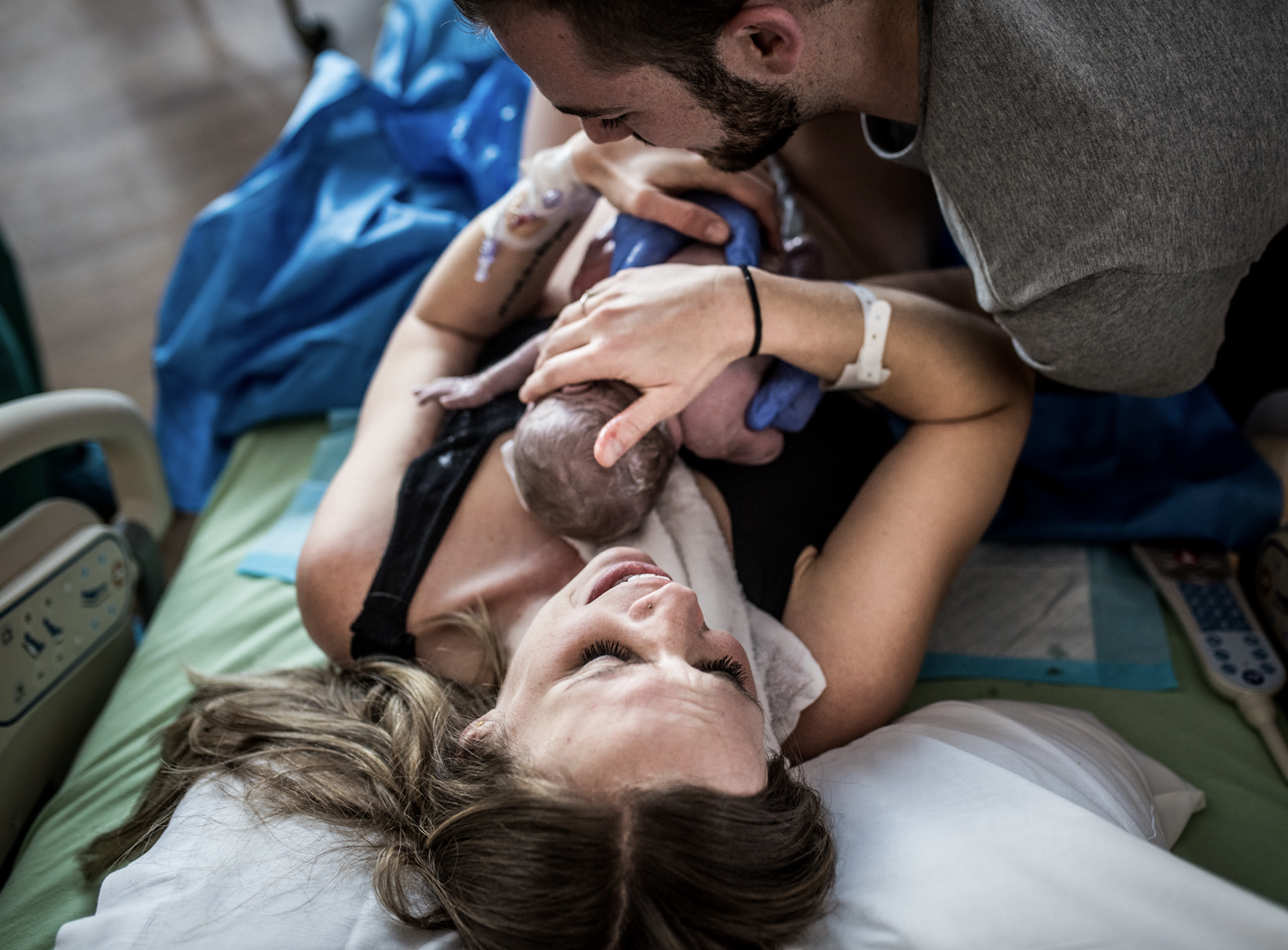
Today I’m sharing my third birth story! It’s one that’s super close to my heart, especially with my son’s birthday rolling around. I get right into the messiness of where I was at emotionally after losing my mom right after my first baby, and navigating that grief through my second pregnancy. I was dealing with brokenness, putting myself back together while raising my girls, and finally feeling ready for a third amid the chaos of COVID hitting just as we decided to try. I share how I was hopeful for a “textbook” experience like my first two, but reminded myself every birth is its own thing, prepping for all possibilities while chasing a redemptive birth and postpartum I was hoping for – filled with more joy than grief.
Tune in for my third, redemptive birth story, and check out these other episodes mentioned throughout:
Labor Nurse’s First Unmedicated Hospital Birth with Midwives | Episode 01
The Emotional Signposts of Labor (an Episode for Every Birth Partner to Hear) | Episode 10
Labor Nurses’s Second, Unmedicated, Fast Birth with D-MER and PPA During Postpartum | Episode 13
Is it Real Labor: Braxton Hicks Contractions, False Labor & Prodromal Labor | Episode 37
You’re Contracting! When Do You Go to the Hospital? | Episode 38
Helpful Timestamps:
- 00:00 My Third Birth Story
- 01:48 Why This Birth Story Matters (and where to hear the first two)
- 02:42 Getting Ready for Baby #3 during COVID
- 06:16 Pregnancy Expectations vs Reality
- 14:41 39 Weeks, a Blizzard Forecast, and Early Labor Whispers
- 21:29 Timing Contractions vs. Trusting Your Gut (When to Go In)
- 25:33 Arriving at the Hospital
- 31:28 Water Breaks, Move to the Bed, and Pushing Positions
- 33:14 Birth Moment: Kel Catches Baby + Surprise Sex Reveal
- 35:48 Postpartum in COVID
- 37:21 Redemptive Postpartum: Mental Health, Breastfeeding, Placenta Caps
About your host:
🩺🤰🏻Lo Mansfield, MSN, RNC-OB, CLC is a registered nurse, mama of 4, and a birth, baby, and motherhood enthusiast. She is both the host of the Lo & Behold podcast and the founder of The Labor Mama.
For more education, support and “me too” from Lo, please visit her website and check out her online courses and digital guides for birth, breastfeeding, and postpartum/newborns. You can also follow @thelabormama and @loandbehold_thepodcast on Instagram and join her email list here.
For more pregnancy, birth, postpartum and motherhood conversation each week, be sure to subscribe to The Lo & Behold podcast on Apple Podcasts, Spotify, or wherever you prefer to listen!
👉🏼 A request: If this episode meant something to you, would you consider a 5 star rating and leaving us a review? Yes, we read them, and yes, they help keep L & B going! ♥️
Connect with Lo more on: INSTAGRAM | TIK TOK | PINTEREST | FACEBOOK
Disclaimer
Opinions shared by guests of this show are their own, and do not always reflect those of The Labor Mama platform. Additionally, the information you hear on this podcast or that you receive via any linked resources should not be considered medical advice. Please see our full disclaimer here.
Additionally, we may make a small commission from some of the links shared with you. Please know, this comes at no additional cost to you, supports our small biz, and is a way for us to share brands and products with you that we genuinely love.
Produced and Edited by Vaden Podcast Services
Transcript
Today is a special one for me.
Lo:My third birth story.
Lo:I hit 39 weeks, it was this feeling of this baby better come now because.
Lo:I don't know what I'm gonna do otherwise.
Lo:there was a big snowstorm I do not wanna have a baby in the middle of the snowstorm.
Lo:There was this one contraction, this one moment.
Lo:Where it just makes me say we should go
Lo:Baby was a boy, and that room erupted in the girliest.
Lo:Cheers.
Speaker:Motherhood is all consuming.
Speaker:Having babies, nursing, feeling the fear of loving someone that much, and there's this baby on your chest, and boom, your entire life has changed.
:It's a privilege of being your child's safest space and watching your heart walk around outside of your body.
:The truth is.
:I can be having the best time being a mom one minute, and then the next, I'm questioning all my life choices.
Speaker:I'm Lo Mansfield, your host of the Lo and Behold podcast, mama of four Littles, former labor and postpartum RN, CLC, and your new best friend in the messy middle space of all the choices you are making in pregnancy, birth, and motherhood.
Speaker:If there is one thing I know after years of delivering babies at the bedside and then having, and now raising those four of my own, it is that there is no such thing as a best way to do any of this.
Speaker:And we're leaning into that truth here with the mix of real life and what the textbook says, expert Insights and practical applications.
Speaker:Each week we're making our way towards stories that we participate in, stories that we are honest about, and stories that are ours.
Speaker:This is the lo and behold podcast.
Lo:Welcome back to another episode of the Lo and Behold podcast.
Lo:Today is a special one for me.
Lo:My third, their birthday is coming up, and so I thought it would be just a perfect time to share their third birth story.
Lo:So you may have already listened to my other ones.
Lo:I have four kids.
Lo:My first birth story is actually episode one.
Lo:My second birth story is episode 13, and then now we're gonna go ahead and do this one, I share those right off.
Lo:The bat because you're gonna hear me use some vocabulary like redemption or talk about kind of my state of mind when I was pregnant or wanting to get pregnant, or why we, you know, waited for a certain amount of time until we try again.
Lo:And so I think those stories are really valuable because they kind of set you up for where we are at this point, which.
Lo:Was, I'm not gonna, I don't wanna say not the healthiest point, but I had gone through a lot.
Lo:I mean, long story short, again, just listen to those episodes and they'll kind of give you a clue of births and postpartums and what was going on.
Lo:But I had lost my mom.
Lo:My mom had died immediately after my first was born, and my second came relatively quickly after.
Lo:And it was just a lot of brokenness and a lot of mess while I tried to raise these babies and put myself back together a little bit again.
Lo:And so that's kind of.
Lo:Short story about where.
Lo:We're kind of starting or where my brain and my body and my mind were at as I started to think about having a third baby when, how am I doing myself personally as a woman and as a mom, and as a human being?
Lo:And so I think it's really valuable to hear those first.
Lo:So I encourage you to listen to those too.
Lo:If you're wondering why.
Lo:Why some of this feels like, why were you so heavy?
Lo:Why was everything such a mess?
Lo:The other interesting thing about this is that my third was, uh, you know, air quotes COVID Baby.
Lo:we got to a place where we felt like we were ready, to think about a third baby, and I'm gonna get Kel on here soon for another episode where we talk about just the decisions to have more kids or not, and all of that because.
Lo:This comes up a lot like on Instagram and in my social media communities.
Lo:How do you know?
Lo:How do you have more, what do you do when you don't agree?
Lo:And I, I bring that up to say that Kel and I were both in agreement that we wanted a third.
Lo:So that was not a complication for us.
Lo:It was more just, you know, when is the right time to try and see if we can make this happen?
Lo:Naturally when we started to feel ready, like a lot of you probably, COVID hit the world and we really were at the point where we're like, let's dry right when it happened.
Lo:And the, you know, the lockdown happened as you guys remember.
Lo:And basically, no one was supposed to go anywhere.
Lo:And we had no idea what this, you know, this COVID was and what it would do or what it could do, and certainly what it could do for pregnancies.
Lo:I'm sure some of you remember, especially if you were wanting to have a baby as well, that at the be.
Lo:Beginning of those months especially, there was just this, almost, I felt like this, like, don't get pregnant if you are pregnant.
Lo:Oh shoot.
Lo:We have no idea what this is gonna do.
Lo:And obviously we all know how things played out and how it changed pregnancies and really just how it changed birth experiences, which you can hear a little bit about in this story.
Lo:So.
Lo:That was a lot to say.
Lo:You guys know what COVID was like, but we did hit the point kind of right in that, and so we decided to just sit on it and wait for a little bit and kind of see, yeah, what this COVID thing was gonna do and what it meant for pregnancies before we actually tried.
Lo:And so by the time we felt comfortable trying, we kind of hit a place where it's like, okay, it seems as if pregnancies more or less are progressing as normally, although the healthcare.
Lo:Arena looked crazy, right?
Lo:And we, we felt that as we moved through pregnancy, you know, weird appointments, people not being allowed, being tested, all of that stuff, like, we walked through all of that.
Lo:So we got to the point though, where we're like, yeah, let's try, we feel comfortable trying and seeing what will happen.
Lo:And so as a blessing, yeah, we got pregnant really quickly and really easy.
Lo:So it was very much like a okay.
Lo:We are in it.
Lo:We are having a COVID baby.
Lo:I know I keep saying that, but I feel like for a while they just had this little, not stigma, but there was just this idea of like if you had a COVID baby, that was a really specific experience to you.
Lo:certainly I just wanna honor that.
Lo:Those of you who had babies.
Lo:In the middle of the shutdown, like in those first months.
Lo:Wow.
Lo:What a struggle and what a hard thing for you.
Lo:Right.
Lo:In the middle of the very beginnings of all of that, we more were, you know, it had been about nine, 10 months when we had our third, and so things were a little different and I would say a little better though they were still.
Lo:Very impacted by COVID and everything that was going on in the world, but I just like acknowledging that because man, those of you who had your babies that February, that March, that April, that May, those first months.
Lo:It was a lot.
Lo:So well done for figuring out how to get through that.
Lo:So, like I said, we got pregnant pretty easily.
Lo:We had as well with our first two babies.
Lo:So maybe that was a hope or an expectation.
Lo:I think my first two pregnancies were pretty textbook, and so my expectation was hopeful for that.
Lo:Again, honestly, you know.
Lo:Baby's always measured.
Lo:Normally I ended up being GBS negative, both of my first two babies, no GDM, the gestational diabetes with my babies.
Lo:No blood pressure issues.
Lo:You know, all of those things that we kinda keep an eye on during all the pregnancies.
Lo:I just had an experience with my first two, my, first two girls, and so I was hopeful and expecting the same as well.
Lo:The challenges of my first two pregnancies were really all the personal and emotional stuff right going.
Lo:My mom was essentially dying.
Lo:Throughout my entire first pregnancy.
Lo:And then she had just died throughout my second.
Lo:So it was like more that was all about me and my grief, right?
Lo:And the first one was like anticipatory grief and also, walking through my mom being here, but still walking through all of that.
Lo:so I think I was really hopeful for a redemptive experience or just one where I wasn't so burdened by.
Lo:All of the other things that I had been so burdened by.
Lo:Now, I'm a couple years out from losing my mom, so please don't assume that I was totally okay.
Lo:I dunno that I would tell you I'm still okay now years later, but I had felt like I'd had some time to not be such a broken version of myself, which was really what you would hear in that second birth story in episode two of Man, I was.
Lo:Just a mess.
Lo:And then trying to have another baby and raise my two babies.
Lo:My burst with the girls as well, were very textbook too.
Lo:They were quick.
Lo:You know, the first time wasn't super, super quick.
Lo:It wasn't, you know, only an hour or whatever.
Lo:But for our first timer, it was quick.
Lo:It moved along very.
Lo:Much I'm air quoting again, like as they should, right?
Lo:Like dilation continued.
Lo:Contractions got closer.
Lo:We had this baby.
Lo:It was amazing.
Lo:It was such an incredible first experience.
Lo:then the second one was very quick, classic, like second baby labor where.
Lo:Contractions, I think we better go.
Lo:Like I'm not hesitating at all.
Lo:And so it really went kind of that like textbook cliche way as well with the second one.
Lo:So I think as I moved through my pregnancy, I did have these expectations of this will likely go the way those first two girls had gone.
Lo:Like textbook.
Lo:Right.
Lo:And I think that's an interesting thing to think about as a, as an educator, right?
Lo:Or a birth professional.
Lo:Just this idea of like my instruction for you would always be to plan for this again as almost the first time, right?
Lo:Especially as we're talking about birth.
Lo:Like you can make some assumptions and some logical assumptions about your body and what happened last time, but every birth is different.
Lo:And that is true for every postpartum, and then that's true.
Lo:Definitely for breastfeeding.
Lo:Like every baby mom, baby couplet and dyad for breastfeeding is different.
Lo:And so it's always this funky balance.
Lo:Especially in like my third and fourth birth of knowing what my history is and being hopeful for that, right?
Lo:Because they've been so great, but also saying, Hey, this is brand new every time.
Lo:We still need to learn with Kelvin.
Lo:We still need to go over all the things for all the different possibilities, the different ways birth might happen, the different things that could happen.
Lo:You know, we still really worked hard to set ourselves up for.
Lo:All the ways birth can happen.
Lo:So again, hopeful for how it was and how I knew it could be based on the girl's birth, but also open to the fact that this could be really different pregnancy wise.
Lo:This, this was my most different pregnancy up to this point.
Lo:And it, I mean, looking back on it, sometimes people are, oh, the wife's tales, were they about having a boy or a girl or et cetera.
Lo:I never felt like any of that held true in any of my pregnancies, but I was so tired in this pregnancy, but I had a 4-year-old and a 2-year-old.
Lo:I was so sick.
Lo:For me, not as sick as some of you are.
Lo:So that's, that's the way I judge it, is I was sicker than my other two.
Lo:But not sick, like hyperemesis, gr puking every day.
Lo:Not that I know we can, that spectrum exists too, but so much sicker than I had been with my first two pregnancies exhausted.
Lo:Like I said, it just felt really different.
Lo:And none of this stuff was different in a. Clinical way, worthy of note really, if that makes sense.
Lo:It just was, I thought, good lord, this feels really different and I feel, I feel pretty crappy and I'm exhausted and I have these little girls and yeah, so as we move through pregnancy, I would say most of the clinical things remained really textbook.
Lo:One thing that was different with this baby that I hadn't experienced with the other two was that I ended up having a marginal cord insertion.
Lo:And essentially that the idea of that is that the cord is supposed to insert in the middle of the placenta or around the middle of the placenta.
Lo:And this one had inserted close to the edge of the placenta.
Lo:And there's other cord insertions, that can be even kind of more significant or mean a few more things, but a marginal cord insertion typically has.
Lo:Great outcomes.
Lo:Every once in a while it can lead to a baby that has maybe some growth restriction or something like that.
Lo:And so essentially when they see that cord on the edge of the placenta, the recommendation or the hope is that, hey, we're just gonna, you know, ultrasound the baby a couple extra times and just pay attention and make sure that they're growing as they should be.
Lo:'cause that marginal insertion, that kind of on the edge, the thought is that it.
Lo:Could lead to kind of less, less blood flow to the baby, which could impact growth.
Lo:That did not impact growth for baby at all.
Lo:They stayed right on track.
Lo:And so that really wasn't that big of a blip for us.
Lo:Just something that was new, new for me to experience personally meant another scan or two, I think I actually.
Lo:Went ahead and denied one scan toward the end.
Lo:Kind of like a very end of pregnancy scan for growth 'cause babe had continued to track the whole time and was, you know, per like, fundal assessments at every prenatal appointment continued to be run on point and so I didn't wanna pay for another scan and baby seemed to be tracking long, just fine after we had had, you know, already an extra one or two skins.
Lo:So that was a little, a little extra new thing for us.
Lo:But otherwise, more or less everything, you know, super.
Lo:Air quoting again, like normal right GBS negative, which I'm always hopeful for since I like to have my babies unmedicated and try for that.
Lo:It's just nice to not have to think about getting GBS antibiotics or getting there early, so was grateful that I was GBS negative.
Lo:Again, physically.
Lo:The last things I would just say is this pregnancy, I had SPD so bad, the synthesis, pubis dysfunction, I was so sore.
Lo:My lower back was a disaster, and this baby I carried so, so low.
Lo:I don't know that it was really a pro.
Lo:I mean, it was probably a product of a lot of things.
Lo:Third pregnancy in a few years, right?
Lo:My third time being pregnant in four years.
Lo:So that would was probably one of them.
Lo:Was I taking really good care of myself and had I been, no, absolutely not.
Lo:And that's really about everything that had gone on with one and two and losing my mom.
Lo:But I had been in survival mode.
Lo:Right?
Lo:And so there were a lot of things that probably really.
Lo:Compounded to make this pregnancy physically really, really, really hard.
Lo:My worst one, spoiler alert for when I share my fourth purse story in pregnancy, but that one was actually way easier than my third.
Lo:So this one was rough.
Lo:I remember wanting to be pregnant again when we decided to try and have a fourth and thinking, oh my gosh.
Lo:But I hope it does not feel like that physically.
Lo:I guess the lesson in that too is there were things I could have done better, like exercises, stretches, things that I could have done, even.
Lo:Exercise leading up to that point.
Lo:Like these things matter and they help.
Lo:And I was doing them earlier on in other pregnancies, and by this point had done none of that and hadn't really taken care of myself.
Lo:Well, like I already told you, and I think it just showed and physically how I Yeah.
Lo:Was able to handle this pregnancy.
Lo:So.
Lo:You know, you could wrap that up with an it is what it is.
Lo:And that's kind of true.
Lo:There are challenges in pregnancy, but I also always think like typically we have some answers and some help for some of the rough stuff and I just, I guess, didn't have the bandwidth to even consider any of it.
Lo:And just more, it was just powering through, you know, wearing my, my support belts and trying to move really carefully.
Lo:So as not to exacerbate my back and all of that, just deal a little bit.
Lo:So, not necessarily good advice, but that's what I did.
Lo:I I did go to the chiropractor as well.
Lo:I will say that.
Lo:All the lower back pain and then I like it for babies and fetal positioning too.
Lo:So at the end.
Lo:We are self pay with all that stuff.
Lo:So practically speaking financially, I don't go to the chiropractor on my entire pregnancies because I can't afford it.
Lo:I did do some at the end to try and just make sure I'm in alignment, make sure like everything down there is as good as it could be, particularly because things have been hurting so badly.
Lo:I didn't mention this in this episode, but you would hear it in the other two birth stories.
Lo:But I, my other kids had been born kind of right around the same time.
Lo:Just past 39 weeks, 39 and 2, 39 and three, and so I hit 39 weeks in this pregnancy.
Lo:I was so incredibly grumpy, so uncomfortable, like I've told you physically such just feeling so challenged very much had the mindset, which you shouldn't have.
Lo:'cause this isn't actually true that my other kids came at 39 weeks or so.
Lo:So this one will too.
Lo:Like why would I go past it?
Lo:And it's just, that's not true.
Lo:Some of us, it is true and we have 'em all around the same time, but it's very normal to have your kiddos show up.
Lo:At 38 weeks and then 41 and then 39, like that's just very possible.
Lo:So I still had this silly notion that they would all show up near the same time.
Lo:And so as I hit 39 weeks, it was this feeling of this baby better come now because.
Lo:I don't know what I'm gonna do otherwise.
Lo:I don't know if you've had a baby before.
Lo:You probably know that feeling.
Lo:So when we hit 39 weeks, there was a big snowstorm that was being predicted, so we were like 39 in one or so.
Lo:So right at that point and.
Lo:We lived in Colorado and later, this was February time of year, and so later snowstorms February, March, April are really actually pretty common.
Lo:We often get the most snow then.
Lo:And so this one was gonna be a doozy, right?
Lo:Everyone was talking about it and we had snowstorm coming and full mood.
Lo:And that is like a quite a. Not a trifecta.
Lo:We would need a third thing being 39 weeks.
Lo:That was my trifecta.
Lo:Right?
Lo:Being pregnant snowstorm full moon.
Lo:And we both Kel and I, were like, if we get past this snowstorm and this full moon.
Lo:We're gonna be shocked.
Lo:And so we actually went to bed the night of the snowstorm and, and I think felt pretty nervous.
Lo:'cause preference was at this point, no thank you.
Lo:I do not wanna have a baby in the middle of the snowstorm.
Lo:I do not wanna drive.
Lo:We have like a 30 minute drive to a hospital.
Lo:We do not wanna drive in the middle of this blizzard, you know?
Lo:It kind of was one of those things where you so much want the baby to come and then you hear this and you're like, oh, why don't you just wait like another day or two?
Lo:I'm good with that.
Lo:And so I think Kelvin was the most nervous.
Lo:He's always scared about car babies, making it to the hospital.
Lo:Now we had this history of faster labors.
Lo:Like he just, I think, always thinks this is, this is a setup for a situation that I don't want.
Lo:So we did go to bed that night and the snow was coming and of course around like 3:00 AM I woke up.
Lo:And it was it was really similar to some of my other stories, but I woke up to go to the bathroom.
Lo:And it felt very deja vu.
Lo:Like, huh, I wonder if a contraction woke me up.
Lo:'cause I've had that happen before, right?
Lo:so I didn't like think anything else more of it.
Lo:There was nothing going on.
Lo:Whatever.
Lo:And I, so I just.
Lo:I got back in bed and then I noticed as I was sleeping and kind of like sleepy lala land that I would have these twinges.
Lo:And so I think that I was contracting like I couldn't, maybe like once an hour.
Lo:I have no idea.
Lo:I have no idea because I was never awake.
Lo:I just kind of felt.
Lo:This awareness that, that had been happening while I had been sleeping those last few hours early in the morning.
Lo:so when we woke up around seven and the girls woke up, I had told Kel, you know, he's pumped that we didn't have a baby in the middle of the night, first of all.
Lo:And then I had told him, I did have, I think some contractions, you know, I, I don't know.
Lo:doesn't mean anything.
Lo:Right?
Lo:And so was working from home, which was nice.
Lo:And I was just home with the girls.
Lo:And so we just kind of went through our morning and I kept having.
Lo:These random, occasional contractions, like nothing to call and tell a family member about.
Lo:I wasn't updating Kelvin, I wasn't tracking, like I'm just hanging out with the girls, particularly because of the knowledge, the knowledge that I have of just.
Lo:The difference between prodromal labor and false labor and like nothing was indicating that anything true or real was going on or worthy of note.
Lo:so it was this little thing in the back of my head.
Lo:Right.
Lo:Which is good because it's also, it makes me think of that idea of teaching, how we teach, how I teach, Hey, ignore it, right?
Lo:Like there's nothing, there's no point in really focusing on something that isn't.
Lo:True or real or capturing your attention and forcing you to pay attention.
Lo:And that's very much what it was like this morning was like, Hmm, that's interesting.
Lo:You know, and carry on.
Lo:But as the morning continued, Kelvin would tell you, or I guess as we were getting more to like mid afternoon, Cal would tell you that he knew.
Lo:That I was in labor.
Lo:He says that he knows every time, even though I don't think I am.
Lo:so he would tell you that he was working like a crazy person in his office, like trying to get things done 'cause he knew we were gonna have this baby.
Lo:And I was still just hanging out with the girls, you know, watching tv, doing whatever.
Lo:I would not say I was in labor at all and certainly not any sort of labor that.
Lo:A care provider anyone needed to know about.
Lo:I wouldn't even, I don't even call that labor.
Lo:Yeah.
Lo:For me, it wasn't labor, but Kelvin believed it was, and it would be.
Lo:so this kind of continued, and you know what, we got to a point where things were like, Hmm, every 12 minutes or something, you know, something would happen.
Lo:And then eight, and then nine, and then 12.
Lo:And so again, nothing, nothing worth noting.
Lo:Specifically, but also like, ugh, this is still happening.
Lo:And so Kel, again, it's a little bit of a nervous Nelly sometimes, about all of this.
Lo:He really wanted to call our cousin and have her come over and just hang out with the girls just in case this turned quickly.
Lo:Which is good advice because if history were to repeat itself and now with hindsight like that is how it goes, and things turned very fast for me.
Lo:And so we had our cousin come over around noon, and I still was just.
Lo:Not sure.
Lo:Like we still hadn't told anyone in the family about anything.
Lo:You know, I hadn't called my sister.
Lo:There were, yeah, we're still just hanging out.
Lo:and when she showed up, I do remember I was in the kitchen chatting with her and she was chatting with me and I stopped and breathed, you know, through a contraction and we're chatting and I think maybe breathe through another one.
Lo:So they were kind of close, couple minutes apart or a few minutes apart.
Lo:But again, they'd been really random.
Lo:This wasn't a normal pattern at all.
Lo:And she looks at me and she goes.
Lo:Did you just have two contractions?
Lo:I was like, yeah.
Lo:And she's like, what are you doing here?
Lo:Freaking out.
Lo:Right?
Lo:Like, you need to go to the hospital right now.
Lo:And I'm like, I'm fine.
Lo:Literally I'm standing here talking to you in our kitchen.
Lo:Like this is not a person who needs to go to the hospital.
Lo:That's for sure.
Lo:So she was kind of, not panicky, but it was just cute to see her response.
Lo:'cause it's not how I felt at all.
Lo:So she was there.
Lo:We put our 2-year-old to bed.
Lo:It was her nap time and then she, my, our cousin hung out.
Lo:Upstairs with our 4-year-old for a little bit.
Lo:And I thought, let's go downstairs to the basement, Kel and I, and just spend some time alone and like, see, see if that helps, like make this turn into the real thing or whatever.
Lo:And so we just got to be in the basement where it was dark, right?
Lo:And not taking care of kids.
Lo:And I don't even remember if we had music on or anything like that.
Lo:But it did feel like that was kind of my, a little bit of a trigger, right?
Lo:Where it made the labor become.
Lo:Labor instead of just, I don't know.
Lo:And so they started to get a little bit closer together.
Lo:The contractions did, but still nothing, nothing impressive.
Lo:you know, it'd be like seven or eight minutes apart.
Lo:And you guys know, like the 4 1 1 and the 5 1 1 and types of contractions, all of all these conversations can really run through your head of, I know stuff's going on, but this still isn't.
Lo:Right.
Lo:This still isn't the when I should go to the hospital, when I should go to the hospital time.
Lo:Right.
Lo:I actually have episodes on both of those topics.
Lo:If you want more, I would highly suggest listening to them.
Lo:It's kind of like a part one and part two, episode 37 and 38, it's all about types of contractions.
Lo:I know I mentioned that earlier, that prodromal labor, that false labor and me like wanting it to be the real thing and thinking through that.
Lo:And then this question of when to go to the hospital.
Lo:And that's in the part two, episode 38.
Lo:So you can totally listen to both of those together, and that will help give you clarity around some of everything that I'm talking about right now.
Lo:Because all of this was in my head right, of when to go and trying to time it right and getting it right.
Lo:And so we got to the point where.
Lo:I was no, I, I do not care about the 4 1 1 or 5 1 1.
Lo:I really don't care about that for myself at all.
Lo:You can listen to those episodes and decide it how you think about those, but for me, labor and when to go is all about mostly a lot of this other stuff because when.
Lo:We decided to head to the hospital.
Lo:I was not in 4 1 1 or 5 1, 1.
Lo:I don't, I hadn't been this entire time, but I had other stuff going on that just made me think this is real and we, probably need to be there as opposed to waiting until my contractions are every three or four minutes, like I think that's gonna be too late.
Lo:So it became a thing of I'm not waiting for this perfect rhythm.
Lo:I'm going off all the other signs.
Lo:And this was just like emotional changes.
Lo:Changes kind of in pressure in the way that my body felt.
Lo:Certainly the contractions were getting a little stronger, but I still wasn't in any sort of active labor per like a textbook.
Lo:But I had one contraction, and I talk about this in my first birth story too.
Lo:There was this one contraction, this one moment.
Lo:Where it just makes me say we should go and it's, I don't know if it's the way they change or move or this pressure, but there's just this like, it's kind of cool.
Lo:I'm so attuned to this specific moment and feeling that it's, it's not led me astray yet up to this point.
Lo:Right.
Lo:And so I looked at Callum and was like, we should probably go.
Lo:And in my first birth he says, are you sure?
Lo:You know, he does all the right things.
Lo:You know, you're doing great at home.
Lo:Why don't we, you know, do a few more and see how you're doing.
Lo:You know, he did all the things to support that desire for an unmedicated birth at a hospital.
Lo:But this time he was like, great, sprinted up the stairs.
Lo:Let's leave.
Lo:He'd already packed the car, like he was literally just waiting for me to acknowledge that I was in labor.
Lo:So we did, we got in the car, we were ready to go pretty quickly.
Lo:This had all been over the span of like an hour, you know, since my cousin had been there and things had turned on.
Lo:So we could maybe say I'd been in labor for an hour, true labor, half an hour maybe.
Lo:I feel like I transitioned in the car.
Lo:And so I don't really know that I ever felt like I was truly in active labor.
Lo:I just went from.
Lo:I'm not really sure.
Lo:So let's just hold out for a little bit till like we should probably go and I feel like my body switched when my mind and my heart switched too.
Lo:It kind of all happened at once, so we, in our drive to the hospital, I mentioned it was about 30 minutes long.
Lo:I just remember that being a very.
Lo:Very uncomfortable ride.
Lo:And at this point, all of my rides had been uncomfortable because I was always in the later stages of labor when we decided to go to the hospital.
Lo:So we had kissed our baby girl, the one not sleeping pretty quickly, gotten straight in the car, and then it just was like, here it comes.
Lo:those 30 minutes are brutal.
Lo:And annoying, and I don't need to go over that.
Lo:You guys know how it is.
Lo:I sat in the front seat this time.
Lo:I don't know what I would recommend.
Lo:I've sat in the backseat as well.
Lo:It just is not fun to labor in a car.
Lo:So there's a hilarious picture of me that Kelvin snapped in profile, like while he was driving and I just looked so sad and so unhappy, but I'm sure that I was just so uncomfortable, getting there.
Lo:When we did get to the unit, like these other times, I delivered where I worked.
Lo:And so it was so sweet as always to just show up and see my friends, right, and to just know they're waiting for me.
Lo:We, I texted people when I started to think this was real, trying to see who was on that day and let them know I would probably be coming in and have a baby for them to think about, for like patient census.
Lo:So we had, we had let them know we had a photographer this time and so we wanted to make sure they made it in time.
Lo:So there were a little bit of moving pieces in regards to that too, and timing.
Lo:But ultimately when we got there, the photographer showed up within a few minutes and you know, the friends, the work, the workers, the nurses, everyone was ready.
Lo:And so it was very calm, it was very steady.
Lo:Nobody was panicked, including Cal and I, which was great because it felt like, you know, the phrase like coming in hot, there was a little bit of that.
Lo:It's like, I'm coming in to have a baby, guys, so I hope you have the table ready.
Lo:'cause all of a sudden.
Lo:Like things have changed very, very quickly.
Lo:I remember apologizing to the charge nurse later 'cause I had called her in the car on the way and she was trying to ask me some questions and I really wasn't able to answer.
Lo:And so then later I'm apologizing to her for being like, not letting her know earlier and she was apologizing to me for trying to like.
Lo:Ask me questions when I clearly was in the middle of labor in a car.
Lo:And so it was a sweet thing where we both were saying, sorry, sorry, we, we could've done better.
Lo:And really, we both just did a great job.
Lo:So it wasn't really relevant at all, but we both were feeling bad about the way we tried to communicate to each other.
Lo:But again, I was in transition in the car, so what are we gonna, you know, what can you do?
Lo:We both just did what we could.
Lo:Okay.
Lo:When we got to the hospital, we, we kind of switched into this classic Kelvin low mode of just how we like to have our babies.
Lo:And so again, kind of this textbooky thing of very, very fast, right?
Lo:You're picking up on that.
Lo:I'm sure this is going to move really quick, but we got there.
Lo:Declined cervical checks 'cause I knew I was in labor.
Lo:They knew I was in labor.
Lo:Nobody cared about that.
Lo:Right.
Lo:I remember her calling my midwife, the nurse and saying she's here.
Lo:She doesn't wanna have a cervical check.
Lo:Like we don't know how far along she is and it just was not a big deal.
Lo:Right.
Lo:Because it's not, I'm clearly gonna have a baby.
Lo:Who cares if my cervix is four, seven or nine at at that point.
Lo:Right.
Lo:And the midwife was coming over.
Lo:Anyways, since they typically are on the unit and, and ready and available for someone coming in, my classic move at this point is always hands and knees on the floor too.
Lo:And so when they first got there, they did do a 20 minute NST, which is standard when you get into the hospital, and that's just where they put the heart monitors on.
Lo:so I remember sitting on the birth ball while they did that, and watching it.
Lo:And that was my moment where I felt.
Lo:Very nursey and then I was able to let it go.
Lo:But every time my kids get monitored, we haven't always had time for it, but in this birth we did.
Lo:When they get monitored, I do kind of watch and I'm looking for ax cells and I'm making sure there's no D cells.
Lo:And I do do that nurse thing of are they okay in there?
Lo:But as soon as that 20 minutes is up and they look good, I want those monitors off.
Lo:And so they put 'em on.
Lo:Baby looked great.
Lo:And then we, we were able to take 'em off.
Lo:I did have an IV this time.
Lo:I had not in my second birth and then I ended up bleeding, uh, too much I guess you could say after birth.
Lo:And so I just thought that's fine.
Lo:Like I'm fine with IVs either way, so let's just do it this time so we don't even have to deal with that if that were to happen again.
Lo:and so then it was really just time to have the baby.
Lo:I know that sounds kind of anticlimactic, right?
Lo:But is that they put in my IV things, were going, we got the monitoring done, and then all of a sudden it was like, guys.
Lo:I would like to be in hands and knees on the floor.
Lo:That is like my classic labor position and it means we're really, really close.
Lo:And I, they laid out a mat on the floor and I got down there and I remember a couple of things emotionally.
Lo:One is the emotional signposts and I'd really started to see them at home.
Lo:So that's an episode 10.
Lo:I do have an episode on this and I. Like highly, highly recommend you listen to this episode and you have any birth partner who's gonna be with you.
Lo:Listen to episode 10 because it's a really good way for people to see and pay attention to what is going on with you and how you're progressing in labor without your cervix being checked.
Lo:It has nothing to do with that and has everything to do with your behavior, but your behavior correlates to the stage of labor that you're in.
Lo:It's very, very cool.
Lo:It sounds a little woowoo.
Lo:It's not.
Lo:It's actually really, really neat to see.
Lo:And so at home I had gone through kind of maybe the beginnings of the, the doubt or not being sure there's like this lack of clarity that you can have that's kind of a signpost that you're progressing.
Lo:And then by the time we were at the hospital, it was very clear that I was in transition.
Lo:'cause there was this like, I don't know what to do, I just wanna have this baby.
Lo:I'm a little bit overwhelmed.
Lo:I'm a little bit freaked out.
Lo:I end up cry.
Lo:I always cry during labor.
Lo:Little like lonely tears rolled down my cheeks.
Lo:I always cry during transition, I should say.
Lo:And so you could see some of these signposts happen.
Lo:And doubt for me is always a big one of just, am I okay?
Lo:Are we okay?
Lo:Can I do this?
Lo:This has to.
Lo:We have to be close, right?
Lo:'cause if not, I can't handle this anymore.
Lo:And I do remember my midwife as well, saying, Hey, you know, after your contraction, why don't you go ahead and take off your underwear?
Lo:Which cracks me up because I was like moments, minutes away from having the baby and I still had my underwear on, which I feel is just such an indication of me and who I am.
Lo:Staying covered up.
Lo:Staying.
Lo:I like to still be like, maintain my modesty.
Lo:I also like to deny that I'm about to have a baby, so why would I need to take my underwear off?
Lo:Yeah.
Lo:It's just so, so me and so I can still remember her asking me to do that, We were in hands and knees on the floor.
Lo:Nobody was leaving the room.
Lo:It was very clear that everyone knew I was going to have a baby and they just let me do my thing.
Lo:I love this memory of it was all women in the room, and remembering of course, that I'd lost my mom and that.
Lo:You know, she couldn't, she never could be there for any of my births, obviously, including this one.
Lo:It was just the sweetness of being really held by some really good women.
Lo:Oh my gosh.
Lo:Sorry.
Lo:I'm getting emotional.
Lo:And so I love that memory.
Lo:So Kelvin's there with us and then just a bunch of women that I love and worked with and trained with and I just felt.
Lo:Trusted and loved and seen and like all the things that you want for your birth right.
Lo:My water popped open when I was in, my water popped open.
Lo:That sounded funny.
Lo:My water broke when I was in hands and knees on the floor.
Lo:And it had been maybe, you know, 35 minutes since we'd gotten to the hospital or something like that.
Lo:And right away it was.
Lo:Baby's coming, and this was the same as birth one and two.
Lo:They came immediately after my, after my water broke, and I always prefer to deliver in the bed.
Lo:So it's my, like I get off the floor by choice and I jump in the bed.
Lo:Nobody tells me to, and certainly my midwife does not care in this moment, but I Why Water broke, baby was coming and I'm like, I'm getting in the bed.
Lo:And Kelvin knows that too, so he's like, oh, let's go.
Lo:Let's get you up there.
Lo:It's just where I feel good.
Lo:There was no meconium this time, which was great.
Lo:I'd had meconium in my first two verses, which was kind of just annoying right to think about in those moments.
Lo:So no meconium.
Lo:So I remember that being a little win in the midst.
Lo:In the midst of having this baby.
Lo:I tried hands and knees once pushing in the bed, so I just crawled up into the bed and did hands and knees, and I did not like it.
Lo:I remember so clearly feeling, this is just me.
Lo:Like so many people delivered hands and knees.
Lo:It's a great position to deliver on.
Lo:So don't hear this as a reason not to do it.
Lo:I just felt really exposed and uncomfortable and not strong.
Lo:Like I just, I'm not gonna push well like this.
Lo:And so I did one push flipped over to my back and in that moment, this is cool.
Lo:This can happen sometimes during labor, but my body kind of like.
Lo:Gave me a break, and you can see this sometimes during these delivering contractions where they're not two minutes apart.
Lo:We're saying, I'm saying this particularly if you don't have Pitocin or something going, but like in a physiological birth that doesn't have meds on board right now, you can see these kind of cool gaps where it really is a time for you to rest before this next.
Lo:You know, ideally like delivering contraction comes and maybe you're gonna have your baby.
Lo:so I had flipped over onto my back and then there was like this three minute gap and it was so chill and people were talking and we were kind of like, we knew this baby's coming on this next contraction or very likely.
Lo:so they had Kel come around to catch baby 'cause he wanted to catch them.
Lo:We did not know the sex of the baby.
Lo:You've probably picked up on that and so.
Lo:So there was also that moment of, we had two girls at this point, right?
Lo:And so everybody in the room is like, are you gonna have a boy?
Lo:Because at this point there had been five granddaughters born in my family, and no one had had a boy.
Lo:So the thought of a boy was pretty, felt pretty impossible, honestly.
Lo:So we were waiting for that sweet surprise.
Lo:And I, yeah, next contraction was just, I don't wanna say easy, but it was clear that this was the time.
Lo:To have this baby, so it felt right, if that makes sense.
Lo:So, a, an easy, I said easy again, didn't I?
Lo:But just pushed through the ring of fire, like pushed into Kelvin's hands, babe rotated.
Lo:They were oa but they had rotated and looked up at the sky, like after the first push to deliver the head.
Lo:And so that is not normal.
Lo:So they were like looking up at everybody.
Lo:So saw Kelvin saw Dad, right?
Lo:'cause he's waiting right there.
Lo:And then, you know.
Lo:The midwife and her student were standing back next to him as well.
Lo:But it was pretty cool to see in pictures on video because typically they rotate the other way.
Lo:And for whatever reason, baby came out, their head came out and they rotated up to look up.
Lo:I forgot to push.
Lo:I didn't wanna push for the rest.
Lo:And so I remember them saying, Hey.
Lo:Hey, my sweeteners Ashley.
Lo:She's like, you gotta push one more time for the rest.
Lo:so one more push.
Lo:And Baby was out.
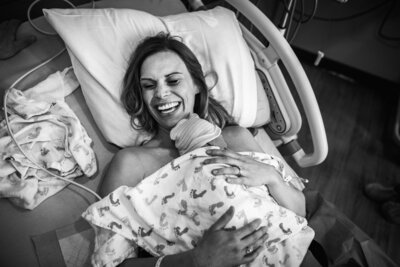
Lo:Baby was a boy, and that room erupted in the girliest.
Lo:Cheers.
Lo:Which going back to what I said of all these women and not having my mom.
Lo:Sorry guys.
Lo:Sorry.
Lo:It was just so sweet to hear this like very feminine, support and celebration over this tiny little boy.
Lo:Okay.
Lo:So anyways, I had a boy, Calvin handed him off to me.
Lo:He was, he got to call it outright 'cause he held him up and looked and handed him over to me and.
Lo:That was that.
Lo:I mean, third baby fast birth.
Lo:I, it was about forty, forty two or 44 minutes.
Lo:I can't remember the exact, from like getting admitted at the front desk to having him.
Lo:So I know I just blabbered on for like 25 minutes about all of that.
Lo:But it was that, it was quick, right.
Lo:We did not have a lot of time to do anything except get you checked in.
Lo:Get you ready.
Lo:Water broke, have the baby.
Lo:but it was peaceful.
Lo:It was not panicked.
Lo:It was, it was incredible.
Lo:I mean, it was very quick, but not so quick that it would cause any sort of like trauma or angst.
Lo:It just felt calm.
Lo:I felt trusted.
Lo:It was, yeah, it was amazing.
Lo:The whole time was really.
Lo:Really great.
Lo:As for postpartum, I know that's like a quick jump into that, but it makes me think back to our COVID conversation, just this idea of the way COVID kind of impacted it.
Lo:So when we got into the hospital, I know I'm jumping back into labor and we don't need to spend time there more, but there was the, you know, you have to wear a mask and everybody has to get screened and everybody has to get checked.
Lo:And I, I share that because the postpartum was also very much the season where no one's allowed in the room, except like your nurse and your providers.
Lo:Then could have the one birth partner and the photographer, which was obviously a huge blessing that they were allowed to come as well.
Lo:And so my girls did not get to come in and meet their brother, which sucked.
Lo:I think that is probably the part that I liked the least about this birth experience is I would've loved for them to have come and to have met him.
Lo:I did not mind.
Lo:The quiet and the lack of other people coming in and out.
Lo:Not at all.
Lo:We like that time, we like that space and we typically love going home after about 24 hours if we can.
Lo:And so that was what we were able to do.
Lo:We did go home the next day and the girls actually stayed with our cousins for one more night, per our choice, and we just got to have this one sweet night at home.
Lo:Post birth, not being in the hospital and before our girlies came home, to just spend with him and reflect and, and fall in love or whatever cheesy thing that you wanna say.
Lo:Not sleep, obviously learn to breastfeed obviously.
Lo:And that was really sweet.
Lo:I'm so grateful we got to do that.
Lo:And then the next day our girls came home and we just kind of waltzed into life with three in a world that was still very much closed down.
Lo:Right?
Lo:So definitely our little bubble in our little pocket.
Lo:When it comes to postpartum, one of the things that has been such a gift about my son's story in that postpartum is going back to that theme of redemption, and it felt like he really redeemed my postpartum experience.
Lo:My pregnancies and my births, like I shared, were pretty, pretty great and pretty beautiful with both the girls, even in the midst of what was going on.
Lo:I mean, I had personal challenges, but clinically, like all that stuff went really good.
Lo:My postpartums were just.
Lo:Huh, tragically hard.
Lo:I don't know else to say it.
Lo:I, I just could not keep myself together.
Lo:I had postpartum anxiety after my second, my mom died after my first, I was in so many bad spaces mentally and emotionally that I just didn't realize that postpartum could also be really sweet and that it didn't have to feel like such a struggle.
Lo:To enjoy this baby and be grateful for them, and also just be wrecked in all these other ways.
Lo:And so my son really redeemed postpartum for me, and that felt like such a gift to know.
Lo:Oh.
Lo:Postpartum can be joyful more than broken.
Lo:And you can be like really, really excited about a new life, more than devastated by other things going on.
Lo:And I know that sounds a little dramatic, but I just don't know that I'd had a postpartum experience up to that point that felt, normal, like just normal challenges and not really big ones that.
Lo:Yeah, had really broken, broken me or hurt me or, or challenged Kel and I and our kids.
Lo:So that was such a gift to have a postpartum that looked like that and felt like that breastfeeding went really well.
Lo:Overall I had deemer again, you can hear, me share a little bit more about that in my second birth story, but it's a Breastfeeding condition that is kind of sucky.
Lo:I knew it would happen again.
Lo:I assumed it would, and so I was more ready for it.
Lo:So that sucked.
Lo:But I was more expected.
Lo:I did do placenta encapsulation this time.
Lo:I'm not gonna deep dive that here, but I do like to mention that.
Lo:And then my big thing with it is we're gonna do an episode on this with someone who's a professional in this space and, and knows.
Lo:Can speak to it really eloquently and really well, and so that'll be up soon.
Lo:But I like to share that I did it and also say, 'cause a lot of people, there's not a great evidence for it.
Lo:Like.
Lo:All of that is true.
Lo:Okay, so I, I need you, I want you to hear that.
Lo:But the possible mental health benefits, which again, are like possible and anecdotal to me, were so potentially important and valuable after how horrible some of that had been for me with my other girls that I just was almost desperate to do or try.
Lo:Anything that might help.
Lo:Me have a better postpartum, particularly in my head and my heart.
Lo:So we'll talk more about that later, but I just wanted to throw that in there because it was a, a different part of my postpartum experience.
Lo:And this was, this was my best postpartum experience.
Lo:I healed really quickly.
Lo:I felt great pretty quickly.
Lo:He was a lovely baby.
Lo:Breastfeeding went great.
Lo:Aside from having dimer like I just.
Lo:Yeah, it just felt like it redeemed a lot of things for me, and I know I keep coming back to that, but it's a phrase that gets tossed around a lot in birth about wanting a redemptive story.
Lo:And I think sometimes it can apply to birth, sometimes it can apply to postpartum, sometimes it can apply to both.
Lo:And for me.
Lo:He really kind of brought some of, some of the goodness full circle, so, such, such a gift to have him.
Lo:All right you guys again, if you wanna listen to the first one, that's episode one.
Lo:If you wanna listen to the second one, that's episode 12.
Lo:I know I mentioned some other, more educational stuff for you that I kind of went through in my burst, and we will drop all of the links for those episodes in the show notes so you can go back and listen to whatever I may have mentioned that piqued your interest.
:Thank you so much for listening to the Lo and Behold podcast.
:I hope there was something for you in today's episode that made you think, made you laugh or made you feel seen.
:For show notes and links to the resources, freebies, or discount codes mentioned in this episode, please head over to lo and behold podcast.com.
:If you aren't following along yet, make sure to tap, subscribe, or follow in your podcast app so we can keep hanging out together.
:And if you haven't heard it yet today, you're doing a really good job.
:A little reminder for you before you go, opinions shared by guests of this show are their own, and do not always reflect those of myself in the Labor Mama platform.
:Additionally, the information you hear on this podcast or that you receive via any linked resources should not be considered medical advice.
:Please see our full disclaimer at the link in your show notes.