




Join YBYB: www.thelabormama.com/birth & use the code PODCAST to save 20%
Today I’m taking you through the whirlwind of the first 1-2 hours after birth. Whether you’ve just pushed out your baby vaginally or are planning a cesarean, there’s so much happening in these ecstatic, hazy moments, from skin-to-skin bliss to essential checks and choices. I want you to feel empowered, not overwhelmed, so you can advocate for what you want while soaking in that newborn magic.
We start right after baby arrives: the relief, possible shaking (totally normal and hormonal!), Apgar scores to gauge baby’s transition, and delayed cord clamping (plus how cord blood banking fits in). Then, we cover what’s happening during this third-stage of labor, like Pitocin to prevent bleeding, placenta delivery (usually 15-30 minutes), and any tear repairs. Moving into the fourth stage, I explain fundal checks versus assessments, the golden hour’s many skin-to-skin benefits (stress reduction, temp regulation, bonding, oxytocin boost, and breastfeeding support), that first magical breastfeed with colostrum, postpartum meds for pain and stool softening, getting up to pee (tips included!), and newborn procedures like assessments, eye ointment, vitamin K, and hep B vaccine. This is your roadmap to informed consent – nothing here has to be decided on the spot. My hope? You leave these hours feeling knowledgeable, blissful, and deeply connected.
Mentioned in this episode:
Helpful Timestamps:
- 01:23 The First Hours After Birth: What to Expect
- 03:43 Understanding the Third and Fourth Stages of Labor
- 05:28 Immediate Post-Birth Procedures and Choices
- 10:08 The Golden Hour
- 13:35 Placenta Delivery and Pitocin Use
- 18:21 Fundal Assessments & Checks
- 21:58 Benefits of Skin-to-Skin
- 27:12 Postpartum Pain Management
- 33:52 Newborn Assessments and Procedures
- 36:52 Transition to Postpartum Care
About your host:
🩺🤰🏻Lo Mansfield, MSN, RNC-OB, CLC is a registered nurse, mama of 4, and a birth, baby, and motherhood enthusiast. She is both the host of the Lo & Behold podcast and the founder of The Labor Mama.
For more education, support and “me too” from Lo, please visit her website and check out her online courses and digital guides for birth, breastfeeding, and postpartum/newborns. You can also follow @thelabormama and @loandbehold_thepodcast on Instagram and join her email list here.
For more pregnancy, birth, postpartum and motherhood conversation each week, be sure to subscribe to The Lo & Behold podcast on Apple Podcasts, Spotify, or wherever you prefer to listen!
👉🏼 A request: If this episode meant something to you, would you consider a 5 star rating and leaving us a review? Yes, we read them, and yes, they help keep L & B going! ♥️
Connect with Lo more on: INSTAGRAM | TIK TOK | PINTEREST | FACEBOOK
Disclaimer
Opinions shared by guests of this show are their own, and do not always reflect those of The Labor Mama platform. Additionally, the information you hear on this podcast or that you receive via any linked resources should not be considered medical advice. Please see our full disclaimer here.
Additionally, we may make a small commission from some of the links shared with you. Please know, this comes at no additional cost to you, supports our small biz, and is a way for us to share brands and products with you that we genuinely love.
Produced and Edited by Vaden Podcast Services
Transcript
Motherhood is all consuming.
:Having babies, nursing, feeling the fear of loving someone that much, and there's this baby on your chest, and boom, your entire life has changed.
:It's a privilege of being your child's safest space and watching your heart walk around outside of your body.
:The truth is.
:I can be having the best time being a mom one minute, and then the next, I'm questioning all my life choices.
:I'm Lo Mansfield, your host of the Lo and Behold podcast, mama of four Littles, former labor and postpartum RN, CLC, and your new best friend in the messy middle space of all the choices you are making in pregnancy, birth, and motherhood.
:If there is one thing I know after years of delivering babies at the bedside and then having, and now raising those four of my own, it is that there is no such thing as a best way to do any of this.
:And we're leaning into that truth here with the mix of real life and what the textbook says, expert Insights and practical applications.
:Each week we're making our way towards stories that we participate in, stories that we are honest about, and stories that are ours.
:This is the lo and behold podcast.
Lo:We are gonna get into a topic today that is so relevant for anyone who is going to have a baby.
Lo:And that is the topic of what is actually happening in the moments and really not just the moments.
Lo:So we're gonna talk like 60 to 120 minutes, that first one to two hours after birth, what is actually going on.
Lo:And I think for a lot of people, these, you know, 60 to 120 minutes again, are kind of ecstatic, right?
Lo:Or there's this like beautiful haze going on of just.
Lo:There's a baby on my chest.
Lo:I did it however long the process has been.
Lo:Whatever got you to this point, all this stuff's happening around you and you're largely blissful or excited or not really paying attention or noticing, and that is a great thing.
Lo:Like that is something that I would want for everyone is to have that kind of blissful hazy.
Lo:Euphoric type couple of hours after birth.
Lo:But in the midst of that, I would also hope, and what I would want for you guys is that you understand all the things that are going on around you not necessarily because there's all this stuff happening and you're not gonna want that.
Lo:That's not what I'm telling you.
Lo:But because there is a lot going on both for you and baby in the moments after birth, and I want you to know what they are.
Lo:So one, you don't ever leave, you know, these couple hours and find out.
Lo:Hey, I, you know, I didn't want my baby to have a bath.
Lo:They bathed baby.
Lo:How did I not notice that?
Lo:I didn't wanna do X, y, Z shot or vaccine until later, or not at all.
Lo:Maybe you didn't want the eye ointment.
Lo:Maybe you wanted a certain amount of delayed cord clamping, whatever it might be.
Lo:There's a lot in these moments, and so I want you guys.
Lo:To know all the different things that might be happening around you so that you can either one, just be aware, right?
Lo:So you don't leave this and say, I had no idea you gave me Pitocin.
Lo:I wish I would've known or two, so that you can, you know, actively step in and say, Hey, by the way, we do or don't want X, Y, Z, or we want something for longer or shorter, or whatever.
Lo:So you can step in actively and advocate.
Lo:And really, so you just don't walk away, like I said, and just feel like all this stuff happened to you.
Lo:And almost like, let's, I'm gonna use the word taken advantage of.
Lo:Not that I don't think you're gonna walk away feeling like that, but I don't want you to feel like all these providers were just doing all these things and not really letting you know, because you were blissfully unaware with baby.
Lo:Like you should know and you should be aware.
Lo:And I hope that in the midst you get to be blissfully not unaware, but.
Lo:Like blissfully knowledgeable about what's going on while just enjoying that baby.
Lo:So we're just gonna walk through.
Lo:All of the things going on in what I call the fourth stage of labor, third stage two, 'cause we're gonna talk about placenta.
Lo:So third and fourth stage of labor, which is really those moments after birth, right?
Lo:And so we have that first stage of labor, which is all that laboring and contracting that you're doing, that is, that gets you to 10 centimeters.
Lo:Okay?
Lo:then the pushing stage is your second.
Lo:Stage and that ends when your baby is born.
Lo:So we're gonna pick up right there in the third stage and then the fourth stage, and talk about everything that's going on in those moments.
Lo:A lot of these things involve like informed consent in some sort of choice for you.
Lo:we're not gonna go into the nitty gritty of every single one of these because in theory, basically everything we're gonna march through right now.
Lo:It could be its own topic, right?
Lo:Or its own discussion about pros and cons.
Lo:Or rather, or not, you know, there's this right to refuse or decline or why you would want to, or why you shouldn't have to worry about it all.
Lo:There's all these different conversations with each of these things going on, but we're not gonna do that here.
Lo:I just wanna lay out like the roadmap for you then you can use that and go, okay, like do I have preferences and feelings about any of this stuff and is that something that I would want on my birth plan?
Lo:And you can find the link to my full birth plan, which includes.
Lo:Information about all of this stuff, specifically the stuff that really involves choice.
Lo:And you can grab that, that's in the show notes.
Lo:It's linked there for you.
Lo:But what I want you to do is take this episode or take that birth plan and then you can use those as tools to start having conversations about this.
Lo:We deep dive all of these topics inside of the full birth course too, so you get resources, information, all of that inside of your body, your birth.
Lo:Which again gives you more information to make whatever choice might need to be made about any of this.
Lo:But this here is like a roadmap.
Lo:Okay?
Lo:And then you've gotta go ahead and fill in the blanks with more information class, more episodes, whatever, and then make choices.
Lo:So we're gonna start.
Lo:The third stage of labor, right?
Lo:Baby is out.
Lo:And we're largely talking about post vaginal birth here, just because I need to, I need to frame this right, like where are we?
Lo:What's going on in this moment in time?
Lo:But a lot of this is going on with cesarean too.
Lo:It could look a little different because you're in the OR and then you get moved to recovery.
Lo:But all of this is still going to happen both for you and baby.
Lo:But we're gonna talk about it and frame it around vaginal birth simply because that gives us our roadmap, right?
Lo:But if you are having a planned cesarean and you're listening to this, this is all going on too.
Lo:And that's on my cesarean birth plan as well.
Lo:And so you'll see all that choices again, what you can make, and you can still apply all of this to your birth.
Lo:Alright, so vaginal birth, your baby's out.
Lo:Are you on the floor?
Lo:Are you in the bed?
Lo:Are you standing up?
Lo:Are you on the toilet?
Lo:I don't know where you are, right.
Lo:But in these moments, there's relief.
Lo:There's ecstasy, I don't wanna say chaos, but there is that like kind of flurry of we've just had this moment in time that baby's been born and you've done it right.
Lo:And I always feel like there's this like brief, beautiful pause.
Lo:And you know, I don't know if this is more in my head, both as a provider and as mom who's gotten to experience this, but there's like this moment I feel like where the earth, this sounds so cheesy, but where everybody just like exhales.
Lo:And this little life is here.
Lo:And let's say they're on your chest, right?
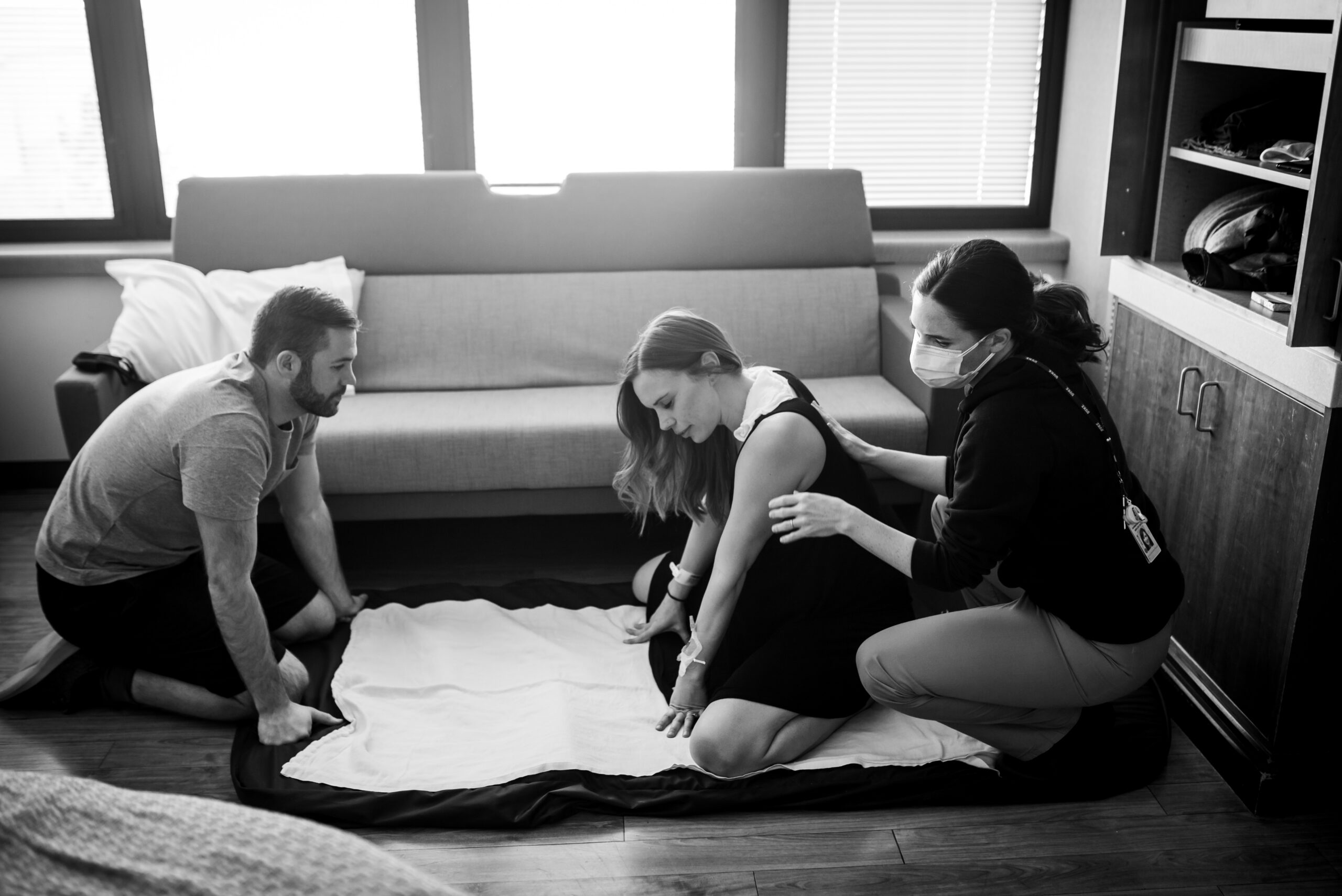
Lo:And if you didn't deliver in the bed, like I had my fourth baby on in hands and knees on the floor, there is this little bit of shuffle of like, alright, hey, let's get in bed to do the rest of the recovery because that is where you're gonna wanna be for.
Lo:You know, all this stuff coming next, which is largely ideally and hopefully skin to skin and all that goodness of the golden hour and more for you and your baby.
Lo:One thing I like to acknowledge when the baby comes out is that it's really normal to have almost more of like a, I need to breathe, I need to pause, like.
Lo:Almost a moment of not disconnect from baby, but more just a deep connection to yourself and what you've done.
Lo:I saw this beautiful video on Instagram going around a while ago, and the baby's on mom's chest and she had birds in the water and she's just breathing, and she was talking about notice how I'm not looking at my baby, and it wasn't a negative.
Lo:Thing that she was calling out.
Lo:She's just saying, see this, this moment where I have to come back to myself after all these things I've just been through.
Lo:And so I like to acknowledge that because I think people might think I need to have this like overwhelming obsession and gimme the baby and crying, weeping, and kissing and loving.
Lo:And you may have that and that's good and that's beautiful.
Lo:Or your body may have this moment of adjustment too, and that baby's on your chest.
Lo:And you're breathing and you're looking at some focal point or somewhere else, and you're just taking a moment to come back to yourself before you begin that full process of hello, who are you?
Lo:Little one like, I'm so glad you're here, and none of those are right or wrong.
Lo:This can look really different, this baby out moments.
Lo:So just wanna acknowledge that so you don't pigeonhole yourself in a certain spot in the spectrum and then feel like I'm doing something wrong or I'm feeling something wrong.
Lo:If you find that, oh, I am not.
Lo:You know, behaving, I didn't respond whatever way I thought I would when my baby is born.
Lo:All right, so baby's out.
Lo:We're gonna say that ideally they're on your chest and you're back in bed.
Lo:The first thing that the care team is doing, which you are just, I'm making you aware of this one, is Apgars, right?
Lo:And so these are scores that we give to baby at one minute of life and at five minutes of life.
Lo:And essentially these Apgar scores are just kind of like.
Lo:Qualification of how well baby is doing in this immediate transition from womb to the outside.
Lo:There's five different categories that are like quote unquote getting a score.
Lo:When we do Apgars, there's ones for one for baby's appearance, their color, essentially their pulse rate grimace, which means like their reflexes when they're born.
Lo:Activity, which is about the tone in their little muscles, and then the respiratory rate and patterns, which is their breathing, and all of those get a score between zero two.
Lo:You add those up.
Lo:Obviously the best score they could get is 10.
Lo:The worst score would be zero.
Lo:That would be a very, a not good situation, right.
Lo:Probably not lending itself to a very good outcome.
Lo:So typically what we're gonna see is something like.
Lo:6, 7, 8. Definitely more like 8, 9, 10.
Lo:Tens are really rare.
Lo:In Colorado where I live and have practice, because we live at Altitude, I don't think I ever gave or saw a baby with a tent in Colorado and it wasn't a bad thing, right?
Lo:A lot of babies came out at a eight.
Lo:They were off a color, a little blue.
Lo:Our oxygen, is a bit lower here at Altitude and so they'd end up like a eight, nine or something like that.
Lo:So this is not really something you have to worry about, think about, certainly do not be doing the math on it, but if you hear someone call out a number if it means something or kind of more conversation stems from it, now you know, these little numbers are just the indication of like babies' wellbeing in the transition.
Lo:They're not necessarily an indication of long term wellbeing.
Lo:Sometimes they can be, but just in this moment.
Lo:It's a number that could be used to make decisions.
Lo:So I want you guys to hear that the golden hour has started as well in these moments after birth.
Lo:So the Apgar thing is something that.
Lo:Often is just based on appearance, right?
Lo:So they're not like taking your baby from you and assessing them for Apgars.
Lo:But those are happening while that golden hour is going on.
Lo:And we're gonna come back to that and talk a little bit more about that.
Lo:So I'll just leave that here for now.
Lo:You are in the golden hour as well.
Lo:Next thing I wanna call out immediately is that there can be a lot of shaking after birth.
Lo:And I'm talking like teeth chattering, knees clacking together, shaking, and it is largely uncontrollable and mostly.
Lo:Hormonal related.
Lo:This is not your fault.
Lo:I have seen so many patients apologize for it.
Lo:I myself have apologized for it, especially with my first baby.
Lo:I remember.
Lo:My knees were clacking together so hard that they could not do the repair I needed.
Lo:I had a little bit of a tear with my first baby, and I'm saying, I'm sorry.
Lo:I'm sorry.
Lo:I'm sorry.
Lo:And of course my midwife, who's also my coworkers telling me it's fine.
Lo:It's fine, it's normal.
Lo:And my husband Kelvin's looking at me like, are you okay?
Lo:And my teeth are chattering, and I was totally okay.
Lo:Right?
Lo:It's just this body.
Lo:Response sometimes to a post-birth response and it passes pretty quickly, but it can be pretty obnoxious it can feel a little scary because you are wondering, why can't I control this?
Lo:So shaking is normal.
Lo:It typically passes pretty quickly.
Lo:You do not need to apologize.
Lo:Sometimes you will feel cold and the team's probably already gonna be on it and providing you with warm blankets, but if they're not, certainly ask, Hey, can I have another, you know, a warm blanket?
Lo:And they'll just lay that right on top of you and baby too.
Lo:So don't hesitate to ask for that.
Lo:If you're shaking and you feel like, Hey, I'm also cold in the midst of all this that's going on with the shaking, okay.
Lo:Immediately after birth as well.
Lo:And I know I keep saying that, but like everything's kind of happening all at once.
Lo:We are also in the delayed cord clamping phase, and within this discussion is the cord blood banking.
Lo:And a lot of people choose not to do cord blood, blood banking, but I don't wanna pass by it because these two things are happening in these moments after birth Now.
Lo:Delayed cord clamping is a conversation in and of itself.
Lo:Like I said, when we started, most of these things are.
Lo:However, I do want you to hear that most hospitals do delayed cord clamping for about 30 to 60 seconds.
Lo:However, a lot of parents and families are choosing or wanting a lot longer now.
Lo:So this is something that you would wanna clarify certainly with your birth partner.
Lo:So they can say, Hey, like by the way, we would like to do cord clamping and or the DC, C until the cord is white, or for five minutes, or something like that.
Lo:I like to point this one out because a lot of people just.
Lo:Check the box on a delayed cord clamping, you know, birth plan checkoff, and they don't really clarify what that means.
Lo:And so perhaps if you wanted more and you haven't spoken up or clarified that both with each other, you and the birth partner, and with your team, you're gonna get, you know, 30 to 60 seconds and you wanted.
Lo:Three minutes, five minutes till it was white.
Lo:Okay, so get really specific.
Lo:Again, those specifics are on the birth plan that I've linked in the show notes, so you can snag that and you can think about that more there.
Lo:Cord blood banking is not part of delayed cord clamping, like they're two totally separate things, but cord blood banking does impact potentially how long you can do delayed cord clamping you can still delay.
Lo:Still get enough blood to do the banking.
Lo:There's just some different timelines that make sense to be sure that you can get the blood that you wanna bank.
Lo:And so sometimes that's something that's happening in the moment.
Lo:Where the provider's like, Hey, we should probably go ahead and collect for your banking.
Lo:So it's time to go ahead and, you know, clamp and collect.
Lo:So you guys will just need to actively have those conversations.
Lo:But this is all going to happen, you know, in those same first few minutes after birth when all of this is going on.
Lo:All right, within the third stage of labor.
Lo:Which again is from delivery of baby until the delivery of the placenta.
Lo:We also walk into this placenta delivery conversation and the Pitocin conversation.
Lo:So it is really standard practice in the United States to have third stage Pitocin given, and typically that's going to be given in your iv.
Lo:If you have an iv, it's going to be like running through the IV line.
Lo:If you didn't have an iv, then it is.
Lo:Something we can give.
Lo:I am, which is an intramuscular injection.
Lo:I have had it both ways in my delivery, so I just like wanna make it clear.
Lo:It's very normal to have Pitocin given either way.
Lo:So if you don't have an iv, totally normal to get the injection.
Lo:I had one birth where I didn't have an iv.
Lo:I got the injection and we decided, hey, I need a little more Pitocin.
Lo:And so we ended up putting in an IV 'cause I was having some extra bleeding.
Lo:And then we gave my, gave me some IV pitocin too.
Lo:So regardless, Pitocin is a standard recommendation in the third stage, and it is, this is, I'm really kind of like bringing this all down to a very narrow scope, but largely it's for the prevention of bleeding in the third stage and then postpartum hemorrhage.
Lo:Okay?
Lo:So the recommendation, not just by acog, our American College of Obstetricians and Gynecologists here in the us, but.
Lo:Also the World Health Organization, most other governing bodies is that you get third stage Pitocin to prevent postpartum bleeding.
Lo:This is a choice.
Lo:Separate conversation you can have that you can dig into this recommendation why it exists and how you feel about it, but typically around the birth of the placenta before or right when the placenta delivers, sometime in that time, this third stage Pitocin will be given.
Lo:And I just really want you aware of this one because if someone were to not want it.
Lo:Which does happen certainly, and I've had patients like that.
Lo:This one can very routinely just be like given, like the provider will say something to the nurse, looks like the placenta is about to attach.
Lo:Go ahead and start the Pitocin.
Lo:And if you're in your hazy la la land, but it weren't something you want, but you didn't catch that.
Lo:Then it might just start running.
Lo:And technically no, that's not informed consent.
Lo:And so we keep coming back to that word here.
Lo:So I want you to know this is happening.
Lo:If you have feelings about it, preferences you've discussed ahead of time.
Lo:Make sure there's are clear, make sure your birth partner, is clear on those as well, and that this gets communicated well in these moments.
Lo:As for how long it will take that placenta to deliver, I would say most deliver in about 15 to 20 minutes.
Lo:The hospitals are going to tend to want them out, like within 15 to 20, 15 to 30 minutes.
Lo:They can take longer and, you know, a lot of home births or birth centers, they might be a little bit more flexible with how long this takes.
Lo:The hospitals can be flexible as well, but their tendency is to, is to want that platin to deliver within I will say shorter amount of time.
Lo:Not an unlikely amount of time, but maybe shorter or a little bit less.
Lo:Flexibility that you might find, like with a midwife or certainly in a home birth or birth center, which can be, you know, 60 minutes or so.
Lo:So while we're waiting for the placenta, we're keeping an eye on the bleeding, right?
Lo:Because the placenta does need to detach, so the uterus can then do its job of clamping down, stopping, bleeding and healing, right?
Lo:Starting the whole process of post-birth.
Lo:And so in this waiting time.
Lo:The Pitocin might be given depending on when the provider thinks, to go ahead and start that or run that or give the IAM injection then they can also while waiting, repair, any tears.
Lo:And so this is all like simultaneous.
Lo:And remember, this is likely when baby is still on your chest as well.
Lo:So if you did have a tear, this is often while we're waiting in the placenta, they just start repairing your tear at the same time.
Lo:If you did not have a tear, then they might just be kind of cleaning you up and chilling and waiting and.
Lo:There's not a ton else going on because it's just kind of waiting for the placenta.
Lo:'cause that's kind of when the birth is really finished, especially for the delivering provider.
Lo:And they kind of do the final checks and they walk out of the room.
Lo:So if your tear is being repaired and at this time, that usually is going to be done with a local anesthetic, like a lidocaine and or you have an epidural running, you.
Lo:Don't need medication likely.
Lo:So the epidural continues to run during this whole third stage that we've been talking about, and it kind of covers you for any repair on a tear that needs to happen if you didn't have an epidural.
Lo:Local anesthetic is given so that obviously you don't feel any stitches going in that you need at that time.
Lo:Typically, we would be turning the epidural off as soon as the repair was done so that that can then, you know, work its way outta your body so you can get up later on.
Lo:So let's say we've jumped to this point where tears are done, any repair that needed to be done on them, let's say, and let's say the placenta is out and it has delivered.
Lo:We're at a point now where you are entering into kind of like the fourth stage of labor and you're a little bit of like fourth stage recovery before we get you moved into officially like a postpartum unit or you know, quote unquote the postpartum patient.
Lo:During this time, and this really has started like after birth as well, but you're gonna move into this period of pretty consistent and frequent fundal assessments, and the fundus is basically the top of your uterus.
Lo:You've probably heard of these.
Lo:There's a lot of.
Lo:I'll say funny or like cringe, make you cringe reels or tiktoks about about the nurse coming in to do a fundal check.
Lo:And essentially what that is, is they are checking where the top of your uterus is Again, that's called your fundus.
Lo:And they want to see if that is like firm and midline in your body.
Lo:And typically at this point, post birth, your uterus, that top of your uterus is gonna be around the level of your belly button, which is kind of magical.
Lo:It's a separate conversation, but that uterus like filled you up all the way to like under your breast, right?
Lo:The baby was full in that massive, huge muscle.
Lo:And immediately after birth, it shrinks down to about the size of a softball, maybe a little bigger, and drops down to the level of your belly button.
Lo:so when the provider is checking on that, maybe while they wait for your placenta, and then when the nurse is checking on that moving forward postpartum, they're looking for the uterus.
Lo:To be smaller, like I just mentioned, again, around the level of the umbilical area, then it should be firm and it should be midline.
Lo:Now, a lot of people hate these checks, and I think that that's largely because we have providers kind of trickling into fundal massaging as opposed to fundal assessing, and you're going, okay, that's just semantics.
Lo:That's vocabulary.
Lo:But that's the big difference here.
Lo:It is important to check your fundus and pay attention to those things I just mentioned.
Lo:Every, not like every five seconds, but you know, frequently in postpartum, just get keeping an eye on that uterus and where it's at, it is not necessary to massage, especially, particularly aggressively massage that uterus every 10 minutes.
Lo:And so I think that that is the difference.
Lo:And I will say I'm guilty as a provider, especially when I was a new nurse of really massaging and getting in there, and I think I was doing fundal massages when I could have been doing fundal checks.
Lo:Now, ideally, your nurse is letting you know, Hey, I would love to go ahead and check on your bleeding and your uterus.
Lo:Is it okay if I go ahead and perform a fundal check right now?
Lo:And so you're aware, and you know you're going to feel that pressure as they find that uterus, but that massaging and kind of.
Lo:I'm gonna use the vocabulary of digging in more really isn't necessary unless there is a concern of bleeding.
Lo:So that's what they're looking for is what kind of blood is coming out, which it's very normal to be bleeding right now at this point in the post birth season.
Lo:And they're also looking for clots, right?
Lo:And then they're also checking that midline, firmness, all of that.
Lo:Step if all of that is not good, if what they're seeing is not appropriate or let's say clinically within normal limits, then there might be some massage.
Lo:There might be a little bit of additional assessment.
Lo:Okay.
Lo:I talked about that for a long time, but I think so many people hate it so much.
Lo:They just want you to understand what's going on.
Lo:And if you felt like your nurse was being incredibly aggressive or kept massaging, you could say, Hey, is there something you're worried about?
Lo:It feel, you know, like this feels like massage more than check.
Lo:Are you seeing extra bleeding?
Lo:Like use this knowledge and be able to ask them a question about what's going on.
Lo:If it feels like more than than you're expecting, particularly based on this conversation, those fund checks are pretty frequent.
Lo:In the hospital, our policy was every 15 minutes we were in there during recovery, doing a little fund check for the first two hours or essentially until you became like a postpartum patient.
Lo:And so obviously if your recovery is about two hours long, this fourth stage of labor, again, you know, that's 8, 9, 10 checks depending on when you get transferred over to postpartum.
Lo:And those.
Lo:Likely are going to spread out a little bit.
Lo:All right.
Lo:I wanna circle back to skin.
Lo:To skin a little bit of stuff going on with the baby.
Lo:So you are, let's say you're recovered, you're in the, just like everything has happened that they're going to do to help you recover more or less checking on your fundus, but otherwise, what's going on with this baby?
Lo:So you likely already know about skin to skin.
Lo:Some of the benefits of it, this golden hour vocabulary that we use, which essentially means that the ideal is that baby gets at least.
Lo:60 minutes of uninterrupted time on your chest, sand to skin.
Lo:And one thing I like to note here is that when I say skin to skin, I mean no bra, no blanket between you and baby.
Lo:Their naked skin on your naked skin.
Lo:So if you can make that happen in your comfortable with that, that's the type of skin to skin that we're talking about here.
Lo:And for my C-sections, I know I mentioned I'm speaking kind of about the vaginal birth environment, but this can happen for you too in the or.
Lo:So just know.
Lo:Naked baby.
Lo:I want them right on my chest under the gown.
Lo:If you have your gown on and we can just tuck them right in their skin to skin on you in the OR too.
Lo:So what's the big deal about skin to skin?
Lo:We could have a whole episode.
Lo:I should add this to the list of episode notes, but essentially skin to skin.
Lo:It can reduce stress for the baby because it messes with hormone levels in a good way, like adrenaline and oxytocin for bonding.
Lo:So that's an awesome benefit.
Lo:It regulates, helps regulate babies like body systems.
Lo:I'll say.
Lo:And so it can help with like regulation of body temperature 'cause it is normal for temperature to drop for them when they're born.
Lo:It's normal for their blood sugars to potentially drop a bit when they're born, particularly if they're cold.
Lo:And so this is cold skin to skin.
Lo:Actually your skin or your body can will actually warm up and warm up the babies.
Lo:And the research shows that this has been true for dads as well and the research that has been done too.
Lo:So that's really cool that you can, furnish that little baby and warm them up as they need to be.
Lo:Skin to skin also kind of enhances baby's immune function, which is really cool.
Lo:It's just about exposure to you and so you're just teaching their microbiome about what's going on out here and what exists out here and can just kind of.
Lo:Let's say the learning that their little system is doing, as their immune system learns to function here on the outside.
Lo:then promotion of bonding is another benefit.
Lo:I kind of mentioned that when I had mentioned oxytocin, but oxytocin levels increase during skin to skin for both of you.
Lo:And so bonding then is naturally going to be impacted in a beneficial way as well.
Lo:then skin to skin has been shown to have benefits related to the initiation of breastfeeding.
Lo:And so if you are, especially if you are desiring to breast.
Lo:Feed this skin to skin is just linked to more successful rates of breastfeeding initiation, so getting things kicked off and started, then actually duration as well.
Lo:So how long the two of you end up breastfeeding together?
Lo:So I think it's important to acknowledge.
Lo:And I don't wanna spend too much time on the golden hour again, but those who don't get this, there can be a lot of grief attached to it, right?
Lo:Because you just heard all these amazing benefits, right?
Lo:And they're not specifically breastfeeding related.
Lo:They're kind of holistically, they're really good for the two of you.
Lo:And so should you not get that, I think it's important to say, yeah, you can grieve that time.
Lo:Absolutely.
Lo:I wanted it with all four of my kids and I certainly would've grieved not getting it, particularly like for the length of time I wanted or when I wanted, I. Get those feelings deeply.
Lo:I also wanna say that as soon as you can get baby skin to skin, get them on your skin.
Lo:Most of these benefits continue to persist, even if this happens an hour after birth, or 90 minutes after birth, or two days after birth for some little NICU baby who can't get on there.
Lo:This continues to be a really beneficial practice for the two of you for as long as you both are enjoying it.
Lo:So grieve may be what you lose here if that is to happen, and then get them on there and get that benefit as soon as the two of you can, and as soon as the two of you want to, within the golden hour, one of the things we wanna be seeing with baby is also the first breastfeed, and often this might happen through something called the breast crawl.
Lo:I will leave that vocabulary there.
Lo:You can Google it, you can look into that more until we chat about it in a different episode.
Lo:But essentially this is baby, like crawling across the breast on their own and getting to you for the first feed.
Lo:It's pretty cool when we stop and let it happen without interrupting it.
Lo:It is, pretty neat.
Lo:There's some cool videos on YouTube where you can see a baby essentially does crawl across mom's body and get to where they need to be to feed.
Lo:And this first feed, the question that comes up so often is.
Lo:Are they getting anything?
Lo:I don't see anything.
Lo:And maybe you're familiar with the vocabulary of colostrum.
Lo:Maybe you're not, but essentially you have colostrum and that is what they are getting, and it is incredibly beneficial.
Lo:The colostrum is your first milk.
Lo:It's usually the body starts making it kind of in the second trimester.
Lo:Of pregnancy really, really early.
Lo:You might have been leaking it toward the end of your pregnancy.
Lo:You might have collected it prenatally.
Lo:And we're gonna get to an episode on that where we talk about colostrum collection and why.
Lo:And we will really deep dive this topic a lot more, but.
Lo:That First milk is incredibly valuable for baby, and it exists in really small quantities, and that is how the system is designed.
Lo:Their tummy is tiny.
Lo:The volume of milk, this colostrum is tiny, and the two go together really well.
Lo:And so getting them latched on, getting them that colostrum, and we are speaking about very little volumes, just milliliters for some people, which is tiny if you think about it in like a little syringe.
Lo:And that is.
Lo:Largely what most babies, that is what they need for this transition, and that is the perfect thing for them their bodies while they're making this transition.
Lo:Okay, we're gonna circle back to you for a minute talk about medications for maybe pain that's popping up.
Lo:It's pretty typical, right?
Lo:You're comfy.
Lo:If you had an epidural, you're not noticing a a lot going on, and then it's been turned off like we talked about, right?
Lo:Or you've had 60 minutes of euphoria and you're starting to go, oh, I just pushed out a baby and I'm kind of feeling what's going on.
Lo:Typical medications.
Lo:In the postpartum period right now are like an ibuprofen or a Tylenol potentially.
Lo:Some people like to combo those and rotate those.
Lo:And research shows us that the combo of the two of them are super effective actually.
Lo:So rotating them like every two hours you take a different one type of thing.
Lo:And then a stool softener is usually on board, so those are pretty standard orders.
Lo:Some sort of oral kind of over the counter type pain medication.
Lo:And a stool softener.
Lo:And I would say the majority of my patients, are choosing to kind of start taking those on a regular schedule in this period of time to stay ahead of some pain or some discomfort, and then certainly to kinda stay ahead of any potential like constipation or bowel issues that can happen post birth.
Lo:If you have an epidural, it's totally appropriate and okay to start taking these.
Lo:It's totally appropriate and okay to say like, no thanks.
Lo:I'm actually feeling pretty great.
Lo:I have done.
Lo:All of the above.
Lo:After my births too, one thing that has pote like really kind of caused me more pain than was expected after birth is the after birth contractions.
Lo:And so I say this almost comically, but I've had all my babies without any medications or any drugs or epidural, any of that stuff.
Lo:And then the afterbirth cramps hit and it is like, ah.
Lo:Sign me up for at least some ibuprofen right now.
Lo:And so I think it's important to hear that it's, this is open to you, right?
Lo:Like whatever type of birth you did have and whatever type of medications you did and didn't receive.
Lo:Like we want your postpartum period to be as comfortable as possible.
Lo:And so what does that look like for you?
Lo:And when it comes to postpartum pain, or bowel issues as well, but particularly pain.
Lo:It's a lot easier to be ahead of your pain and then wean back from, whether that be something more significant like a narcotic or something as simple as a Tylenol.
Lo:Weaning back from those while you feel comfortable is a lot better than, let's say like, what's the vocabulary?
Lo:Like being a hero and then, oh shoot, you know, I am very behind on my pain.
Lo:I need to get up and go to the bathroom and I'm really hurting.
Lo:Or these cramps are really bad, or whatever.
Lo:So there's no right or wrong here.
Lo:Just know that there are.
Lo:Almost always, I mean, I, every single one of my patients had standing orders available to them for some basic over the counter drugs, to help with pain management and to help with, kind of keeping the bowels moving post birth.
Lo:So you can certainly get those on board.
Lo:Sometimes it's nice to get them on board about 45 minutes or so before you're gonna get up for the first time.
Lo:Because then they're working a little bit and most of these meds that you take by mouth are probably going to, you know, need about 30 to 45 minutes or so to, to, to be on board and to be working.
Lo:So if you have the wherewithal to think about any of that, your nurse is likely going to be offering them in a way that makes sense for you too.
Lo:It's nice to get them on board.
Lo:Before you're gonna jump out of bed, which brings us to the next topic, and that is getting outta bed for the first time.
Lo:So after you've had your golden hour or your time, or potentially if, let's say your bladder is starting to fill up, if you had an epidural.
Lo:The catheter that was related to that epidural was pulled out sometime before, during your birth, during pushing.
Lo:So your bladder is filling up from this point, right?
Lo:And if you didn't have an epidural or you didn't have a catheter, your bladder has still been filling up over this last couple hours that we're talking about.
Lo:And so it's likely time for you to get up and pee.
Lo:And this is especially important to your nurse as well because a full bladder.
Lo:Pushes that uterus when we were talking about the fundus.
Lo:It can push that off to the side.
Lo:It can prevent the uterus from doing its job of clamping and stopping bleeding.
Lo:And so bladders need to be empty for your kind of postpartum recovery uterus, bleeding to to stay within those normal limits too.
Lo:So they are gonna want you to get up and go to the bathroom at some point.
Lo:Likely in this first like one to two hours.
Lo:And so I'll just say like my own personal experience as well.
Lo:As, you know, the majority of my patients is 60 to 90 minutes of skin to skin, and then mom's saying, I think I need to go to the bathroom.
Lo:Or the nurse is saying, Hey, let's empty your bladder.
Lo:You know your uterus.
Lo:Feels a little boggy is the word they might use or soft, or you're bleeding a little bit more.
Lo:Let's get you outta bed and go pee.
Lo:this is always the point where then I passed off baby to my husband and he would do his skin to skin while I went to the bathroom, got myself cleaned up.
Lo:And this is that sweet time where your nurse brings you into the bathroom and helps you and takes care of you.
Lo:And ideally is like those gorgeous videos that you might see online of a nurse.
Lo:Just showing how this is supposed to be done well, right?
Lo:So they're protecting your privacy.
Lo:They're there to help you.
Lo:They're helping you clean up your bleeding.
Lo:They're making sure you're not dizzy.
Lo:They're doing all of this stuff with you and for you, and honestly, you guys with joy.
Lo:It's a sweet privilege to help you get up and go to the bathroom for the first time.
Lo:And I know that sounds weird, but what a vulnerable time for you.
Lo:that you let someone sit there and help, you know, spray you with a parry bottle and clean up your bleeding, like it really is the sweetest gift between two human beings.
Lo:So just believe me and receive that when I tell you that it's a really cool thing, and we are happy to do that for you.
Lo:So let them help you.
Lo:Let them make sure this is safe.
Lo:Couple tricks for going peak 'cause sometimes it can be really hard and if you're painful or swollen down there, you're just a little nervous.
Lo:But turn the tap water.
Lo:Tap water on when you are in there and leave that running.
Lo:The sound.
Lo:The audio can help.
Lo:You can spray your perineum with that spray bottle that we always have available to you with warm water, not hot water, so like warm or cooler water.
Lo:If you spray while you're going, it can help kind of dilute the urine, which can help.
Lo:If that passes over, any cuts and tears that have been repaired, the diluted urine can feel a little more comfortable.
Lo:Ask for privacy.
Lo:If you're not dizzy, we do not have to stay in there with you, so you can just say, I'm good.
Lo:I'm not dizzy.
Lo:I think I'd like a few minutes to just sit here.
Lo:That's all right.
Lo:You can sit.
Lo:It can take some time.
Lo:Peppermint, essential oil in the toilet bowl or sniffing it can actually oddly help.
Lo:Blowing through a straw like in a cup of water can help.
Lo:And then just being patient and recognizing this might take a couple minutes.
Lo:That's okay.
Lo:Don't stress about it.
Lo:You know, we're gonna get you there.
Lo:And so those are all some tricks to help you go pee for the first time.
Lo:Some people do jump in the shower at this point, some people do not.
Lo:If that's available to you, just know it's available to you.
Lo:If that's something you want know, it's available to you.
Lo:It's something you can chat with, with your nurse about at that time.
Lo:But.
Lo:Some people wanna get back in bed and get back to baby.
Lo:Some people wanna get cleaned up 'cause it's messy and sweaty and they're just feeling like now's the perfect time.
Lo:And so just know that that's a possibility for you.
Lo:If you know getting up out of bed went went well and you're feeling good.
Lo:The last thing I would say is that often in this time of.
Lo:Transfer where, you know, maybe dad or your birth partner has the baby and they're doing their skin to skin and you're up, or you're showering is your baby's nurse.
Lo:It might be your nurse.
Lo:They might be taking care of both of you.
Lo:The baby might have a separate nurse during these two hours or so, recovery, baby has some stuff that a nurse typically, let's say, like needs to do or wants to get done before they kind of hand over care to the postpartum, nurses or providers.
Lo:And so that includes a newborn assessment, a head to toe assessment.
Lo:And then there's the rith erythromycin eye ointment that is given.
Lo:There's the vitamin K injection and then there's a Hepatitis B vaccine, and all three of those things at some point in these hours after birth are likely going to come up.
Lo:And you of course, like we talked about when we started, you can learn about each of these why they're given.
Lo:If you feel like they're important or necessary for you, I will say, please make sure you're getting information on each of these from evidence-based resources about why and informed consent and informed refusal.
Lo:But those are the three right now that are standardly offered or given.
Lo:And so at some point, often when your skin to skin is over, this might be a conversation that's happening.
Lo:So make sure you and your birth partner are on the same page about these in case they're saying, you know, let's say you're in the bathroom and they're like, Hey, why don't we go ahead and do baby's head to toe and, and give them their meds.
Lo:Move on that if you weren't there in that moment, not that they're doing something intentionally without your consent or acceptance, but just to make sure that everybody's on the same page about all of that.
Lo:And then, like I mentioned, they're doing a head to toe assessment and then this head to toe assessment is kind of the basis for how baby's going to start changing basically immediately now and as they change over the next couple of days.
Lo:And before you go home in your body or birth.
Lo:I do go into detail about.
Lo:Newborn appearance and assessment and all this different stuff they're looking at, which is really cool for you to know 'cause your baby changes so much and it's really neat to hear and learn like what?
Lo:What are some expectations of what they will and won't do.
Lo:How they will and won't look.
Lo:How they will and won't breathe.
Lo:Like things like that starting at, you know, moment one or hour one and then moving forward so you kind of know what some normals are because it really does, it is just shocking how much they change and grow and what they look like in the first moments, and even how different they can look, you know, a day or two later.
Lo:And then certainly as you're moving forward and then throughout your recovery, that nurse.
Lo:Is also checking baby's vitals and stuff.
Lo:So you're being checked on consistently throughout and so is baby.
Lo:And then all of these big things that I just went through are kind of happening in the midst.
Lo:So that is basically it, which I say that now, I'm like, that's a lot right in the first two hours.
Lo:But a lot of it is not noticeable and, and to me that's a good thing.
Lo:If you're aware and you know what's going on and you understand why it's going on, and it's just happening while you're enjoying.
Lo:The goodness of all of this then.
Lo:Then in my opinion, the providers have done their job and you're getting the gift of a really sweet, sweet, golden hour.
Lo:Depending on where you deliver and the type of hospital it is, at the culmination of this kind of first couple of hours, you're going to get transferred to a postpartum unit, and so this typically happens after you've gotten up for the first time.
Lo:That's why we talked about this after you peed, let's say all your vitals are within normal
Lo:limits your baby's vitals are within normal limits.
Lo:You've probably fed at least once, like so that labor nurse kind of can hand over this package of, Hey, this is a stable mom and baby, and they are ready for the postpartum unit.
Lo:And you will then move to a different room if by chance you deliver at an LDRP unit.
Lo:That's like the one I worked at, which is labor delivery, recovery, postpartum, and everything happens in the same room.
Lo:You're not going anywhere, but you are at this point.
Lo:You kind of switch over, we'll say clinically, like in the charting system or for the charge nurses.
Lo:You've now become a postpartum patient, and when baby is doing well, then you guys are a postpartum couplet.
Lo:And so moving forward, you're getting.
Lo:You know, spread out among nurses as this little postpartum couple and obviously you've left that labor patient status behind.
Lo:Alright, you guys, I feel like, I thought that would be really quick, but there is a lot that happens in, you know, these first two hours and so hopefully this gave you that roadmap that we talked about at the beginning of, okay.
Lo:There's quite a few things going on.
Lo:And the good news is, is y'all can think about all of this before a baby is born.
Lo:Like none of these decisions need to happen in the moment.
Lo:You can think through 'em before, know why things are and aren't happening, or why choices do and don't exist, and then you can kind of.
Lo:Roll with what happens in your birth.
Lo:And, and yes, sometimes some things indicate that there's different needs or a different med or something like that.
Lo:But now this roadmap, my hope is, is that this roadmap kind of shows you like, here's some normals, if you will, and some expectations, and then you guys can figure out, how you wanna move through these couple of hours after birth.
Lo:All right?
Lo:My hope for all of you is that you get this sweet ideal, that skin to skin, that golden hour in that time, and that in the midst of all of it.
Lo:Like I said, the providers are doing their job and you just get to enjoy this in a way that you will ideally and hopefully remember as a really incredible couple of hours for the rest of your life.
:Thank you so much for listening to the Lo and Behold podcast.
:I hope there was something for you in today's episode that made you think, made you laugh or made you feel seen.
:For show notes and links to the resources, freebies, or discount codes mentioned in this episode, please head over to lo and behold podcast.com.
:If you aren't following along yet, make sure to tap, subscribe, or follow in your podcast app so we can keep hanging out together.
:And if you haven't heard it yet today, you're doing a really good job.
:A little reminder for you before you go, opinions shared by guests of this show are their own, and do not always reflect those of myself in the Labor Mama platform.
:Additionally, the information you hear on this podcast or that you receive via any linked resources should not be considered medical advice.
:Please see our full disclaimer at the link in your show notes.