



Join YBYB: www.thelabormama.com/birth & use the code PODCAST to save 20%
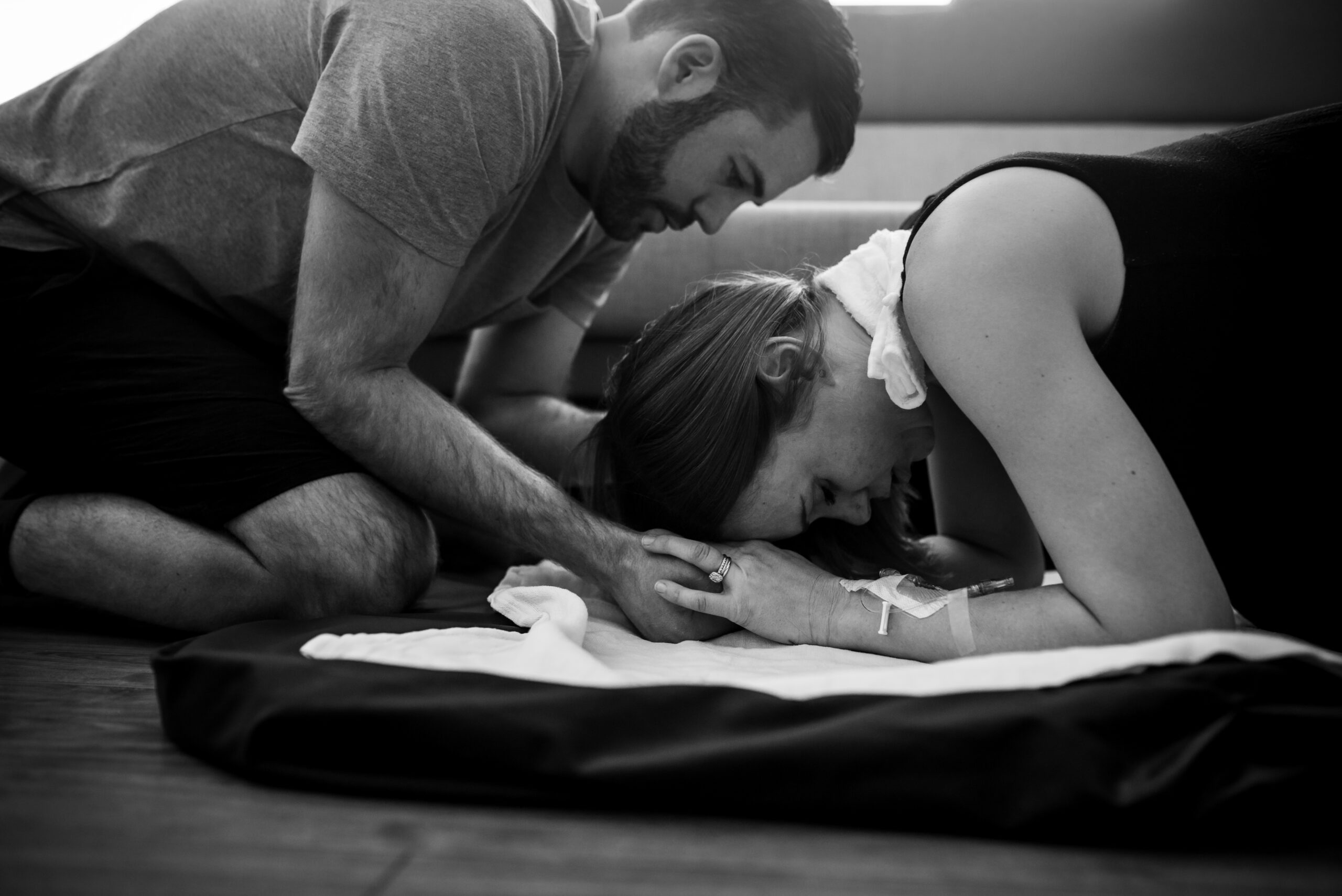
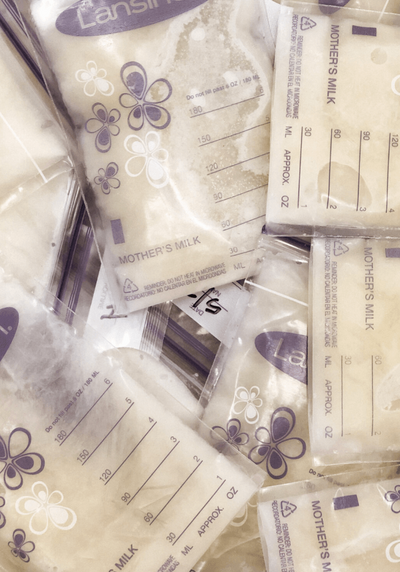
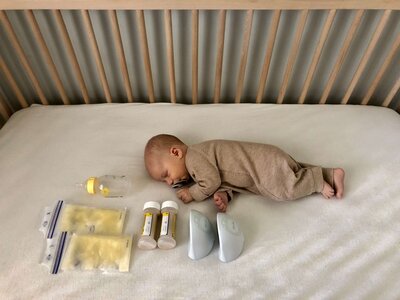
Hello, hello, friends! In this heartfelt episode of Lo & Behold, I sit down with Hannah, one of my amazing birth course students and a military mama who’s navigated some seriously wild twists on her path to motherhood. She opens up about her fertility journey – think IVF rollercoasters, repeated early miscarriages after Clomid and methotrexate, and the emotional gut-punch of late implantations that just didn’t stick. Then, we dive into her two birth stories: the first a grueling multi-day induction at a military hospital, marked by intense cramping from Cytotec and a Cook’s catheter, a traumatic scalp stimulation, and finally welcoming her son after an hour-and-a-half of pushing (with some accidental lat workouts thrown in!). We touch on her raw postpartum struggles too – bonding challenges, mastitis, high lipase milk, and granulation tissue. It’s real, it’s messy, and it’s a reminder that there’s no “best” way through any of this.
Fast-forward to baby number two, and Hannah’s second induction is like night and day – empowered choices at a civilian hospital, gentle providers who actually listened, a quick progression with Pitocin and water breaking leading to fetal ejection reflex, and a smoother postpartum with better breastfeeding prep and therapy healing those first-birth scars. I love how Hannah pulls wisdom from her first experience, leaning into education and advocating like a boss.
Helpful Timestamps:
- 01:24 Birth Story Day: Meet Hannah
- 02:04 Hannah’s Journey to Pregnancy
- 08:14 IVF and Pregnancy Success
- 10:46 Labor and Delivery Challenges
- 24:09 Her First Birth Experience: A Quiet Arrival
- 25:41 Postpartum Challenges: Breastfeeding Struggles
- 26:34 Hospital Stay and Recovery
- 29:40 Second Pregnancy and IVF Journey
- 31:04 A Better Birth Experience
- 40:08 Postpartum Reflections and Future Plans
- 44:48 Resources and Recommendations
About your host:
🩺🤰🏻Lo Mansfield, MSN, RNC-OB, CLC is a registered nurse, mama of 4, and a birth, baby, and motherhood enthusiast. She is both the host of the Lo & Behold podcast and the founder of The Labor Mama.
For more education, support and “me too” from Lo, please visit her website and check out her online courses and digital guides for birth, breastfeeding, and postpartum/newborns. You can also follow @thelabormama and @loandbehold_thepodcast on Instagram and join her email list here.
For more pregnancy, birth, postpartum and motherhood conversation each week, be sure to subscribe to The Lo & Behold podcast on Apple Podcasts, Spotify, or wherever you prefer to listen!
👉🏼 A request: If this episode meant something to you, would you consider a 5 star rating and leaving us a review? Yes, we read them, and yes, they help keep L & B going! ♥️
Connect with Lo more on: INSTAGRAM | TIK TOK | PINTEREST | FACEBOOK
Disclaimer
Opinions shared by guests of this show are their own, and do not always reflect those of The Labor Mama platform. Additionally, the information you hear on this podcast or that you receive via any linked resources should not be considered medical advice. Please see our full disclaimer here.
Additionally, we may make a small commission from some of the links shared with you. Please know, this comes at no additional cost to you, supports our small biz, and is a way for us to share brands and products with you that we genuinely love.
Produced and Edited by Vaden Podcast Services
Transcript
Motherhood is all consuming.
Speaker:Having babies, nursing, feeling the fear of loving someone that much, and there's this baby on your chest, and boom, your entire life has changed.
:It's a privilege of being your child's safest space and watching your heart walk around outside of your body.
:The truth is.
:I can be having the best time being a mom one minute, and then the next, I'm questioning all my life choices.
Speaker:I'm Lo Mansfield, your host of the Lo and Behold podcast, mama of four Littles, former labor and postpartum RN, CLC, and your new best friend in the messy middle space of all the choices you are making in pregnancy, birth, and motherhood.
Speaker:If there is one thing I know after years of delivering babies at the bedside and then having, and now raising those four of my own, it is that there is no such thing as a best way to do any of this.
Speaker:And we're leaning into that truth here with the mix of real life and what the textbook says, expert Insights and practical applications.
Speaker:Each week we're making our way towards stories that we participate in, stories that we are honest about, and stories that are ours.
Speaker:This is the lo and behold podcast.
Lo:Hello.
Lo:Hello.
Lo:Today is Birth Story Day.
Lo:I have Hannah here with me.
Lo:She is a student of mine and she's gonna share her two birth stories with us.
Lo:Before we get started, I did wanna mention to you that Hannah does briefly mention in her own story some history of sexual assault, and then there's some IVF and some repeated early miscarriages.
Lo:So if any of that feels tender to you or not something that you wanna take in right now, I would encourage you to just skip this episode and come back when, or if you feel ready to listen to it.
Lo:Hannah, I am so glad to have you here and to see your face because I feel like we've been talking off and on Nike as socials and classes and courses, I don't know, for years.
Lo:So it's really fun to see you guys in person.
Lo:Why don't you go ahead and introduce yourself to everybody, your family, whatever you wanna share, and then we'll just get into your birth story.
Lo:So.
Hannah:All
Hannah:right.
Hannah:My name is Hannah.
Hannah:My husband and I have two kids, an almost two and a half year old and a just
Hannah:three month old.
Hannah:He's in the military.
Hannah:I was in the military.
Hannah:I'm not anymore.
Hannah:So we move around a lot.
Hannah:And we are currently in Virginia, and kind of hanging out on the east coast for a bit.
Lo:Mm-hmm.
Lo:Let me just say, I don't know if it's cheesy, but I'm gonna say it regardless.
Lo:Thanks for your guys' service.
Lo:One of my best friends is in a military family, and I feel her dad, her brothers now her husband, and just as much as you guys all move.
Lo:I know you said you're not in anymore, but man, just to be married to someone in the service or obviously when you both are, it is.
Lo:Wild.
Lo:How much you just keep shifting your lives because that's part of what you do.
Lo:So just a thank you from me and my family to you and your family.
Hannah:Well, we just found out
Hannah:that where we're going next summer, we'll be there for three years and I'm like, oh, we haven't been in a, in one place for three.
Hannah:Like what do we do it three years or before?
Hannah:COVID, like, I don't, what if I hate the house for three years?
Hannah:Like that's a long time.
Hannah:You can't
Lo:switch.
Lo:Yeah.
Lo:Yeah.
Lo:Well, thank you.
Lo:Anyway,
Lo:keep going.
Hannah:Okay.
Hannah:So when we, started trying for kids, we thought we were really smart, and we planned it out, where we were living his job, all the things, and super exciting.
Hannah:And we, he tried this, not scientific at all approach, that the idea is depending on.
Hannah:When you're ovulation, when you ovulate, and when sperm is present, whether like sperm is present before ovulation or after determines the gender of the child.
Hannah:Oh yeah, that's the thing.
Hannah:Lots of people do
Hannah:that.
Hannah:Oh, yeah.
Hannah:Oh, nothing.
Hannah:I know I'm not the only one, but I also know, but I dunno that it really
Hannah:works that much, but you're not the only one.
Hannah:So we were, we were all in on trying for a boy, so, you know, got the, the.
Hannah:Sticks that you pee on to tell you about your luteinizing hormone and everything.
Hannah:And, and there's a another thing that can tell you if your progesterone rose afterwards to make sure you've ovulate all the things.
Hannah:And we try.
Hannah:And I like that first month I was like, oh my gosh, we're gonna have a baby.
Hannah:And then it was negative and it was like, okay, lemme try it again.
Hannah:And then it was negative.
Hannah:And then we tried again and it was negative and I was like, okay, maybe, maybe we'll stop the, like trying for a boy thing and just like try in general.
Hannah:And still negative.
Hannah:And after, I think it was like five negatives in a row and I knew that, I knew when I was ovulating, I knew that I had ovulated.
Hannah:I went to an ob.
Hannah:We had just gotten to a new duty station and.
Hannah:I may have fibbed and said that we had been trying longer, because I was like, I don't have time for this.
Hannah:Also not the only
Hannah:person who's done that
Hannah:either, right?
Hannah:So he said, let's, he did some blood tests and said, you're ovulating.
Hannah:It's not super strong, so let's try medication.
Hannah:So we tried Clomid and nine, 10 days.
Hannah:11 days after ovulation tested negative next couple days, still negative.
Hannah:And I'm like, okay, this sucks.
Hannah:Previously my period was like clockwork.
Hannah:So 14 days post ovulation, I was supposed to get my period and I didn't get it.
Hannah:And I'm going, Ugh, what did your medication do to me?
Hannah:So I called the OB and I said, Hey, period's late.
Hannah:And they said, come on in.
Hannah:So I go in the next day.
Hannah:And they make you take a pregnancy test like they do, anybody that comes into the ob and he walks into the room and I'm sitting on the table and he says, you're pregnant.
Hannah:And I was like, no, I'm not.
Hannah:I've, I've tested, I'm not.
Hannah:And he was like, no, you are.
Hannah:I'm like, well, okay, it's late then.
Hannah:It's a super late implantation, which means it's not gonna be viable.
Hannah:And he's like, yeah, well, let's test your blood and we'll just see.
Hannah:So I, I knew.
Hannah:From all my research, I didn't add in, you know, this, I'm a nurse, er nurse, not l and d.
Hannah:So I had done a deep dive into mm-hmm.
Hannah:All things pregnancy.
Hannah:I knew that late implantations had a low, possibility of becoming viable.
Hannah:Mm-hmm.
Hannah:So I, I knew it then that this was not going to be a viable pregnancy.
Hannah:It was a weekend.
Hannah:He said, well draw your blood.
Hannah:We'll see what your HCG is.
Hannah:Come back on Monday, we'll do it again.
Hannah:I. Another nursing friend, who couldn't look at her husband and get pregnant, talked me into being super positive and going like, this is it.
Hannah:You're fine.
Hannah:You're healthy.
Hannah:This is it.
Hannah:So I went home and got one of the expensive pregnancy tests.
Hannah:Yeah.
Hannah:Peed on one of those and took it to my husband's office and, 'cause he knew I was going into the OB and I said, you know, hey, why don't I just stop by?
Hannah:And I walked into his office and closed the door and I pulled the stick out.
Hannah:From my pocket, and he jumped up with this just elated look on his face and grabbed me, and he's not, he's a very reserved person.
Hannah:You do not know what emotion is going on, so like this reaction from him, and I feel so bad because that never happened again.
Hannah:Because this, that pregnancy ended in a miscarriage.
Hannah:Mm-hmm.
Hannah:It wasn't, HTG was super low.
Hannah:It wasn't, doubling like it was supposed to.
Hannah:And, I unfortunately started bleeding and then it wasn't stopping and they couldn't, no, I think I, no, I had.
Hannah:I wouldn't start bleeding.
Hannah:I had not started to miscarry, and they were like, it's taking some time.
Hannah:Because they didn't know if it was in uterus or on the fallopian tube.
Hannah:I did methotrexate, started bleeding.
Hannah:Bleeding lasted for like six weeks.
Hannah:Wow.
Hannah:Not great.
Hannah:And that went into, unfortunately our anniversary trip to Jamaica.
Hannah:So that was great.
Hannah:Took a month off, tried again.
Hannah:Exact same thing happened, like literal, exact same timing of everything.
Hannah:And we just had really bad luck.
Hannah:That time we found out, that this pregnancy test was positive but very late.
Hannah:We were in Paris.
Hannah:We were gonna go to the Eil Tower that day, and we were going to the Louvre, and I was like, we should stop going on vacations because this is clearly, this is the issue.
Hannah:So.
Hannah:Same thing, methotrexate again.
Hannah:And he said, we can try again.
Hannah:Or, you know, I said, I wanna look into a fertility specialist,
Lo:mm-hmm.
Hannah:And possibly IVF.
Hannah:So we found a clinic, that looked good, headed out to it.
Hannah:And long story short, with that, we did a cycle of IVF, which was rough.
Hannah:It's just there, there's a lot of one, there's a lot of medication, which mm-hmm.
Hannah:That I was fine with.
Hannah:But then that week that you are going in constantly and it's, do you, you know, do you have enough follicles?
Hannah:Are they growing, are they growing together?
Hannah:Like, are you gonna have enough to do the, retrieval?
Hannah:Mm-hmm.
Hannah:Make it through those like 10 days, do the retrieval.
Hannah:And we got like, I think 22 eggs.
Hannah:Which is great.
Hannah:Mm-hmm.
Hannah:And then it, it goes down.
Hannah:How many of those are right?
Hannah:Mature.
Hannah:How many of those fertilized, how many of those made it to day five at least?
Hannah:Blast decisive embryos and we only had four that made it.
Hannah:Okay.
Hannah:So we sent them off to be genetically tested and three came back viable, two boys and a girl, which is what we wanted.
Hannah:And I was like, this is, this is what it means.
Hannah:And now we're good.
Hannah:So we transferred the, the best graded boy and I was actually good.
Hannah:I waited the whole, no, I didn't, I was not good.
Hannah:I did not wait.
Hannah:I waited nine days and then tested and it was positive and we're both sitting there looking at it and we're both like, we'll just see.
Hannah:Like it was not a happy, it was, we, I don't think either of us believed it was gonna be a thing.
Hannah:And that was the rest of the pregnancy that, like each milestone that we hit.
Hannah:Okay.
Hannah:Got a heartbeat.
Hannah:Okay.
Hannah:Yeah.
Hannah:Got like all the things even up to anatomy scan, like we didn't tell anybody.
Hannah:Very, very few people knew, until the anatomy scan.
Hannah:And then it was like, I guess we should tell some.
Hannah:People.
Hannah:Mm-hmm.
Hannah:Some family and stuff.
Hannah:And I, had, was in a really bad place mentally, mental health wise, the rest of the pregnancy, even though things were going well, I just innately did not believe that I was gonna go home with a living child.
Hannah:We were moving, we were gonna be moving like two months after the birth.
Hannah:So that was a really easy way for me to be like, people would ask you, what do you need?
Hannah:And I'd go, oh no, no, we don't, we don't need anything.
Hannah:We're gonna be moving so we don't wanna take it with us, kind of a thing.
Hannah:We got a stroller, a car seat, a bedside bassinet, and I think a changing table.
Hannah:And that was it.
Hannah:And I was like, and I kept the boxes.
Hannah:We took them outta the box.
Hannah:We built all the things, kept the boxes.
Hannah:'cause I was like, we're, we're gonna have to return 'em.
Hannah:So we need to keep this, and going into my, I was gonna be induced.
Hannah:Which I, when I first found out I was really angry about and then realized this is you need this because you're too OCD.
Hannah:You can't let things just happen.
Hannah:You need, we need somebody to take care of the dogs.
Hannah:Like, I need to know when this is, I have an autoimmune disease.
Hannah:So that was part of it.
Hannah:And because of that also, I was doing N MSTs twice a week.
Hannah:Mm-hmm.
Hannah:And I did them on Tuesdays and Fridays, and then I was gonna be induced on Saturday.
Hannah:So I go in there on my last, Friday and, you know, I'm in a, I'm in a good mood.
Hannah:I had done my last workout, which I was just, so, I did not love working out pregnant.
Hannah:I had made myself a box of mac and cheese, added like a pound of extra cheese and then ate it all, and head in for my NST.
Hannah:And he was not totally cooperating.
Hannah:He didn't have any de cells.
Hannah:But he didn't have as much variability as they wanted.
Hannah:Mm-hmm.
Hannah:And they say, okay, he doesn't look bad, but he doesn't look great.
Hannah:So since you're gonna be induced tomorrow, why don't you just come in tonight?
Hannah:Mm-hmm.
Hannah:And I'm like, I don't want to, I have things to do at home.
Hannah:Like this is not part of the plan.
Hannah:So unfortunately.
Hannah:I was admitted that night.
Hannah:So we moved some things around and they started induction that night.
Hannah:So from like 3:00 PM on Friday to about 3:00 PM on Saturday, it was just cytotech.
Hannah:And I was.
Hannah:Like fingertip and nothing else.
Hannah:On Friday and over that 24 hours, it only progressed to like one centimeter and 25% a face.
Hannah:The weird thing was that I was not aware of, that could happen is really, really, really bad cramping.
Hannah:And I was just like, I didn't, I didn't see that coming.
Hannah:I didn't know that that was gonna be a thing.
Hannah:But after 24 hours of Cytotech not doing a lot, they said, let's start Pitocin.
Hannah:And we'll quit the Cytotech.
Hannah:That was better pain wise.
Hannah:I felt contractions, but they weren't painful.
Hannah:Just like whole stomach getting hard.
Hannah:But then it would, you know, go up and go down and it was fine.
Hannah:Yeah.
Hannah:Cramping was still a little bit there, but not horrible.
Hannah:So we were at least moving somewhere very slowly on day two.
Hannah:Yeah.
Hannah:When I was finally dilated to a solid wand, they said, let's try a cook's cath.
Hannah:And that was awful.
Hannah:She, you know.
Hannah:Was the nicest she could be, but it was just not going in.
Hannah:'Cause my cervix was still super tight, so, so painful.
Hannah:Right.
Hannah:They could only inflate both sides like 50% of the way.
Hannah:Mm-hmm.
Hannah:Um, and then it was like, are we even doing anything at all?
Hannah:Horrible back pain.
Hannah:Like, just not, and I'm going, man, like I'm not, I'm barely into this and I'm not handling this well.
Hannah:I had wanted no epidural, was still open to it, but I was like, you're not even in labor yet and you're dying, like, you're not gonna make this.
Hannah:But it was all the cramping, the, the contractions were not painful at all.
Hannah:It was this continuous cramping that I was just like, I did not have that on my bingo card.
Hannah:Overnight pain was really bad.
Hannah:The provider that was on said, we can do some IV morphine and then I am morphine.
Hannah:That will keep you like act long, a longer acting basically since it goes in the muscle.
Hannah:And I said, okay, let's try that.
Hannah:I got some sleep for like an hour, which was glorious, but then I woke up in horrible pain and I was like, oh, that didn't last as long as I wanted it to.
Hannah:Spent the night kind of like rolling around and stuff.
Hannah:He was.
Hannah:Not having as much variability as they wanted.
Hannah:No D cells, but just kind of chilling.
Hannah:Mm-hmm.
Hannah:So did some fluids, did some movement, and by the end of the night at almost shift change, that was the second night that I had, the same nurse.
Hannah:And I said, like, I hate to say this, but like, I feel like I need an epidural.
Hannah:Like I, this is just not working.
Hannah:And so we talked about how to phrase it to, because.
Hannah:Get an early epidural, basically.
Hannah:Yeah.
Hannah:And we had this plan and I'm like, okay, this is what we're gonna do.
Hannah:And then the new provider came in and she was a midwife.
Hannah:And this was, I, I had my son at a military hospital, so some of the providers were civilian and some were military, and she was active duty.
Hannah:And, she walked in, introduced herself, and said.
Hannah:We're not really happy with how he's been on the monitor.
Hannah:So we're gonna try a couple things and if they don't work, we're gonna go to the OR and do an emergency C-section.
Hannah:And I was like, that escalated quickly.
Hannah:I mm-hmm.
Hannah:Okay.
Hannah:Was not thinking that.
Hannah:I did not know he was in that bad of shape.
Hannah:Okay.
Hannah:So the first thing was take the cook's cath out and immediately I heard the nurse say, oh, look, he perked up.
Hannah:Okay.
Hannah:And then the second thing was scalp stimulation.
Hannah:Mm-hmm.
Hannah:And I knew what it was and I, but I didn't know what I was in for.
Hannah:So I laid down and she starts, and the, the pounding in of her knuckles on the bottom of my pelvic bone and just the like force that she was.
Hannah:Thrusting with, was fairly unbearable.
Hannah:I was holding my husband's hand with one hand in the back of the headboard with the other to stop myself from not ramming into it.
Hannah:Started silent crying.
Hannah:I'm not a, I'm not a verbal person.
Hannah:I'm not loud person, so I'm sitting there just silently crying and thinking like.
Hannah:Like this has to stop.
Hannah:Like it was hurting me.
Hannah:I could feel her finger thumping his head every time and just going like, this is, this can't be normal.
Hannah:And.
Hannah:She finally decided that that was enough and he had had enough accelerations.
Hannah:And she goes, okay, so he's fine.
Hannah:And I'm like, I don't know.
Hannah:Like that was very bipolar view, emergency C-section.
Hannah:Okay, he's fine.
Hannah:Like that was okay.
Hannah:And I'm still silently crying.
Hannah:And she stands up and she's very tall and looking down over me.
Hannah:Bed's in lowest position, so I'm very low.
Hannah:She's very tall.
Hannah:Yeah.
Hannah:And she just looks at me and goes.
Hannah:I'll
Hannah:give you a minute to get yourself together and walked out.
Hannah:And I was like,
Hannah:oh my, and I mean,
Hannah:in the moment that was, it was awful.
Hannah:And I didn't realize how much that was gonna affect me.
Hannah:That was something I ended up in therapy afterwards.
Hannah:Just for that interaction.
Hannah:I, many, many years ago I was sexually assaulted and.
Hannah:That plus the aftermath, which had the start of the destruction of a relationship with a family member, the legal stuff that went on, just all the things would rather have that have happened like 10 more times than.
Hannah:That interaction with that provider doing the scalp simulation.
Hannah:Like, I like it just the entire thing.
Hannah:The, the violence of it and then her demeanor.
Hannah:Mm-hmm.
Hannah:I was just, I, that broke me.
Hannah:So ironically I never saw her again.
Hannah:There was a, another provider on and he came in, and I had asked for an epidural at that point and they said, well, this was Sunday anesthesia's in the OR with something else.
Hannah:We'll, we'll call on call.
Hannah:Then they came back and said, we need to do your labs, we need platelets.
Hannah:Okay, great.
Hannah:So did labs, platelets were fine because I had lower platelets throughout pregnancy, but nothing horrible.
Hannah:Mm-hmm.
Hannah:And waited and waited and waited and kept asking the nurse for the provider and kept getting excuses of why the provider was not gonna come in.
Hannah:And finally came back in and said, so we didn't call on call.
Hannah:We're gonna wait.
Hannah:And I was like, okay.
Hannah:So.
Hannah:Thanks for telling me.
Hannah:We've sat here now for almost seven hours with no interventions.
Hannah:Mm-hmm.
Hannah:Pitt was turned off Cytotec and stopped, like all the things just sitting there.
Hannah:And she was saying, we're not gonna, you can wait for the epidural.
Hannah:And we're not gonna start anything else because we don't know how a baby's gonna react.
Hannah:And I'm saying, well, why don't we just, you know, start Pitocin over?
Hannah:And she said, well, he looked horrible overnight.
Hannah:We are not gonna do that.
Hannah:And I'm like, we looked horrible overnight.
Hannah:'cause I had marks like I, I had drugs that were making him sleepy.
Hannah:Mm-hmm.
Hannah:Those have now worn off.
Hannah:We can do Pitocin again.
Hannah:And she's like, well, no, we don't know that it was the narcotics.
Hannah:It might have been the Pitocin.
Hannah:We don't know.
Hannah:And I was like, well, he was great on Pitocin for seven hours previously.
Hannah:Mm-hmm.
Hannah:I don't, I'm not understanding why we're not.
Hannah:And she, like, I just had no options.
Hannah:I wasn't given choices.
Hannah:It was just, this is what we're doing and that's all.
Hannah:And I was like, okay, if we're not doing anything, can I eat?
Hannah:Because I had not been allowed to eat anything.
Hannah:And they're like, no.
Hannah:And I'm like, what are we doing then?
Hannah:Were you contracting on your own?
Hannah:Like had your body, so okay.
Hannah:So literally doing nothing.
Hannah:Yeah, just chilling.
Hannah:So get the epidural, which was fine.
Hannah:But then I didn't have any feeling in these two fingers and in the back of my shoulder.
Hannah:Mm-hmm.
Hannah:Breathing was fine.
Hannah:Could totally breathe was fine.
Hannah:Mentioned this to anesthesia and he kind of like, everything was titrated appropriately, like nothing was wrong, but for some reason I didn't have feeling on kind of my left side.
Hannah:And he was like, we're starting over.
Hannah:Took everything out bad juju, like
Hannah:new, new
Hannah:bottle, new line, all the things.
Hannah:And I'm like, okay.
Hannah:Like waited until I felt everything, in my legs to start over.
Hannah:Finally gets it back and I have feeling back and we're good.
Hannah:So the other provider comes in, and we're asking him like, Hey, we're, we're kind of upset, like we kind of been hanging here.
Hannah:Doing nothing for hours.
Hannah:Yeah.
Hannah:And we're not being giving any choices or like, this is, this is not okay.
Hannah:And he was kind of like, I'm sorry you feel that way.
Hannah:Nothing.
Hannah:And he allowed for to restart the Pitocin.
Hannah:But he was.
Hannah:He was kind of sitting on the bed talking to himself and he said he was gonna check my cervix to see how dilated I was, which I was fine with.
Hannah:But then with the epidural, I, I could not obviously feel much.
Hannah:I did not know.
Hannah:He then did a membrane sweep and broke my water.
Hannah:We didn't talk about that.
Hannah:Mm-hmm.
Hannah:And he was like, okay, you're four centimeters.
Hannah:And I could hear my water like pouring on the floor.
Hannah:And he is like, so, and we'll get this cleaned up.
Hannah:And I'm like, oh, did my water break?
Hannah:And he was like, no, I just did.
Hannah:And I'm like, thanks yeah, for that chat about that.
Hannah:'cause then I'm, you know, concerned about how, you know, what if I don't have him in 24 hours and then we're concerned about all the things.
Hannah:Still said you can't eat.
Hannah:I'm so hungry.
Hannah:But at least Pitocin was starting again.
Hannah:So going into Sunday night, they titrated Pitocin, and was just, they were just moving me overnight.
Hannah:They did flipping babies.
Hannah:Mm-hmm.
Hannah:So all the leg contortions and all the things, started having back spasms on my left side called anesthesia.
Hannah:They said, this is not an anesthesia thing.
Hannah:It sounds like spasms.
Hannah:So my husband was trying like every 30 minutes we were doing something like a massage or a heating pad or, and it just wasn't, it was just getting worse and worse and by like 5:00 AM Monday morning.
Hannah:I did not know it.
Hannah:It must have been in transition.
Hannah:'cause I was like, I'm done.
Hannah:We are.
Hannah:I'm, I did not want a C-section.
Hannah:Over anything else.
Hannah:And I was like, I'm doing a C-section.
Hannah:This is stupid.
Hannah:We're done.
Lo:Sounds like transition.
Hannah:Yeah.
Hannah:So called the provider and I had the same midwife, the whole weekend, Friday, Saturday, and Sunday night.
Hannah:And she comes in and she's, and she was great.
Hannah:She was like, I'm so sorry.
Hannah:Let's just see where you are and you know, otherwise like we'll go right to the or.
Hannah:So she's checking and then I see her face like just surprised.
Hannah:And I'm like, what?
Hannah:What Now what?
Hannah:Now what?
Hannah:And she's like, you are 10 centimeters, a hundred percent a face and a negative one station.
Hannah:You're having a baby.
Hannah:And I was like, oh, but I just decided to have a C-section.
Hannah:Like right now I have to, now I have to like, okay, we're doing this.
Hannah:So it's like right at shift change, of course.
Hannah:And the nurse came in and, you know, she said, okay, let's, let's do some practice pushes.
Hannah:And I was like, can I, I don't wanna push on my back.
Hannah:And she was like, well, what do you wanna do?
Hannah:And I was, and at that point, very little sleep.
Hannah:Not a lot of food.
Hannah:Forgot everything that you said about the different positions.
Hannah:And I was like, I don't know, on my side with the peanut ball.
Hannah:And she was like, no, you can't.
Hannah:That's great.
Hannah:And I was like, okay, I have no, I have no fight in me.
Hannah:Fine, I will push on my back.
Hannah:So I started pushing at six 30.
Hannah:And it just, with the epidural, I could still feel my legs but not do much with them.
Hannah:They just felt like giant like.
Hannah:Redwood trees, chunky things that wouldn't do anything.
Hannah:And like, so I couldn't hold onto my leg for any, like, counter pulling or anything, but they had handles and mm-hmm.
Hannah:And, yep.
Hannah:One of the other nurses was, as I hold the handles, I get it in my head that I need to pull against these handles.
Hannah:So for the next hour, every time that I pushed, I'm, I'm pulling as hard as I can because I'm just delirious by now.
Hannah:Completely tiring myself out trying to do an arm exercise, like while having a baby.
Hannah:Right.
Hannah:And it was a slow process, but it was, I only pushed for an well an hour, not only, but it was an hour and a half.
Hannah:And mm-hmm.
Hannah:He was finally born and it was very quiet in the room.
Hannah:And I was so exhausted that I just didn't.
Hannah:I didn't have it in me to say anything, and they're holding him above me, drying him off, and he is looking at me.
Hannah:He's not crying, but he's also like, we are making eye contact, like he's not in distress.
Hannah:I'm waiting, you know, to hear an APGAR score, don't hear anything.
Hannah:He kind of makes a, and they continue drying off and then lay him on my chest and didn't hear an APGAR score again.
Hannah:And like no one's saying anything.
Hannah:No one's talking to me.
Hannah:No one's been like, congratulations, he's here like nothing.
Hannah:And I finally was like, is he okay?
Hannah:And they were like, yeah,
Lo:right.
Lo:Like, like, are good.
Hannah:Okay, cool.
Hannah:And I was just like, from the last four days, and then just being so tired from mm-hmm.
Hannah:Doing a lat workout while pushing.
Hannah:It was just shocking.
Hannah:Laid there for a while, I tore slightly.
Hannah:So, you know, delivered placenta.
Hannah:They were like, do you wanna see it?
Hannah:And I was like, is it weird?
Hannah:And they said, no, it's normal.
Hannah:And I was like, no.
Hannah:I just wanna see it if it's, you know, something's wrong with it, otherwise I've seen placenta.
Hannah:It's fine.
Hannah:And it was kind of just surreal from then on.
Hannah:'Cause I honestly did not believe we were going home with a baby.
Hannah:And then this living baby was like, Hey, I'm here.
Hannah:Mm-hmm.
Hannah:And I'm like, I don't know what to do with you now.
Hannah:Breastfeeding was not natural at all.
Hannah:It was, it was, it was rough.
Hannah:And I kind of immediately started pumping but then didn't have the right flange size because I didn't know you were supposed to talk about those
Hannah:things.
Hannah:And it was just.
Hannah:The bad, nursing,
Hannah:Experience started in the hospital and, and extended for weeks.
Hannah:And they wouldn't take the epidural out because they didn't, they turned it off, but they wouldn't take it out.
Hannah:So big thing.
Hannah:Taped to my back until they got, platelets in because my platelets had dropped to 63 the morning of delivery.
Hannah:So they had mass transfusion protocol hanging outside the room just in case.
Hannah:I did get TXA during, birth, but I didn't, didn't have any bleeding.
Hannah:And so then we waited for platelets to come back and for them to come up enough for, for anesthesias to decide to pull the, catheter.
Hannah:And we were in the hospital for, we went home on Wednesday, so admitted on Friday.
Hannah:Went home the next Wednesday.
Hannah:Postpartum was rough.
Hannah:I, was not bonded to him at all.
Hannah:I was exclusively pumping and having problems with it.
Hannah:So I would pump while my husband would feed him a bottle.
Hannah:So I, we didn't have that, the nursing, the connection there.
Hannah:I had a volatile relationship with the pump instead.
Hannah:Had mastitis, had just all, all the problems.
Hannah:So many nights of a clogged duct and doom scrolling of what you need to do and heating pad wet.
Hannah:Heat versus cold versus get in the shower and use a, a haka.
Hannah:Like, it just, it was awful.
Hannah:And there were so many times that I was like, just quit.
Hannah:Just stop.
Hannah:It's fine.
Hannah:Fed is best.
Hannah:It's fine, just stop.
Hannah:And I could not, I couldn't make myself stop.
Hannah:He had a lip and a tongue tie, so nursing was not gonna work until that was taken care of.
Hannah:And then we were moving.
Hannah:So it was just, it was a really rough time.
Hannah:And I was bedridden because.
Hannah:One of the small tears that I had popped, and when I went in to have it res, sutured, granulation tissue formed, and that's incredibly painful and the only way to get rid of it is by burning it off.
Hannah:So I went in the first like two or three weeks postpartum.
Hannah:I went back I think four times to have, it.
Hannah:What is it?
Hannah:Liquid nitrogen to off.
Hannah:So I was, you know, couldn't walk, couldn't sit, couldn't feed my baby.
Hannah:Like it was just, it was bad.
Hannah:But he was fine and he was healthy, and I needed to figure out like, you have this baby now.
Hannah:Like, I know you didn't plan for this, but he's here.
Hannah:So it took, it took a while to settle into.
Hannah:A place of like, feeling like I had any type of control or handle on anything.
Hannah:We did get his lip and tongue tie fixed.
Hannah:I worked with, lactation so much, and was able to nurse him after, I think by like 13 weeks I was exclusively nursing.
Hannah:But continued some pumping, to try to build up a stash.
Hannah:And then months later found out, as you know, that I had li High lipase and we tried all the things and I think like it was, what he would accept was like one drop of breast milk to like eight ounces of milk with.
Hannah:Vanilla extract.
Hannah:Otherwise he was, he was not taking, because it was, it was gross.
Hannah:I mean, soap to the extreme.
Hannah:So that was, that was another, like, I had no idea this was a thing.
Hannah:Like I just, I was not prepared for the nursing and lactation side of things.
Hannah:I did not know that that was something that you really need to do.
Hannah:Mm-hmm.
Hannah:Your due diligence before birth.
Hannah:So yeah.
Hannah:I got through therapy, worked on some things, knew that we wanted more kids, but I was like, I, I don't know how to do this again.
Hannah:Time went on, when he, right after he turned one, we were gonna do another transfer.
Hannah:We were in a different state by then.
Hannah:Worked out with our IVF clinic to, do it.
Hannah:Remote.
Hannah:So like all the, the monitoring was in Florida and then, okay.
Hannah:That went well.
Hannah:It was fine.
Hannah:We flew up to North Carolina and went to the clinic.
Hannah:Everything was going great.
Hannah:We transferred the girl and thought everything was fine and she didn't stick.
Hannah:And it was just kind of a, like, this just happens.
Hannah:So then it was, okay, we have one embryo left.
Hannah:Do we put all of our eggs in this basket?
Hannah:Literally.
Hannah:And then if he doesn't stick, we know we're doing a whole nother round of IVF, the whole retrieval.
:Yeah,
Hannah:yeah, yeah.
Hannah:So we decided to do another retrieval, and in hindsight, it was a horrible decision not to just stay with the clinic in North Carolina and do the back and forth.
Hannah:Decided to use a clinic that was local and it was awful.
Hannah:They were very much a, a numbers clinic.
Hannah:Just need to get people in here, boost our numbers.
:We ended up with I think two, two boys and two girls.
Hannah:After all was said and done and they transferred one of the girls and she stuck and we.
Hannah:I went into this one a little much better mentally.
Hannah:We were planning for her to stay alive and be born.
Hannah:So went through that pregnancy.
Hannah:We knew we were moving towards the end of it.
Hannah:So we were able to move to our new duty station, which is here.
Hannah:We're in Virginia right now,
Lo:right?
Hannah:And established with an OB here.
Hannah:They did not have a military hospital close to us, that I could deliver at, and I didn't want to again.
Hannah:So I was using the civilian ob and from, it was like night and day, how great they were from just even seeing the ob, like even trying to coordinate from being out of town, getting records like just.
Hannah:Mundane things, but like how great they were at it.
Hannah:I had the same OB the entire time.
Hannah:He was fantastic.
Hannah:And, MFM was fantastic.
Hannah:There were a ton of them.
Hannah:And they were all, it was just, it was, I did not know that you could have that type of experience, with providers and.
Hannah:I got down to scheduling induction and, we scheduled it for, they didn't do it on weekends, so we ended up scheduling it for, like 38 and five.
Hannah:Instead of 39.
Hannah:Mm-hmm.
Hannah:And I saw my OB the day before.
Hannah:He checked me because if I was not dilated at all, I was gonna go in that night and do cyto attack overnight.
Hannah:I was at, I was at two centimeters and 60%.
Hannah:So he was like, Nope, go in, go in tomorrow morning.
Hannah:I'll see you tomorrow morning.
Hannah:We, yeah.
Hannah:Got up bright and early.
Hannah:Went to Denny's.
Hannah:I had so much food just in case.
Hannah:Went in just in case.
Hannah:Right.
Hannah:And right.
Hannah:You know, you never know when you're not gonna eat.
Hannah:Yeah.
Hannah:And this other provider comes in and she was like, your OB had a death in the family last night.
Hannah:He's not gonna be here.
Hannah:And I'm like, I'm very sorry about that, but I'm like, damn.
Hannah:I really wanted him to be here.
Hannah:But she and I sat down and talked.
Hannah:She asked what I wanted, what I didn't want.
Hannah:And she was basically like, you are, you are driving this train.
Hannah:Let's, let's do what you want.
Hannah:And if something comes up, we'll talk about it.
Hannah:I'm like, Ugh.
Hannah:That's just new to me.
Hannah:So we did two doses of Cyto attack, and it was a little crampy, but not awful.
Hannah:Oh, I guess I should add this in.
Hannah:The reason why the cyto attack was so awful and the cook's cast was so awful and all the things is because I had scar tissue on my cervix.
Hannah:So it would not dilate.
Hannah:It was trying to break up while I was dilating and that was just, yeah, not, not great.
Hannah:No more scar tissue this time, so mm-hmm.
Hannah:Things were much easier.
Hannah:So after the two doses of cyto attack, there were like, do you wanna try cooks Cath?
Hannah:And I was like, I will try it.
Hannah:But it was so awful last time and it was a different provider that came in and did it, and she was so.
Hannah:Like gentle and like she'd move like an inch and be like, are you okay?
Hannah:Another inch be like, are you okay?
Hannah:And I'm like, no, no, you're good.
Hannah:Like this is okay.
Hannah:I'll, I'll tell you if it's bad.
Hannah:Completely different than, than the other time.
Hannah:Left that in for like two hours, and then tugged a little bit and it fell out and they're like, great.
Hannah:You're like five centimeters now then.
Hannah:Okay.
Hannah:Should we start Pitocin?
Hannah:And they were like, do you wanna start Pitocin?
Hannah:And I was like, sure.
Hannah:Like it was, it was very much like, let's talk about what you want and we'll do whatever you want.
Hannah:I was like, let's, it'd be great if I could have the baby today and not like four days later.
Hannah:And they're like, we'll go as fast or slow as you want, as long as it's yeah, safe.
Hannah:And I'm like, okay.
Hannah:So I mean, we'd gotten there, started Cytec at nine in the morning.
Hannah:This is now.
Hannah:Three in the afternoon.
Hannah:Started pit every 30 minutes, increased, got to mm-hmm four 30 and I was at six of pit.
Hannah:And is that where they, I I feel like it was the cutoff, like they don't go any higher.
Hannah:Was feeling contractions.
Hannah:Just depends.
Hannah:I've gone way higher, so Yeah.
Hannah:Maybe there, yeah.
Hannah:I was feeling contractions, but they weren't, they weren't awful.
Hannah:And I was like, let's, let's do a cervical check.
Hannah:See where I'm at?
Hannah:I was at six and she was like, if you really wanna like push things on, we can break your water.
Hannah:And I'm like, sure, let's do that.
Hannah:Let's see what happens.
Hannah:That was the key because then I felt everything and was like, okay, I can no longer sit on a ball and watch Hulu.
Hannah:This is not.
Hannah:Yeah, a breathable situation.
Hannah:So within like 10 minutes, I am
Hannah:really feeling the contractions.
Hannah:It was sadly not the like belly get hard ones.
Hannah:It was the like really low uterine cramping that was just like, this is, this is your mm-hmm.
Hannah:Your period on.
Hannah:wasn't comfortable laying or sitting down, so I, I sat the bed up and turned around and was kind of like hanging over it, like on my knees.
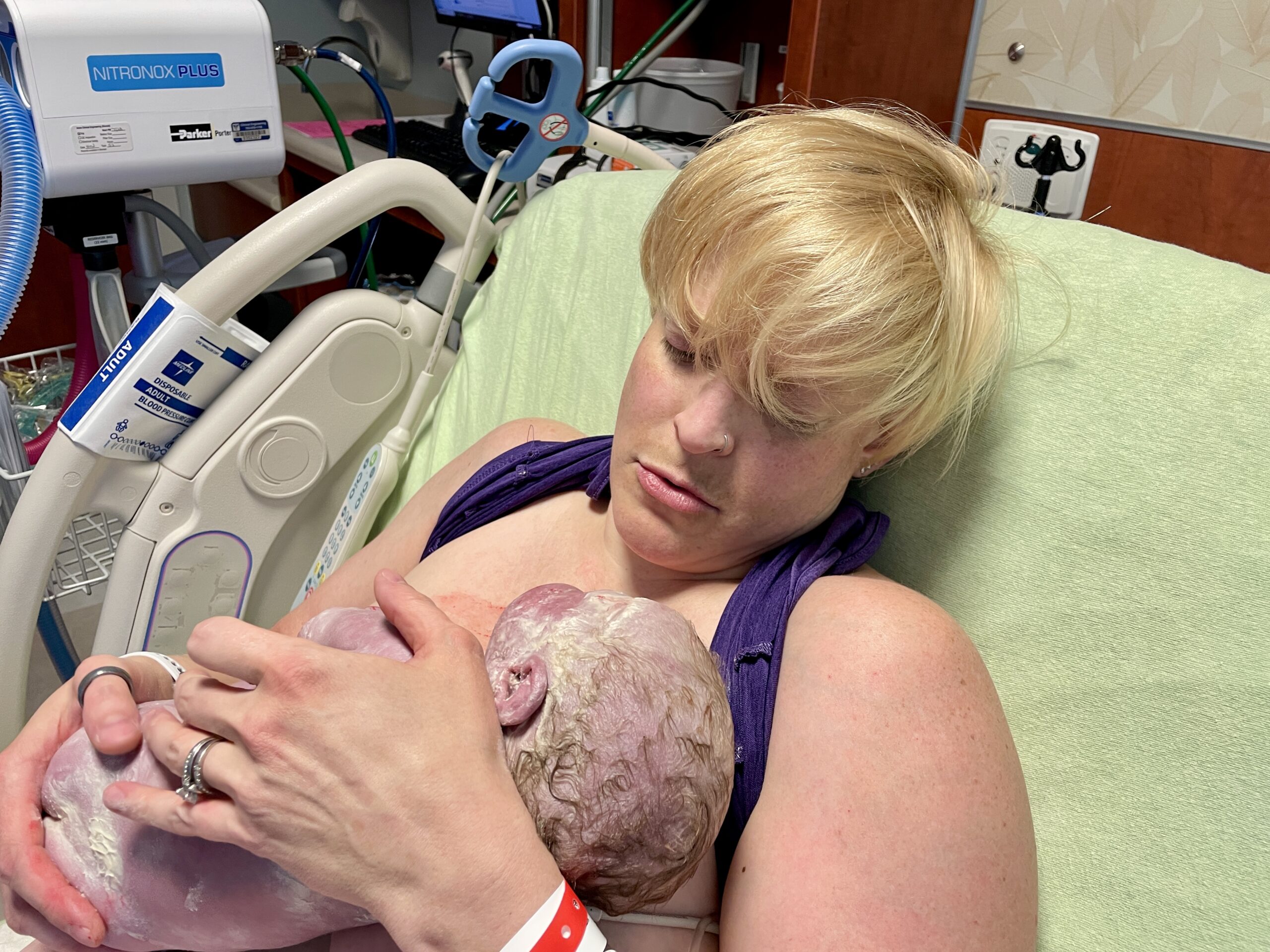
Hannah:Decided to try Nitro, which I didn't know.
Hannah:It makes sense, but I didn't know that the mask was gonna be, so, like, you'd have to fully seal it to your face and then take it off to exhale.
Hannah:That's hard to do when you're in pain.
Hannah:And also didn't know that you needed to start doing it like 30 seconds before the contraction starts.
Hannah:My contractions were two minutes apart, so I was not getting a, a great break.
Hannah:Between like doing the mask and all the things.
Hannah:My husband was doing hip squeezes and at one point he was like, do you think the nitros working?
Hannah:And I said, I don't know.
Hannah:Let me try one without.
Hannah:And it was too much for my brain to really weigh like, is this working or is this not?
Hannah:And I was kinda like, I'm just gonna do it, it's fine.
Hannah:And same thing with hip squeezes.
Hannah:He, he tried something else one time and I was like, I don't know, just keep doing it.
Hannah:So he was, you know, jump, he would jump on the bed, hip squeeze, also watching the time, tell me, okay, start breathing now.
Hannah:And I do the Nitro and then get through it.
Hannah:And you know, he was, he was directing everything 'cause I was just useless at this point.
Hannah:It had been maybe half an hour and the nurse comes in and turns the Pitocin off and she's like, your contractions are too strong and they're too close together.
Hannah:And I'm sitting there thinking, oh, great.
Hannah:Okay.
Hannah:They're gonna slow down a little bit.
Hannah:They're gonna feel better.
Hannah:They changed.
Hannah:Nothing changed at all.
Hannah:And I was like, you are setting me up for failure here.
Hannah:Mm-hmm.
Hannah:I was really hoping for like a break, and started feeling a lot of pressure.
Hannah:So I called the nurse, 'cause she was just kind of in and out like letting me go.
Hannah:And said, you know, I'm feeling a lot of pressure.
Hannah:Mm-hmm.
Hannah:So she came in and she checked and I was 10 centimeters.
Hannah:A hundred percent and negative.
Hannah:No positive one station.
Hannah:Is that the low second to lowest?
Hannah:Is it two?
Hannah:So I was at one, and she was like, okay.
Hannah:I'll call the provider and I'm like, okay, look, you do that.
Hannah:And I think it was maybe like five minutes later I couldn't see anybody.
Hannah:I could only, 'cause I'm facing the back wall, the computer's next to me, so I could see if she was charting, but I didn't know who else was like in the room behind me and I glanced and the provider wasn't in there.
Hannah:So I, I call again and they pick up like at the worst part of the contraction and you know, hi, how can I help you?
Hannah:And all I could get out was I got a poop, like hoping that would like, okay, she's about to have a baby, let's get in there.
Hannah:'cause I just had no other like way to get that point across.
Hannah:So they come in, I hear 'em, providers, you know, sitting on the bed and stuff, and.
Hannah:Like a minute later, I feel her crown and I have my wits about me this time, and I'm like, all right, we're gonna stop.
Hannah:We're gonna breathe.
Hannah:We're gonna pant through this so you don't tear.
Hannah:And my body said, no, you're not fetus ejection reflex.
Hannah:Twice and she's out.
Hannah:I didn't push at all.
Hannah:She fell onto the bed.
Hannah:They didn't know she was coming and they, and I heard this.
Hannah:Whoa, okay.
Hannah:And I'm like, is everything okay?
Hannah:They're like, yeah, she's here.
Hannah:And I was like, well, I know.
Hannah:Sorry.
Hannah:I tried not to.
Hannah:So then kind of like sat down and twirled umbilical cord and everything, and.
Hannah:They put her on my chest and, you know, she was great.
Hannah:She was crying already.
Hannah:Super small compared to Cody.
Hannah:My first, and tore pretty bad because my body was like, we're done with this.
Hannah:You're going really glad that I learned about that from you.
Hannah:'cause I did not, I wouldn't, that would've scared the crap outta me.
Hannah:And I'm, that should be something that people talk about more because your body deciding your baby's coming out versus you deciding I'm going to push you out is terrifying actually.
Hannah:She was fine.
Hannah:I had.
Hannah:Done more of my due diligence on nursing and everything.
Hannah:And she latched mm-hmm.
Hannah:While I was still laying there in that first hour and just postpartum was so different and, in the hospital and even, you know, getting outta the hospital and stuff.
Hannah:And it was a complete night and day.
Hannah:Difference of, experiences and I'm glad it happened that way because if the good experience had been first and then the bad experience had been second, I would not have wanted that to be like how I left things.
Hannah:Yeah, I don't think we, we are not going to do a third, even though we had said that all along because of the, like the IVF.
Hannah:It's just, it's such a mind.
Hannah:Screw.
Hannah:And it's mm-hmm.
Hannah:It's just not something that I can handle again.
Hannah:So we have, we have our two Yeah.
Hannah:Perfect little kids.
Hannah:And this has just been a very, very wild, last couple years of so much planning.
Hannah:And then what is it?
Hannah:The you plan and God laughs and I'm like, well, God must think I'm real funny then because everything that we planned just was something else outta left field is what happened.
Hannah:But for Cody, I did deep dive induction and that was super helpful.
Hannah:Mm-hmm.
Hannah:Knowing options and what.
Hannah:Things are normally done and whatnot.
Hannah:And then I did your body or birth, for the second one.
Hannah:And loved Kelvin's part in that and has been really, appreciated that too.
Hannah:Because I, in the first birth he was mm-hmm.
Hannah:I mean, he was just as kind of like, stumped as I was on like, this is not what I thought this was gonna be either.
Hannah:So Right.
Hannah:Thank you for, you know, doing that and being the person that you are.
Hannah:That was very helpful.
Lo:Of course.
Lo:Well, thank you for sharing all of your stories.
Lo:I love hearing when people have one more than one story to share because I feel like.
Lo:You can see like the wisdom grow, right?
Lo:Mm-hmm.
Lo:And so like these parents are pulling forward what they learned the first time and you see that play out or you're pulling forward like something that did not go a certain way the first time and then it makes you get more education or get education if you didn't like, even with breastfeeding, like I was listening to you talk about the first time and I was thinking 'cause.
Lo:Now I have a breastfeeding course too, and there's obviously lots of resources for people, but it's like there is just so much you don't know until you know it.
Lo:Right.
Lo:And some of these things are really big to try and navigate in the moment.
Lo:So if we can, yes.
Lo:Get familiar with them before.
Lo:It doesn't mean your baby won't be tongue tied or it doesn't mean you don't need a Cook's catheter, but like to not have everything come feel like it's coming outta left field.
Lo:It's just like such a game changer.
Lo:So.
Lo:When you have wisdom, it's so helpful.
Lo:And then if you pull education through as well, it's just like putting that all together.
Lo:It feels like you have this classic first birth, really hard, really long, like all those things.
Lo:And then second birth, it's like you knew what was going on, your body knew what was going on.
Lo:Your husband knew more of what was going on, and so, so often you do, you just get that.
Lo:Better experience.
Lo:Mm-hmm.
Lo:Because you're pulling so much forward from the first time too, so it's just, yeah.
Lo:It's just nice to hear, I think for those people who have that rough first time knowing like it can be better.
Lo:And then I also is your first time going okay.
Lo:Like, yeah.
Lo:Yes.
Lo:And knowing like you can have a good first time too.
Lo:I don't want anyone to hear me saying that's not true.
Lo:But like you said, like, oh, learning education, like learning how to advocate and speak up in some of those hard combos, like all of that stuff that we hear about on social media or wherever we are, it does matter.
Lo:And it does.
Lo:Mm-hmm.
Lo:It does make a difference.
Lo:Yeah,
Hannah:and even like, like as a nurse, I know that advocation for our patients and everything is huge and I have no problem doing that.
Hannah:And I, so I didn't think that was gonna be an issue for me as the patient.
Hannah:And it still is.
Hannah:So like even going into things knowing like, oh, I know what to do in this situation.
Hannah:There might be extenuating circumstances where it's like, you, you can't do what you thought you were gonna do, or something just doesn't go the way that you thought it was.
Hannah:Mm-hmm.
Hannah:And knowing like, that's not the end of the world.
Hannah:Move past it or, you know, figure something else out.
Hannah:'cause I, I was sure that I would be able to speak my mind and in the moment I couldn't at all.
Hannah:And it
Hannah:was, that was, that was another learning thing.
Hannah:Right.
Lo:right.
Lo:Okay.
Lo:Well, I know you mentioned I, you're a student and obviously it's funny 'cause so much of what you shared.
Lo:I'm just remembering like dms and messages and all of it.
Lo:Like I'm familiar with your story and then sometimes I'm like, oh, she needs to explain more 'cause I know what she's talking about.
Lo:But not everyone does.
Lo:So you shared a ton just, which is great.
Lo:And.
Lo:Yes, you were a student with me.
Lo:Any other though, like birth, podcasts, books, like other things that you did love either with baby number one or with baby number two as you've gone along?
Hannah:So I think,
Hannah:I think the
Hannah:first,
Hannah:People that I saw on Instagram that had anything to do with, with pregnancy and birth, was Mamas Day Fit.
Hannah:And it was, it's about working out.
Hannah:Mm-hmm.
Hannah:During.
Hannah:Or prenatal and then postpartum.
Hannah:And I hadn't really thought about like what to do with that.
Hannah:So that that was, oh, okay, great.
Hannah:Someone's gonna tell me exactly what I need to do for my body to get ready to give birth.
Hannah:And it's a, mm-hmm.
Hannah:It's a pair of sisters.
Hannah:One is an L and D nurse who's in midwifery school right now.
Hannah:The other, has degrees in.
Hannah:I think kinesiology, and they have these courses that you can do.
Hannah:Mm-hmm.
Hannah:All with working out, they've got a pelvic floor phys physical therapist that works with them now, who's great.
Hannah:And I've, I've followed them.
Hannah:I think they were the first ones that I followed.
Hannah:And then shortly after I found you right, I think it was right after you guys moved overseas.
Hannah:And then just kind of.
Hannah:Once you follow one person, then you, the Instagram's like, follow this person too.
Hannah:And that's how you see everything.
Hannah:But mm-hmm.
Hannah:The you two mama stay fit and then you have been the, the big ones, that I have followed and then I, I do love.
Hannah:Okay.
Hannah:Babies over 35.
Hannah:She's a maternal fetal medicine mm-hmm.
Hannah:Specialist.
Hannah:And she debunks all the non-evidence based.
Hannah:Things like, she's just, she's very, she's a MFM, an OB that just knows everything.
Hannah:And so you have a question, shout something.
Hannah:I would just look up her stuff, to see is this real, is this fake?
Hannah:Is this the right thing to do?
Hannah:Is
Hannah:this what's, recommended?
Hannah:So on and so forth.
Hannah:But that was it.
Hannah:Okay.
Lo:Perfect.
Lo:And in terms.
Lo:In terms of someone, if they wanted to reach out to you or ask you a question or something about your stories and they do that, is there somewhere that you're comfortable with them DMing you or emailing you or whatever?
Lo:Where would that be?
Hannah:Yeah.
Hannah:I'm, I'm, all of my socials are, private, but absolutely send a message and, and I have,
Hannah:I have no problem talking with anybody.
Lo:Okay.
Lo:And then last question that I asked, just for fun, so it can be anything, what is something in your life right now that is just making you excited, sparking a ton of joy, just something really good Right now.
Hannah:My son is starting Montessori preschool tomorrow, and he, we went to his classroom today and.
Hannah:He's just so excited.
Hannah:He won't show it, but at home he's all excited running around school, school, school.
Hannah:And then he gets there and he is super quiet.
Hannah:Mm-hmm.
Hannah:But he's just, he's so excited for it and I'm, that makes me so happy because I hated school and I'm really glad that it looks like he's gonna like it.
Hannah:I love that.
Hannah:I just dropped my son off at his first day of pre-K today, so we're literally like right there with you.
Hannah:And he's excited and he's, he just walks in.
Hannah:I mean, we're walking out and he's like, mom can have a hug.
Hannah:Sure.
Hannah:And then, bye, see you later.
Hannah:So, okay.
Hannah:Bye.
Hannah:Super sweet.
Hannah:When they're excited and they are.
Hannah:They're not all always going to be like that excited.
Hannah:Right.
Hannah:So it's nice when they are so you don't feel like your heart is breaking 'cause you're doing something you know, bad to them or for them or whatever.
Hannah:So yeah, I hope it's good for you guys.
Hannah:Definitely concern about, because it's pretty sweet when they love it.
Hannah:Definitely concerned about leaving him tomorrow and him realizing like we are not staying.
Hannah:But you know, today it was great.
Hannah:Yeah.
Hannah:When we got to go in together and leave together.
Hannah:That was fun.
Hannah:Yeah.
Lo:Perfect.
Lo:Okay, well thank you so much, Hannah.
Lo:It was just so nice to hear the fullness of both stories and get kind of that like start to finish.
Lo:And also you're still only three months postpartum, so I feel like I should be saying like, good luck or keep going, or, you're doing great because you're still right in it.
Lo:So thank you for giving me an hour.
Lo:I know it's not easy with babies and kids sleeping in the house and all that, so thank you.
Lo:Of course.
Lo:Of course.
:Thank you so much for listening to the Lo and Behold podcast.
:I hope there was something for you in today's episode that made you think, made you laugh or made you feel seen.
:For show notes and links to the resources, freebies, or discount codes mentioned in this episode, please head over to lo and behold podcast.com.
:If you aren't following along yet, make sure to tap, subscribe, or follow in your podcast app so we can keep hanging out together.
:And if you haven't heard it yet today, you're doing a really good job.
:A little reminder for you before you go, opinions shared by guests of this show are their own, and do not always reflect those of myself in the Labor Mama platform.
:Additionally, the information you hear on this podcast or that you receive via any linked resources should not be considered medical advice.
:Please see our full disclaimer at the link in your show notes.