



Join The Breastfeeding Blueprint: www.labormama.com/breastfeeding & use the code PODCAST to save 20%
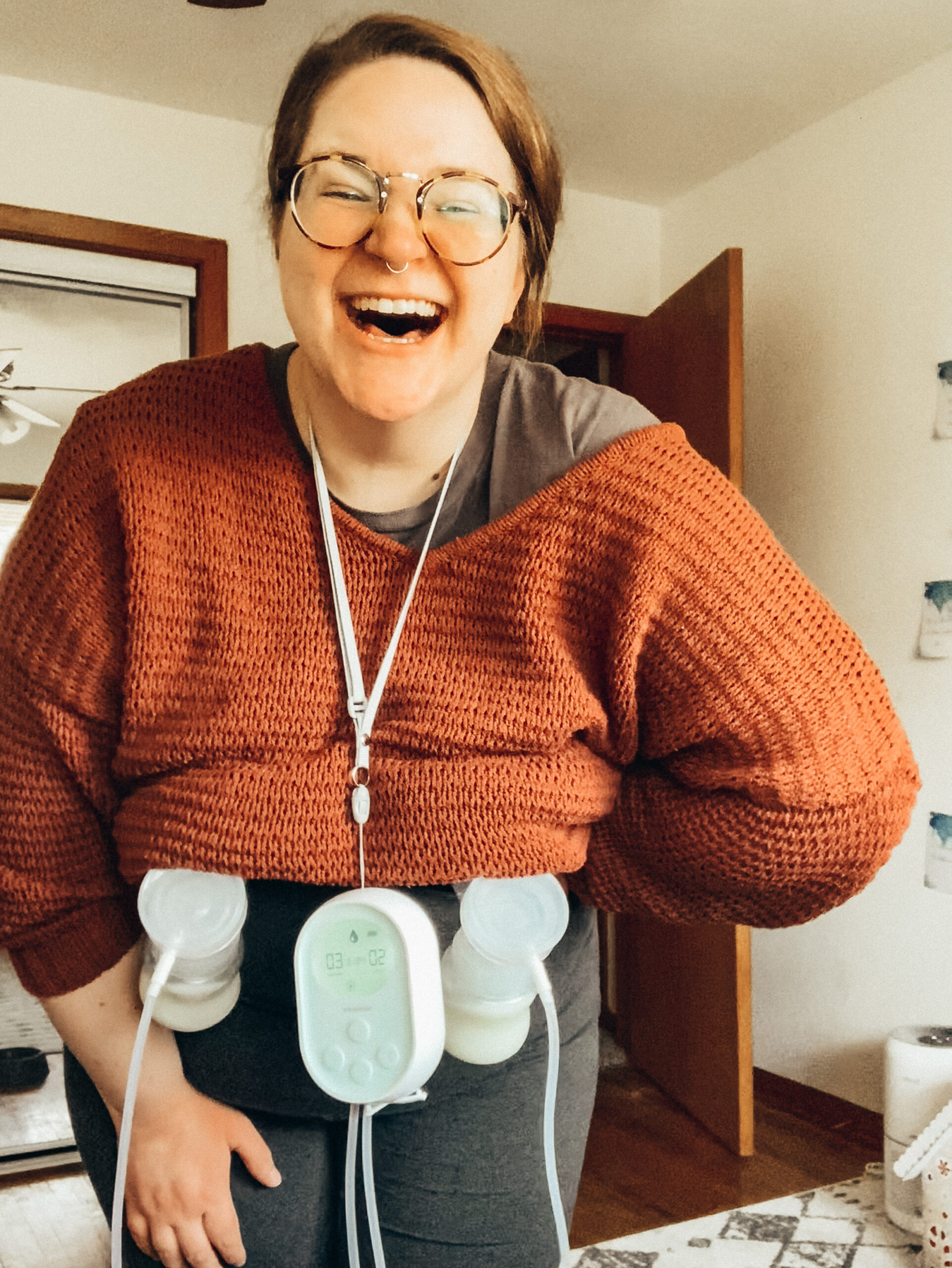
I sat down with Bethany (aka The Oversupply Mama), a CLC, NICU mama, autism mama, and someone who has lived both the exclusive-pumping trenches and a redemptive nursing journey. We get real about what oversupply actually feels like when it’s your reality and how to manage an abundant supply without experiencing recurrent mastitis.
What’s inside this episode:
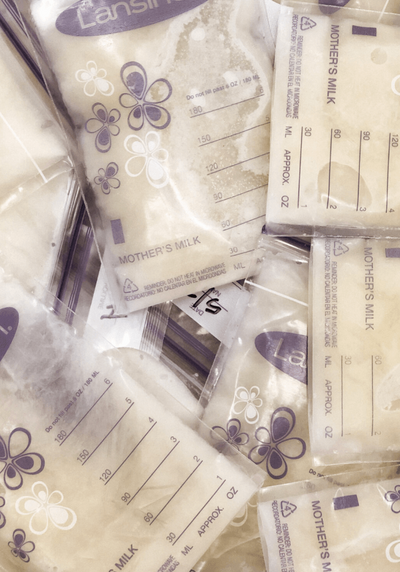
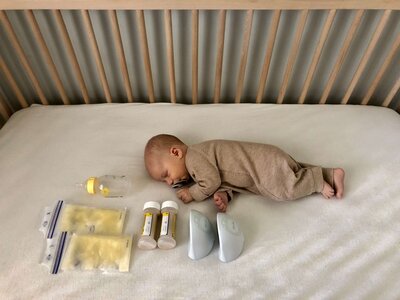
- Oversupply isn’t just “extra milk in the freezer” — it can mean daily clogs, mastitis scares, hours spent labeling milk bags, and legit stress. Your struggle is valid, even if someone else would “kill to have your problem.”
- Pumping done thoughtfully can actually extend your breastfeeding journey (yes, even if you nurse at the breast most of the time).
- You can absolutely nurse + pump + bottle-feed and still hit your “exclusive breastfeeding” goals.
- How to gently drop pumps or reduce supply (slow is the name of the game, friends).
- Why weaning (even just dropping one pump session) is emotional — hormones are wild, and it’s okay to both celebrate and grieve at the same time.
If you’re an exclusive pumper, or just curious about the “other side” of the supply conversation, this episode will make you feel so seen. And if you’ve ever thought, “Wait… I can keep my oversupply and actually enjoy it?” — Bethany’s got you.
Helpful Timestamps:
- 02:17 Meet Bethany: The Oversupply Mama
- 04:03 Navigating Pumping and Nursing
- 06:29 Understanding Oversupply and Pumping
- 18:09 Practical Tips for Managing Oversupply
- 22:54 Steps to Reduce Oversupply
- 27:23 The Emotional Impact of Weaning
- 29:35 Gradual Weaning Strategies
- 31:38 Adapting to Changes and Seeking Help
- 35:19 The Joy and Challenges of Pumping
- 41:57 Final Thoughts and Resources
More from Bethany The Oversupply Mama:
Follow her on Instagram: @theoversupplymama & TikTok: @theoversupplymama
Visit theoversupplymama.com
Grab the No More Mastitis Weaning Course
About your host:
🩺🤰🏻Lo Mansfield, MSN, RNC-OB, CLC is a registered nurse, mama of 4, and a birth, baby, and motherhood enthusiast. She is both the host of the Lo & Behold podcast and the founder of The Labor Mama.
For more education, support and “me too” from Lo, please visit her website and check out her online courses and digital guides for birth, breastfeeding, and postpartum/newborns. You can also follow @thelabormama and @loandbehold_thepodcast on Instagram and join her email list here.
For more pregnancy, birth, postpartum and motherhood conversation each week, be sure to subscribe to The Lo & Behold podcast on Apple Podcasts, Spotify, or wherever you prefer to listen!
👉🏼 A request: If this episode meant something to you, would you consider a 5 star rating and leaving us a review? Yes, we read them, and yes, they help keep L & B going! ♥️
Connect with Lo more on: INSTAGRAM | TIK TOK | PINTEREST | FACEBOOK
Disclaimer
Opinions shared by guests of this show are their own, and do not always reflect those of The Labor Mama platform. Additionally, the information you hear on this podcast or that you receive via any linked resources should not be considered medical advice. Please see our full disclaimer here.
Additionally, we may make a small commission from some of the links shared with you. Please know, this comes at no additional cost to you, supports our small biz, and is a way for us to share brands and products with you that we genuinely love.
Produced and Edited by Vaden Podcast Services
Transcript
Motherhood is all consuming.
Lo:Having babies, nursing, feeling the fear of loving someone that much, and there's this baby on your chest, and boom, your entire life has changed.
Jenn:It's a privilege of being your child's safest space and watching your heart walk around outside of your body.
Amy:The truth is.
Amy:I can be having the best time being a mom one minute, and then the next, I'm questioning all my life choices.
Lo:I'm Lo Mansfield, your host of the Lo and Behold podcast, mama of four Littles, former labor and postpartum RN, CLC, and your new best friend in the messy middle space of all the choices you are making in pregnancy, birth, and motherhood.
Lo:If there is one thing I know after years of delivering babies at the bedside and then having, and now raising those four of my own, it is that there is no such thing as a best way to do any of this.
Lo:And we're leaning into that truth here with the mix of real life and what the textbook says, expert Insights and practical applications.
Lo:Each week we're making our way towards stories that we participate in, stories that we are honest about, and stories that are ours.
Lo:This is the Lo and Behold podcast.
Lo:We are gonna talk about something today that I have not personally experienced with my four babies, but that my students, my clients, some of my friends have, and that when they do, when they have, I know that it can be a lot, both literally and figuratively.
Lo:I have brought Bethany on from the oversupply Mama.
Lo:She is a CLC with a focus on exclusive pumping oversupply and neurodivergent lactation.
Lo:She's a NICU mom, she's an autism mama, and she has experienced both birth trauma and redemptive birth, and you'll hear a little bit about all of that in our conversation today.
Lo:Ultimately, what I hope you get from this conversation though, is a good idea, kind of of what oversupply is, how it can impact you for sure.
Lo:And then resources and things to think about and think through as you prepare for your breastfeeding story.
Lo:And then if oversupply is a part of your breastfeeding story, how to kind of navigate that and how to feel about that.
Lo:Let's get into this conversation with Bethany.
Lo:Stephanie, thank you so much for being here with me today.
Lo:I'm super excited to get into this topic.
Lo:Know that it's gonna be really valuable for a lot of people.
Lo:Why don't you go ahead and introduce yourself.
Lo:Tell us more about yourself.
Lo:I kind of already gave your little official bio, but I'd love to hear what you have to say about yourself, your family, and what you do too.
Bethany:Yeah.
Bethany:Yeah, I'm Bethany.
Bethany:I am the oversupply mama.
Bethany:You might find that on like all of my platforms.
Bethany:But I talk specifically about oversupply, ACL C, so lactation professional.
Bethany:And I kind of have a background in exclusive pumping with my first son.
Bethany:He had a really rough start, so we were in the nicu.
Bethany:I ended up having an oversupply because I could only pump for him.
Bethany:And so with that, it.
Bethany:Kind of evolved into like, okay, no one's really talking about how to do this, how to do it well, how to pump well, and with an oversupply, and it's kind of just grown from there.
Bethany:Mm-hmm.
Bethany:So my first son, Brevin, had a really tough.
Bethany:Start to birth.
Bethany:We were in the NICU and then I just recently had my second son Corrin, and his birth was so redemptive and it is just wild to me where we now have a nursing experience and I never thought that I would get that and just navigating this kind of.
Bethany:In dichotomy of like both, and I can be exclusive, pumping and nursing, like that sort of thing.
Bethany:So that's really special to have.
Bethany:Not only that be part of my story, but also being able to help parents in the oversupply, in pumping, in nursing, not, I mean I'm, I don't feel as comfortable with that, but it's so cool being able to talk to parents about that.
Bethany:So that's kind of my vibe.
Lo:Perfect.
Lo:Thanks.
Lo:I love actually the like both and idea in all of this too, because when I'm teaching or sharing with moms, I've always been someone who nurses more but wants to pump too for, you know, the freedom or the babysitter or whatever.
Lo:And so I think that that education of, hey, you can do both and you can like nurse your baby to sleep once and then you can give them a bottle once and then you can pump one.
Lo:Like this is okay.
Lo:I think.
Lo:I think it's easy to kind of.
Lo:Think we're gonna mess something up if we introduce something or if like the goal is exclusively breastfeeding, which does include exclusively bottle feeding pumped milk as well.
Lo:Yes.
Lo:I think it's this idea that like, I don't wanna screw up maybe the nursing part, like nursing at the breast part, but you really can do all of this together and hit those goals if the exclusive part is really a goal too.
Lo:So I love when people are saying, no, no, no, we can do both.
Lo:We can do it in a healthy way.
Lo:Like your baby can go back and forth like.
Lo:There's absolute that relationship that can, yeah, that can be available to you.
Bethany:And I think part of the conversation with that is what we find and what the research shows us is that when pumping correctly and when it is done in a way where you know what you're doing mm-hmm.
Bethany:It can help extend the time period that you are.
Bethany:Your breastfeeding journey.
Bethany:Mm-hmm.
Bethany:So it can extend the duration of that.
Bethany:Mm-hmm.
Bethany:Which I think is a lot of parents' goal is to make it to six months, to make it, to a year to, mm-hmm.
Bethany:You know, do all of these really.
Bethany:Hard but beautiful things and when done correctly pumping can help get us there.
Bethany:Mm-hmm.
Bethany:And I think that is left out of the conversation a lot of the time where it's almost demonized, where it's, you know, don't, don't, don't pump for the first six weeks, you know?
Bethany:Right.
Bethany:Yes.
Bethany:Depending on your goals and what this looks like.
Bethany:We can do both and we can incorporate that well into our journey no matter what that looks like for, for you.
Bethany:And I think there's so many rules about like, yes, there are really specific and important things, but I think the beauty comes from adapting it well and, and figuring out what works well for your family.
Bethany:And saying, yes, I'm going to do this.
Bethany:Yeah.
Bethany:Or you know, I'm gonna wait on that.
Bethany:I'm gonna wait and see if that fits well for my family or no.
Bethany:And so I think that's really cool and we can kind of shift and have this really beautiful ebb and flow instead of being so strict about this.
Lo:Yeah.
Lo:You know, you kept talking about, like, you know, if it's done, I'm gonna say, well, like you said, or if you, you know, how to, you I'm talk, speaking to pumping, incorporating that in healthy ways or whatever, how it can actually extend the breastfeeding story.
Lo:And I was just thinking about that.
Lo:Even with my own kids.
Lo:I've just been someone who.
Lo:Add in a pumping session after the first few weeks to like make a little stash, which, no, you don't have to that, like, we could get into that, but like that's what we wanted to do to be able to have a little bit to go away or whatever.
Lo:And I'm thinking about even now, even when I've weaned, which we've been able to go past a year, I'm actually currently still nursing my 15 month old, but I actually still have milk in the freezer.
Lo:That in theory will extend.
Lo:The journey potentially when we're done weaning.
Lo:And it's not like we need it right at this point, right?
Lo:It doesn't have to be in the freezer.
Lo:But there even is that little idea of like, let's say we weaned, or let's say she stops tomorrow, but if she'll still take that out of her water bottle, like she's still gonna get breast milk because I pumped that milk.
Lo:And that's not like a reason you must pump because then you can give it to your baby when they're 15 months old.
Lo:But it is like that.
Lo:What you're saying is that extension.
Lo:The journey possibly just 'cause I, I happened to pump and have some extra and mm-hmm.
Lo:Like, in my opinion, did it in like a healthier, thoughtful way and knew what I was doing.
Lo:I think that was your phrase is if you know what you're doing and so I didn't Yeah.
Lo:Interrupt or mess with the supply or our relationship, but I do, I do have this milk that will.
Lo:Continue to, to serve her, you know, unless she starts refusing it or something.
Lo:Right.
Lo:And that's, that's another topic
Bethany:booster too.
Bethany:Like knowing like, Hey, I did this and I was able to do this.
Bethany:I was able to kind of, you know, put away a little bit in the freezer.
Bethany:And for some parents that's aren't important.
Bethany:Important to them and that's totally fine.
Bethany:Mm-hmm.
Bethany:But for some parents, like they one need to pump, we have to talk about the necessity of pumping.
Bethany:Two for a lot of parents going back to work and they financially have to work and.
Bethany:You know, we have to be able to talk about that and, and have that be constructive and how to do it in a way that is going to support your body.
Bethany:Mm-hmm.
Bethany:You know, there's a lot of nuances when it comes to pumping as far as, you know, flange size and, and, how to do it well and your equipment and, you know, all of these.
Bethany:They seem like very small things, but when we put them all together, yeah, they can make a really huge, huge difference.
Bethany:Yeah.
Bethany:So it's, it's been something that has brought a confidence in me and I really hope that that is the case for a lot of other parents too.
Bethany:But it's, it's brought forth.
Bethany:Sense of self where it's like, mm-hmm.
Bethany:I've done this.
Bethany:And I think that breastfeeding itself, I use breastfeeding as like an un umbrella term, whether it be you're feeding breast milk, be a G-tube, you're, you're nursing, you're pumping, all of that is breastfeeding.
Bethany:And it's so powerful.
Bethany:And I don't think a lot of folks realize how powerful it is until you're actually in it.
Bethany:You're actually doing it, you know the work that goes into it and you've done it yourself.
Bethany:Mm-hmm.
Bethany:And I think that is so cool.
Lo:Yeah, I agree.
Lo:After getting to have done it a few times, it is, it's, it's a pretty special thing for sure.
Lo:Yeah.
Lo:Okay, so I wanna go back to kind of what we were talking about is, hey, yeah, like doing this thoughtfully or doing it well, and let's talk about those early weeks and what it might look like, both specifically in regards to overly or maybe someone who has a history of it, but also just in general, like.
Lo:Your thoughts on introducing the pump or not, and reasons you might want to, and reasons, Hey, you actually don't really need to do this right now, and kind of.
Lo:That discussion for those really early weeks when we're just getting started with baby.
Bethany:Yeah.
Bethany:Yeah.
Bethany:One thing to just be aware of too is that in the first few months of breastfeeding, of nursing, however you decide to, to feed our body is producing a lot more milk.
Bethany:So I, we find that, that that's really common, for the first few months is to have.
Bethany:A, whether you call it oversupply or you have a surplus.
Bethany:And so sometimes that can be harder to navigate.
Bethany:It can, it can be really wonderful when you have a pump to support that oversupply.
Bethany:Because it can be so uncomfortable with clogs, with just feeling uncomfortable.
Bethany:It can be so helpful to initiate that and just relieve a little bit of pressure.
Bethany:Sometimes just that little bit can be so important.
Bethany:So it's.
Bethany:It's kind of up to you on whether or not you wanna introduce a pump right away.
Bethany:I have parents that bring their pump to the hospital and they're like, I'm gonna do this right away.
Bethany:I'm going to get started on this.
Bethany:And there's no right or wrong in that.
Bethany:There's a few ways where you can specifically do that.
Bethany:You can pump after your nursing sessions.
Bethany:Usually we find that a typical, pump session after a successful nursing session, it's not gonna look like a lot, but it really does mean a lot.
Bethany:It can be like half an ounce to about two ounces or so, depending on you, depending on your supply.
Bethany:We find that that's really normal, even if, you know, it doesn't always look like a whole lot.
Bethany:That's kind of our normal and standard supply.
Bethany:And when we talk about normal and standard supply, I think a lot of parents also don't necessarily know what oversupply looks like.
Bethany:Typically we find between, if you're exclusively pumping two to four ounces is gonna be more standard.
Bethany:Anything upwards of that, typically that's a little bit larger of, of that supply.
Bethany:So we can, we can pump after our nursing session.
Bethany:You can.
Lo:Okay.
Lo:I'm gonna interrupt for a second.
Lo:Oh yeah, go ahead.
Lo:Because you just threw out a, you well, no, you're good.
Lo:You just threw out a number and I know people latch on a number.
Lo:So when you're saying like typically, and again this is, there's a range here?
Lo:Yeah.
Lo:Like two to four ounces.
Lo:Are you saying pumping that much after nursing at the breast or some, that's like a standard pumping session.
Lo:Just
Bethany:that's if we have in general,
Lo:right?
Bethany:Yeah, that's If we have not had a milk removal session prior to.
Bethany:Yeah.
Bethany:Mm-hmm.
Lo:And so a two to four ounce is a pretty standard pumping output, which makes sense, right?
Lo:Yeah.
Lo:Because typically we all end up with babies who it's like, oh, they take about four ounces, and then some babies will take more, maybe a little bit less, but that's like such a standard
Bethany:mm-hmm.
Bethany:Kind
Lo:of volume for a feed.
Bethany:Yeah.
Bethany:Yeah.
Bethany:Yes.
Bethany:And we also have to consider like, how often are you pumping?
Bethany:Mm-hmm.
Bethany:Is it every three hours on the dot or is it every six?
Bethany:You know, if it's every six, then maybe we talk about what that looks like as far as your supply.
Bethany:So there are so many little nuances when it comes to supply.
Bethany:So I don't, I don't want us to focus on the number.
Bethany:Exactly.
Bethany:Again, this is low, this, this fluidity that we're talking about.
Bethany:But in general, if we're pumping every three hours without a milk removal session prior to.
Bethany:In general, you're probably going to be looking about two to four ounces per pump session.
Bethany:Mm-hmm.
Bethany:Is pretty typical and pretty normal.
Lo:And if you're consistently.
Lo:Over that, let's say six or six to eight, you might be someone who does, I guess I'm trying to clarify for the moms who are like, do I have oversupply?
Lo:And then the next question would be like, is it an issue?
Lo:And if not, like if it's working for you, you're okay.
Lo:But so more than that, especially consistently or like multiple pumps throughout the day might be an indication, Hey, your body's making a little bit extra.
Lo:Especially if baby is not taking that all in as well.
Bethany:Yes.
Bethany:Yeah.
Bethany:And we also have to be comparing.
Bethany:So you have to be comparing like what's your baby eating?
Bethany:Right, exactly.
Bethany:So I always go back to like, what is your baby taking your individual child?
Bethany:If, if you are creating 10 extra ounces, then your baby's eating to me.
Bethany:I call them an oversupply.
Bethany:I call it a baby oversupply, you know, because it's not a whole lot, but it still is extra.
Bethany:You know, so I, I really bring it back to what is your baby eating, because we have to be comparing that.
Bethany:So anything outside of that is going to be overly, and it is going to be that extra that you're putting in the freezer or that you're saving for milk bags or whatever it may be.
Bethany:Mm-hmm.
Bethany:Because we also, we also can't compare like volume to volume.
Bethany:Like if someone's baby is taking 20 ounces.
Bethany:You know, my baby's taking only five, you know, that's very, very different.
Bethany:Right.
Bethany:So, you know, we have to really consider the individual in this conversation.
Bethany:Right.
Lo:Well.
Lo:And one thing I like to always interject in these conversations too, as someone whose kids basically would never take more than four ounces at any four kids and not one of them ever took a six ounce bottle or eight ounce, like if I had extra or wanted like they wouldn't take it.
Lo:But I think it's important to one, acknowledge that that's totally normal.
Lo:My body like made what they wanted and they got it and that was it.
Lo:They like didn't want more or need more.
Lo:And two that my.
Lo:Body it.
Lo:There was nothing wrong with me or my body if it wouldn't pump extra or make extra.
Lo:Like our body's jobs in theory are to make what our baby is asking for.
Lo:so those other moms who maybe were pumping extra, their kids were taking nine ounce bottles is like, that's great for you guys.
Lo:And like your body's are doing great together.
Lo:And like me and my kids, we're doing something different, but we're also doing great together.
Lo:'cause I think sometimes.
Lo:When we get in the supply conversation, there's this idea of even if we look at our baby, right?
Lo:'cause how often we're like, look at your baby.
Lo:How's your baby doing?
Lo:Are they happy?
Lo:Like then hold on before you start freaking out about other things.
Lo:And so even so in that conversation, I just think it's important to say like even if you're looking at your baby and they're doing great and your brain's trying to go over here and say, but I can't really pump extra.
Lo:I don't have a lot in the freezer.
Lo:Like, you're still doing well.
Lo:Like your body's still making what your baby needs, which means it's doing its job.
Lo:It's nice to have extra.
Lo:Maybe you want a little bit of freezer stash, but not to necessarily sit here and think like, oh, this is a failure.
Lo:Or I'm super frustrated when you are either pumping nursing or doing both of those enough and your baby's getting what they need in that 24 hour cycle, like their body's doing a good job, even if another body does a different thing with their dyad.
Bethany:Yeah, and a few things with that is we have to remember that these larger bottle, you know, that we might see on social media or things like that, kids who are exclusively breastfed, we find that the volume stays really consistent, and that's because your body is quite literally creating and changing.
Bethany:The composition of that breast milk.
Bethany:So you might find that your baby won't take more than four or five ounces through the entire journey.
Bethany:And that is beautiful.
Bethany:That is wonderful.
Bethany:Right?
Bethany:Because that shows that your body is creating what they need from the bottom up, pretty much.
Bethany:Mm-hmm.
Bethany:Oh, there was something else I was gonna say and I lost it.
Lo:That's okay.
Lo:I think it's just valuable to remind people of that, so.
Lo:Mm-hmm.
Lo:Yes.
Lo:I like fully agree with what you just said too, that, yeah.
Lo:Is enough.
Lo:Like you, you're doing enough.
Lo:When your body recognizes what your baby needs, I mean it.
Lo:I just think that's actually so cool now that it's not cool if a body makes extra or whatever.
Lo:It's not like it's not paying attention to what the baby needs, but I actually think it's really neat to see the harmony of, this is my body that makes 32 ounces a day and my baby wants about 32 ounces a day, and that's what we do together.
Lo:I mean, that's pretty cool to think that that feedback system is all.
Lo:That intertwined and connected and, and speaking to each other like that.
Lo:Yeah.
Bethany:Yeah.
Bethany:Yeah.
Bethany:It's so cool.
Bethany:And, you know, getting on more of the conversation about, about oversupply and what that looks like to maintain it.
Bethany:Yeah.
Bethany:Like it's, it's really hard to one, be in a space where you're talking about oversupply on a consistent basis.
Bethany:And, you know, a lot of moms will say, well, I, I so wish I had that problem.
Bethany:Mm-hmm.
Bethany:And I think we have to see both sides of that, like.
Bethany:Yes, it would be so wonderful if you could feed your baby and have this extra, that would be amazing and wonderful.
Bethany:But we also have to look at the concerns.
Bethany:And these are very valid and very real concerns that oversupply parents have where we're purchasing extra freezers to literally accommodate for all of this breast milk.
Bethany:It's bagging up milk hours, sometimes hours a week, to make sure that it is safe.
Bethany:To make sure that, that we are providing for our babies and that we're keeping that safe.
Bethany:It's talking about how to remove at a very consistent way.
Bethany:Mm-hmm.
Bethany:Because otherwise I had a mom tell me that she literally left a house once the first time postpartum and she got messed.
Bethany:And so we have to have these kinds of conversations as well.
Bethany:And, you know.
Bethany:Sometimes when I'm in, in social media in my Instagram and I'm talking about oversupply, and it's almost like this, well, this is such a minimal problem because you can feed your baby a full supply.
Bethany:And it's almost giving to me, it's almost like, well you're, you skinny.
Bethany:You don't have to have that problem, or you're large and you don't have to have that problem.
Bethany:And I, I hate that.
Bethany:No matter where you are, no matter what kind of journey, what kind of milk supply you have, we all have our very individual concerns.
Bethany:And things that need to be addressed.
Bethany:And as a lactation counselor, like, I wanna make sure that you're seen and you're heard.
Bethany:And I don't think that anyone's concerns should be minimized regardless of your milk supply, regardless of what is going on.
Bethany:And I think that's one of the hardest things as an educator to talk about, is it seems so minimal, but really it, it is the same kind of stress, different stress.
Bethany:That's for sure.
Bethany:It's very different, but it's still stressed on a parent.
Lo:Yeah.
Lo:I know the mastitis moms that I've talked to and worked with our students who are saying, oh my gosh, I have oversupply, so I'm already like, how am I gonna do this with the next baby?
Lo:Just they've had multiple times where they know it's gonna happen again, type thing.
Lo:And I do think that.
Lo:It is a burden maybe that someone like myself doesn't fully understand, because it's not like, should you have oversupply, you can just turn it off, first of all.
Lo:second of all, like you have to manage it throughout or you could end up.
Lo:Like you said, with some pretty significant inflammation issues, mastitis, recurrent mastitis, so I think that maybe the general public or those who don't have oversupply could think.
Lo:It's easy to just turn off like, oh, if you don't want that issue, can't you just back it down type thing.
Lo:Exactly.
Lo:And for a, for a lot of people who have oversupply it, it doesn't work like that.
Lo:If you wanna give your baby breast milk, that means you're gonna deal with oversupply the entire time, which means pumping, like you said, cleaning a time commitment, like a, a really.
Lo:Good diligence about this kind of inflammation awareness.
Lo:Like I could leave my kids and know like, oh shoot, I'm a couple hours late.
Lo:Like, I'm probably gonna be okay.
Lo:You know?
Lo:Like I've always had that privilege, I guess I would call it, of Yeah, yeah.
Lo:Of knowing that it'd be all right.
Lo:And I have mamas and students who, I mean, they skip one feed, the baby sleeps a little longer at night, and it's like that quickly.
Lo:They're dealing with.
Lo:With pretty, you know, significant issues.
Lo:Yes.
Lo:They're often like resolvable or mastitis can be corrected, but it's not fun to go through that, especially over and over and over again.
Lo:So I guess, yes, I'm just reaffirming that it is something that is easy for people to dismiss because.
Lo:The reverse of it is like, you have enough milk for your baby.
Lo:And so I would, I'm gonna say like the person who may say like, I would kill for that, right?
Lo:Like that type of mentality, which they do feel like they will, they want to have enough.
Lo:Like that is primary goal, but that it does come with really significant, I'll say like struggle or complication alongside the privilege of yes, we make enough and, and it's actually one of the really hard parts of breastfeeding too.
Lo:So yeah,
Bethany:it's both and.
Lo:Totally.
Lo:Again, it's, it's
Bethany:both, you know, you have this really beautiful U journey where it's like, yes, I have, I, I, this is the part that I don't have to stress about is having the volume.
Bethany:But also on the other hand, that volume is the stress.
Bethany:Yeah.
Bethany:So it's all hand.
Lo:Yeah.
Lo:Mm-hmm.
Lo:Definitely to get really practical.
Lo:I was telling you before we started, sometimes I feel like because of what we see on social media, or even me, I just was saying I like to have a little bit in the freezer.
Lo:You know, like these kind of messages that there's the possibility that some of us almost.
Lo:Like create an oversupply for ourselves and then we have to end up backing that down later on.
Lo:Or we are, yeah, feeding baby and then pursuing this really full freezer, whether or not we even need it, just 'cause we think that's like how this needs to be done.
Lo:And then we have moms who truly do have some overp like you're talking about, where they can see the signs of it.
Lo:So what do you suggest for.
Lo:Moms really in either scenario, but to actually maybe start backing down a little bit, whether or not this oversupply is, I'm gonna say real, like self-created or persistent, like it's not going to go away, but what are some steps that people can kind of take if they're thinking, I'm making too much, I need to peel back a little bit.
Lo:Really, regardless of who you are, where do they start with that process?
Bethany:Yeah, and I'm gonna just preface this right away.
Bethany:If this is something of a concern for you, like.
Bethany:I have a course that I'm like, it's actively being released right now.
Bethany:So I call it the no mastitis weaning course.
Bethany:Mm-hmm.
Bethany:And it's specifically created for over suppliers and exclusive pumpers.
Bethany:So I'm gonna talk specifically about pumping because that is where my expertise lies.
Bethany:But a lot of that is to go slow.
Bethany:Very, very, mm-hmm.
Bethany:Slow, even slower than, you know, we hear about, you know, I, I hear parents say like, oh, I, I dropped a pump in a week.
Bethany:Well, for a lot of over suppliers, that's fast.
Bethany:Yeah.
Bethany:That's a lot of milk to, to try and cut back on.
Bethany:Mm-hmm.
Bethany:And so that can be hard for their body.
Bethany:But my, my suggestion to you is to go slower, and to cut out a few minutes every, every couple days.
Bethany:On a single pump session.
Bethany:Session.
Bethany:On a single session session?
Bethany:Yeah.
Bethany:On a single session.
Bethany:Mm-hmm.
Bethany:I think a lot of the mistake is, you know, I'm gonna cut back, you know, 10 minutes on all of my pumps.
Bethany:Right?
Bethany:And that's where the mistake lies, is where, right.
Bethany:It's too much for our body.
Bethany:It's too much.
Bethany:And you think about like, even it seems fast, you know, when we give birth and suddenly, or maybe not suddenly for some people, we have a note.
Bethany:We have when our body didn't a week beforehand.
Bethany:Right.
Bethany:Which is wild to me.
Bethany:It's so wild.
Bethany:But then thinking about going the opposite, we have to be gentle with our body and we have to give it the, the, the gentleness of how we started.
Bethany:You know, and so I think there's this like now, now, now mentality where, you know, we wanna increase our milk supply and it needs to be now, or I wanna decrease and it needs to be now.
Bethany:But in reality, our body is not a robot.
Bethany:Like we have to give ourselves and pace ourselves and, and have our body adapt and our body can adapt.
Bethany:We can increase supply.
Bethany:Ideally, you know.
Bethany:Within the first 12 months, even if, if not, you know, beyond that it's very, you know, typically it's very adaptable, you know, but when it comes to reducing that, we also have to give our body the time, the space, the peace to be able to do that gently and to keep our physical and mental stability in line.
Bethany:So my first recommendation is to choose one single pump session and focus on that.
Bethany:For a lot of parents that can be your middle of the night session.
Bethany:That's typically where we start because sleep is amazing and that's where we wanna start.
Bethany:Who wants to do
Lo:that one?
Lo:Yeah.
Lo:Yeah, yeah.
Bethany:Mm-hmm.
Bethany:Yeah.
Bethany:Another good place to start might be your, your dinner time pump.
Bethany:I don't know about your house, but my house is absolute chaos and so that's a really great place to start, is to try and cut out a little bit more stress, while cutting out that individual pump session.
Bethany:So taking it down a few minutes.
Bethany:Every few days, until you're usually say between five and 10 minutes.
Bethany:If your pump is any more than that, probably take it down a little bit more.
Bethany:But if your pump session is between five and 10 minutes long, you can probably cut that out, completely.
Bethany:Mm-hmm.
Bethany:And then, you know, we talk about, if you need to kind of help, help your body in that transition.
Bethany:You know, you might hand express or you might use your manual pump and, and just pump and for comfort, you know, not a full session, but just relieve a little bit of that discomfort.
Lo:Yeah.
Lo:Mm-hmm.
Lo:It's interesting, I think the oversupply conversation.
Lo:It's really a weaning conversation too, and I think sometimes we put a lot of us associate weaning with total cessation of breastfeeding, but this is all weaning.
Lo:Like if you're weaning back from a pumping session, if you're weaning baby back from one specific feed during the day, like this weaning process can kind of be something that.
Lo:Not cyclical, but could, and not perpetuity.
Lo:It's not forever ongoing.
Lo:Eventually they weed, but it's on, it could be ongoing for like a year, right?
Lo:Yeah.
Lo:Like my daughter already has been weaned back from the many feed she was doing, and now we're down to like three a day and I'm pretty sure we'll probably wean away from one more soon and she'll just do two.
Lo:So it's like this kind of consistent weaning that's happening, which is to some degree, yeah.
Lo:A consistent adjustment in supply.
Lo:I think my supply is.
Lo:Not super up and down at this point, her age, but certainly, yeah, there's still these little bouts of weaning, which I think I'm bringing up 'cause I do think it's valuable when we think about supply because we need to remember that.
Lo:It could bring along like emotions as our supply does change a little bit.
Lo:That, that there's just more to it than just like lopping off five minutes of the time that you are nursing or, but pumping, like we're talking about that it is a process
Bethany:that is emotional
Lo:part of this big process.
Lo:Yeah.
Bethany:Yeah.
Bethany:Yes.
Bethany:The I, I consider weaning to be.
Bethany:Anything where you're taking your current, your current right.
Bethany:Scatterer, your current schedule and bringing that down and then back up than it already is.
Bethany:Yep.
Bethany:And dropping a pump, like to me that's weaning, you know, you're taking a little bit off of that and there's some really, it's freeing for a lot of families.
Bethany:Yeah, absolutely.
Bethany:Free to be able like, oh my God, I don't have to get up in the middle of the night to do that.
Bethany:Totally.
Bethany:And, and I think it's, it's definitely in the conversation, especially with oversupply, where we can do this.
Bethany:And it doesn't have to be like one and done going down to absolutely zero.
Bethany:You can, you can do this weaning process in stages, in steps.
Bethany:It can be very fluid, you know?
Bethany:Yeah.
Lo:Yeah.
Bethany:Mm-hmm.
Lo:What do you say for someone who is doing this kind of gradual wean, like you're talking about from a session and I'm gonna say it's not working, or like, what are some other steps like that would work for me, but I'm sure there are some people where it's like, yeah, it's not really working, or I'm getting mastitis, or kind of what's, what about those moms who I'm gonna say that kind of initial intervention.
Lo:Doesn't totally work and they do need to back up that supply for whatever reason.
Bethany:Yeah.
Bethany:You know, I find that with over suppliers, a lot of times when they cut out sessions, they may not necessarily cut down volume.
Lo:Right.
Lo:It just moves.
Lo:It
Bethany:takes.
Bethany:Longer.
Bethany:Mm-hmm.
Bethany:And so I call it like a reallocation almost, where mm-hmm.
Bethany:Your body is taking, let's say, you know, your volume from two sessions and now it's back into one session, so you have a bulk amount of milk in one single session.
Bethany:So we really do have to almost change our mindset in, and it, it, it may not be as structured as we want it to be.
Bethany:And sometimes, right.
Bethany:Sometimes that looks like going backwards and saying, you know, I, my body really cannot handle this.
Bethany:I need to add in more time.
Bethany:And mm-hmm.
Bethany:I think that's also one of the, the, you know, again, shifting that mindset where it's like, just because we have to take a step back.
Bethany:Or what if your, you get sick or what if your baby gets sick?
Bethany:I had a mom that I was, you know, talking through meaning, and you know, her baby got sick and she was like, I have to add in another pump session.
Bethany:Like I have to take that back.
Bethany:Yeah.
Bethany:There is nothing wrong with that.
Bethany:We have to talk about like, your individual situation.
Bethany:Your baby gets sick and you wanna see breast milk.
Bethany:Oh my god.
Bethany:Let's do that.
Bethany:Let's go ahead and do that.
Bethany:Mm-hmm.
Bethany:If you're, if you're on the verge of like, I, I cannot physically handle another clog.
Bethany:I need to be using my pump more often, oh my God, please go ahead and do that.
Bethany:My job is not to have you stay on this structured, this plan.
Bethany:Although a plan is really nice to have.
Bethany:It's amazing and it can be really freeing and it can be supportive for a lot of families.
Bethany:But sometimes, you know, we have to be adaptable.
Bethany:I, I love that back and forth where we add in more time if you need it.
Bethany:If it's not working, if you're trying to cut these minutes down and cut your pump sessions down and you're like, gosh, I'm, I'm really struggling.
Bethany:I'm really having a hard time with this, because this is the reality for a lot of families and a lot of parents, it's okay to ask for help.
Bethany:It's okay to reach out to a lactation professional and say, Hey, I, I'm really struggling with this.
Bethany:Can we do the support together?
Bethany:Can we have something together?
Bethany:You know, along with dropping pump like minutes, you know, we also talked about extending time period in between our pumps, right?
Bethany:So instead of being every three hours, we're now gonna do every three hours and 15 minutes.
Bethany:Mm-hmm.
Bethany:And then we're gonna move it up and up and up.
Bethany:Mm-hmm.
Bethany:So it's again, this gradual, very slow process.
Bethany:I always say slower is better than fast.
Bethany:Because we can really run into some tough, tough things when we go too fast.
Lo:Which, I mean, if you're out there and you're like, I don't have oversupply, but I, I do pump once a day or something, like, my recommendation still is really slow when you back that up too, like why, why invite?
Lo:An issue when you can slow it down just a tiny bit and, and know, know that you're not gonna Yes.
Lo:Invite some sort of inflammation problem.
Lo:Like if you can go slow, you just take the time to go slow.
Bethany:Yeah.
Bethany:Yes.
Bethany:You also mentioned the emotional period of that and Yeah.
Bethany:So many emotions impacted with Wean, because.
Bethany:We think about breastfeeding and we think about the, the idea of lactation itself and oxytocin and prolactin are like running rampant through our bodies.
Bethany:Mm-hmm.
Bethany:And that literally changes our, our brain and our brain chemistry and how we approach every aspect of our lives.
Bethany:It's this calming that gets surging through us.
Bethany:And then when we stop that and when we take it down.
Bethany:Your body is almost like withdrawing in a sense.
Bethany:Mm-hmm.
Bethany:And it's, and it's changing.
Bethany:And so a lot of parents will be like, I thought I was ready for this, but I'm a mess.
Bethany:Yeah.
Bethany:I'm emotional.
Bethany:I'm angry at my partner and.
Bethany:That's very unfortunately normal and it's okay.
Bethany:Like there's a lot of, a lot of emotional impact when it comes to weaning that that where you're like, oh my God, I'm saying goodbye to part of myself.
Bethany:You know, if you have been breastfeeding for a longer period of time for this extended breastfeeding, it's almost a sense of like, to me, my milk is part of myself, even when it's outside of my body.
Bethany:Mm-hmm.
Bethany:And when we say goodbye to that, it's almost this, this morning.
Bethany:It's like, oh my God, we're onto the new chapter.
Bethany:We're onto our new set.
Bethany:You know?
Bethany:Yeah.
Bethany:So it can be, it can be really hard and my recommendation is just to feel that, feel that, and I'm always, always, see a therapist if you need to as well.
Bethany:Like that did me so good in my first.
Bethany:Postpartum journey with my son when, when we had birth trauma, when we were in the nicu.
Bethany:And I did not have this beautiful nursing journey that I obviously expected to have.
Bethany:Mm-hmm.
Bethany:And I was thrown into exclusive pumping.
Bethany:I had to figure it out, bootstraps by myself, you know?
Bethany:Mm-hmm.
Bethany:And there's, we have to do both and mm-hmm.
Bethany:Be so grateful for where we are, where we've come, be ready for weaning.
Bethany:And also in this same breath, be sad that it's over.
Bethany:Yeah, you can do both.
Lo:Yeah.
Lo:You know?
Lo:Yeah.
Lo:Gosh, this is a separate conversation, but also thinking about weaning and how not only like prolactin and oxytocin when they're falling related to weaning, but then that also means that your cycle might be able to return, so then you're bringing in like progesterone and estrogen and what they all do.
Lo:If our cycle does happen to come back during one of these, you know, weaning processes or, or, or prior, that it isn't just is a lot.
Lo:A lot happening in your body and I think sometimes you have this idea of like, alright, I'm peeling something back.
Lo:And I don't wanna say things are gonna get easier, but like I'm removing a responsibility maybe from myself, from a body, and it's like, well, but yes, easier.
Lo:But then your regular cycle might come back in, whatever, whatever that brings along, you know?
Lo:So it's like almost more of a flip flop back to like one for the other.
Lo:And so it can, yeah, it can just be emotionally a lot when really you're thinking about it as a physical thing and times and, and quantities and all of that, and it, there's this whole other part of the spectrum that is very real and very much a part of it too.
Bethany:Yeah, yeah.
Bethany:Absolutely.
Bethany:And for me at least, it's like, feel it, like feel it because it's so, it's so real to you.
Bethany:It's so, I don't care what anyone else says.
Bethany:Like they don't know how you feel inside your body, but that's your truth and that's your reality.
Bethany:You know, we're, we're saying goodbye to a, a chapter and that's okay to be sad about it or it's okay to, you know, have these very big emotions.
Bethany:Yeah.
Bethany:You know, and that.
Bethany:Very valid.
Bethany:Yeah.
Bethany:So you're not, you're not crazy, even though if you feel like, you're like, oh my God, what's going on?
Lo:Well, it's funny 'cause the reverse, I'm also thinking of the people who are listening and they're like, are you kidding me?
Lo:I was so happy to be done.
Lo:I was clicking my heels and burning my pump.
Lo:Yeah.
Lo:And like that's good too.
Lo:Like it really does hit us all in really different ways.
Lo:And it, and I think it's you, you keep saying like, you can feel both, but like you can have both.
Lo:Maybe you just have one or the other.
Lo:That's okay too.
Lo:Like there's a lot inside of this story.
Lo:Okay.
Lo:Anything else?
Lo:I know that like there's 16 different rabbit trails that we could go down, but anything else that you would wanna add kind of to those?
Lo:I would say almost those who, maybe two messages.
Lo:One, never respite a baby.
Lo:So what should I be thinking about?
Lo:Heading into this in terms of supply, like I know what I would say, but I'd be curious what you would say as well.
Lo:So that with no history and then like almost to your first time mama self then to your second time mom self who did have oversupply and did have that, like how to approach kind of going into that.
Lo:When baby is not quite here yet and how to think about, I don't know, like best plan, not best plan necessarily, but getting started and what, what's coming next for you?
Bethany:Yeah.
Bethany:Well, I, if I'm looking at my first, my first journey, I would say make sure you're using a pump that is going to be supportive.
Bethany:I started off with a pump that, mm-hmm.
Bethany:For all intents and purposes, absolute garbage.
Bethany:And so being able to have your tools at your disposal if and when you need them, and so being able to have that, that adequate equipment is really important.
Bethany:We see all these really sexy, really beautiful pumps online, but
Lo:yeah.
Lo:Where
Bethany:is their place?
Bethany:Our journey, is it going to be supportive of our entire supply or is it the purpose of being convenient?
Bethany:So that's my first step, is make sure you, you know, your equipment.
Bethany:That's, that's one of the biggest things that I find is that we may not know our equipment right away.
Bethany:Mm-hmm.
Bethany:And then if I was going into this, my second journey is there is so much freedom in being able to create.
Bethany:Schedule that you want to do.
Bethany:Mm-hmm.
Bethany:And being able to go outside of the house and know how to use your pumping and being comfortable with that and not caring what other people think that you're pumping, whether it be what traditional SL is or your wearables, but being able to live your life while being outside and, and doing the, the life stuff.
Bethany:You can do that outside of your home, you can, um mm-hmm.
Bethany:It's protected.
Bethany:It's the same way how it's protected with nursing in all 50 states here in the US where you are allowed to do that.
Bethany:Yeah.
Bethany:Within whatever feels good to you.
Lo:Yeah.
Lo:Perfect.
Lo:I wanna narrow in on you talking about really quickly for that first timer, especially that like, have your stuff ready.
Lo:If or when you need it.
Lo:And just understanding like you might not deal with this at all, and that's great.
Lo:So don't expect that this is gonna be something that's gonna challenge you or don't be worried about or unnecessarily anxious about it.
Lo:And just know that there are tools to help those who have oversupply and educators if that becomes part of your story.
Lo:And it very well may not be part of your story.
Lo:And so this might not be as.
Lo:I don't wanna say complicated 'cause oversupply doesn't have to be complicated.
Lo:Yeah, you can figure it out, but it might not be as challenging as some of this.
Lo:Like you may not ever have to really deal with that.
Lo:And that's great too.
Lo:So I, I, I just wanna like plant that seed of, yeah.
Lo:That this is an not, this is an if conversation for some people, not a, a win.
Lo:So be ready and be prepared and know your resources.
Lo:And also know that this might not be part of your breastfeeding story and that's great too.
Bethany:Yeah.
Bethany:It's, it's, it's hard to know until you're, you're creating milk and you're, and you're in it.
Bethany:Yeah.
Bethany:Yeah.
Bethany:You know?
Bethany:Yeah.
Bethany:And it's oversupply.
Bethany:It does not have to be a bad thing, just like you said.
Bethany:Right.
Bethany:Right.
Bethany:It can, you can keep your oversupply and be totally happy with it.
Bethany:Yeah.
Bethany:And that's, that's something that I've done is I probably could have weaned down, but I. I like to play games with myself and pretend and see how much I can make, or like, what happens if I try this?
Bethany:What happens if I, you know, and, and, and to me, that's where the joy of pumping comes in.
Bethany:And a lot of people don't think pumping is joyful, but I personally do.
Bethany:I think it's such a gift that we have this technology where we can be supportive of oversupply and literally create an entire.
Bethany:You know, my grandma could never, you know, but like we can, we can absolutely do this in this time and age, and I think it's such a tool and it's such a gift and, and I really think that we can start talking about pumping as a gift.
Lo:Yeah.
Lo:Yeah.
Lo:That's lovely.
Lo:I love that.
Lo:Also, not to mention, if you do make a ton of extra and you don't need it, you can donate, which is another combo too.
Lo:But that's a really cool gift too, so don't forget about that.
Lo:If this is something that you run into, that's a pretty awesome thing to do as well.
Lo:Yeah.
Lo:So, okay, Bethany, why don't you tell everyone, I think you mentioned it earlier when we started, but just kind of where they could find you, maybe check out this course that you just mentioned to us, all of that stuff.
Lo:Yeah.
Bethany:Yeah, you can find me at, at the Oversupply Mama on Instagram, on TikTok.
Bethany:My website is the oversupply mama.com and the course that is currently on pre-order, is the no more Mastitis Meaning course.
Bethany:Basically almost, it gives you a little bit of a snippet when we were talking.
Bethany:Yeah.
Bethany:But we go really into depth about the different techniques about how to adjust and adapt to we, for your individual body.
Bethany:Mm-hmm.
Bethany:What are the signs where weaning is going well, and the signs that we, we need to let up a little bit, and how do we adjust that to your individual journey?
Bethany:So if we go really into depth, it's a signature course and it, it's a year in the making, so I'm so excited that it is.
Bethany:Being put out to our families who need it.
Lo:Okay.
Lo:Perfect.
Lo:And then last question does not have to be related to anything we just talked about.
Lo:I just love to ask at the end, what is one thing in your life that's just sparking a ton of joy for you right now?
Bethany:Oh gosh.
Lo:I know it puts you on spot.
Lo:My, my son,
Bethany:my, my oldest is, my oldest is autistic.
Bethany:We just found out that he is.
Bethany:And so just being able to.
Bethany:Check in with him and play in a way that supports him.
Bethany:Mm-hmm.
Bethany:Like right now, we are all wwe e all the time.
Bethany:He's jumping, he's climbing, I'm throwing him on the couch, and I get to be the fun mom and playing with him in a way that supports him.
Bethany:And like, I always forget to do that.
Bethany:Like, I'm like, oh, let's not do that.
Bethany:Let's, and so that's what's bringing me a lot of joy is we get to just be crazy outside.
Bethany:And we get to just be wild.
Bethany:And it's.
Bethany:I get to be a fun mom and I love that.
Bethany:Mm-hmm.
Bethany:So that's what's bringing me a lot of joy is, you know, investing in him and, and how he, experiences the world.
Lo:I love that.
Lo:I like the idea of freedom.
Lo:I think sometimes with social media and just all of our inputs, we almost get the opposite, right?
Lo:We're like, I shouldn't do that.
Lo:I shouldn't do that and I shouldn't do that.
Lo:Oh my gosh, I've screwed everything up.
Lo:So for whatever reason, if someone grants you freedom to do something in parenting and you can take it, I think, yeah, it's gonna feel a lot more joyful.
Lo:'cause instead of feeling like I'm screwing up, be like.
Lo:This is actually exactly what I'm supposed to do and it feels great.
Lo:So I'm, I love that
Bethany:I'm such type type B person.
Bethany:I'm such a type B person that this is already on my plate.
Bethany:Like I, I love it so much, but like just leaning into that where it's like, there are no rules.
Bethany:I can do whatever.
Bethany:Right.
Bethany:I'm in charge of humans, first of all.
Bethany:That's wild else.
Bethany:So.
Lo:Yeah, it is.
Lo:Well, and to this type a mom, I'm like, no rules.
Lo:Whoa, whoa, whoa.
Lo:We need to calm down.
Lo:So that freedom though, that is, that is great.
Lo:If you can embrace that.
Lo:I need more of that in my life too.
Lo:Yeah.
Lo:Well, thank you so much for being here with me today and Yeah, for doing what you're doing.
Lo:Absolutely.
Lo:I think that the population who needs you, they really need you.
Lo:And so it's important to have people like you out there helping those families.
Lo:So thank you.
Bethany:Oh.
Bethany:Yeah.
Bethany:Well thank you so much.
Bethany:It was such a gift talking to you.
Bethany:This was so special and you're, you know, the communities that you touch with birth and, you know, this is so important and I loved having this conversation.
Bethany:So thank you so much.
Lo:Thanks.
Lo:Thanks, friend.
Lo:Thank you so much for listening to the Lo and Behold podcast.
Lo:I hope there was something for you in today's episode that made you think, made you laugh or made you feel seen.
Lo:For show notes and links to the resources, freebies, or discount codes mentioned in this episode, please head over to lo and behold podcast.com.
Lo:If you aren't following along yet, make sure to tap, subscribe, or follow in your podcast app so we can keep hanging out together.
Lo:And if you haven't heard it yet today, you're doing a really good job.
Lo:A little reminder for you before you go, opinions shared by guests of this show are their own, and do not always reflect those of myself in the Labor Mama platform.
Lo:Additionally, the information you hear on this podcast or that you receive via any linked resources should not be considered medical advice.
Lo:Please see our full disclaimer at the link in your show notes.