



Join YBYB: www.thelabormama.com/birth & use the code PODCAST to save 20%
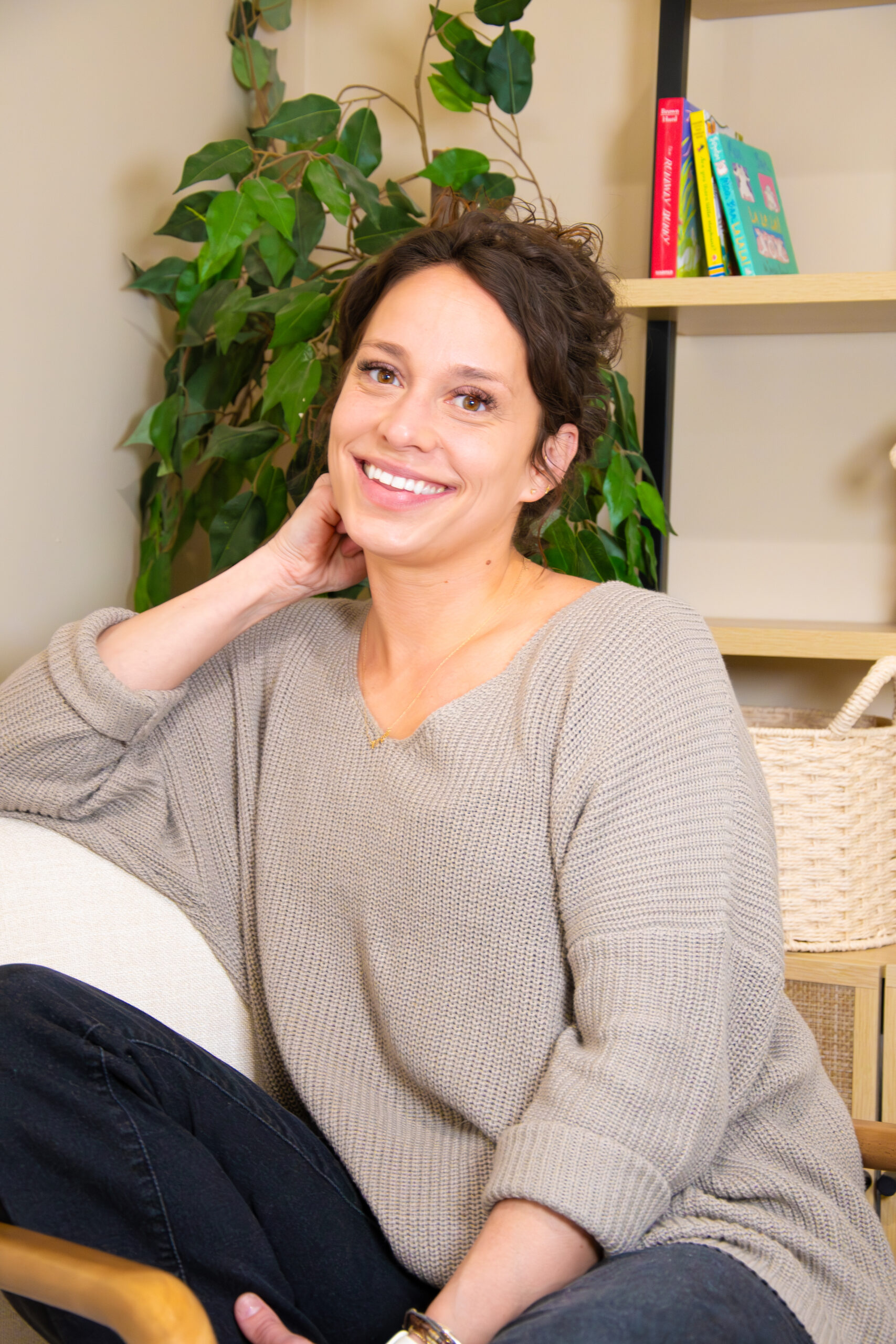
If you’ve ever found yourself Googling “when should my baby roll over?” or stressing about tummy time, this one’s for you. In this episode, I sat down with the incredible Dr. KC Rickerd, a pediatric physical therapist with nearly 15 years of experience specializing in the development of babies from birth to three years old, wife and mama to three, and founder of Milestones and Motherhood – where she helps parents ditch the worry and enjoy the journey.
In this conversation, we discuss early baby milestones and development, the importance of free floor time, and how to worry less while enjoying more. Dr. KC also breaks down the myths and realities of milestones, the role of baby containers, and why crawling is a crucial milestone to monitor. Tune into this episode for practical tips to foster your child’s development without feeling overwhelmed.
What’s inside this episode:
- Baseline Knowledge is Power:Get familiar with milestone ranges to avoid unnecessary worry. Most babies figure it out with free floor time and exploration.
- Mini Stones Matter:Don’t fixate on the big ones only, like rolling or walking – celebrate the building blocks.
- Containers in Moderation:Use them when needed, but balance with tummy time and play to support development.
- Trust Your Intuition:If something feels off, advocate early. But if your baby is progressing on their own norm, give yourself grace.
More from Dr. KC Rickerd, PT, DPT:
- Use code TLM for 10% offcoursesand 20% offthe complete bundle.
- VisitMilestonesAndMotherhood.com
- Listen to theMore Than Milestones Podcast
- Grab Milestones & Motherhood Freebies
- Follow her on Instagram:@milestones.and.motherhood
Helpful Timestamps:
- 01:23 Introducing Dr. KC Rickerd
- 06:19 Navigating Baby Milestones
- 12:49 The Role of Baby Containers
- 21:15 Understanding Milestone Checklists
- 25:35 The Importance of Mini Milestones
- 28:08 Concerns About Crawling and Development
- 30:49 Trusting Your Parental Intuition
- 36:09 Practical Tips for Encouraging Milestones
- 40:08 Resources and Final Thoughts
About your host:
🩺🤰🏻Lo Mansfield, MSN, RNC-OB, CLC is a registered nurse, mama of 4, and a birth, baby, and motherhood enthusiast. She is both the host of the Lo & Behold podcast and the founder of The Labor Mama.
For more education, support and “me too” from Lo, please visit her website and check out her online courses and digital guides for birth, breastfeeding, and postpartum/newborns. You can also follow @thelabormama and @loandbehold_thepodcast on Instagram and join her email list here.
For more pregnancy, birth, postpartum and motherhood conversation each week, be sure to subscribe to The Lo & Behold podcast on Apple Podcasts, Spotify, or wherever you prefer to listen!
👉🏼 A request: If this episode meant something to you, would you consider a 5 star rating and leaving us a review? Yes, we read them, and yes, they help keep L & B going! ♥️
Connect with Lo more on: INSTAGRAM | TIK TOK | PINTEREST | FACEBOOK
Disclaimer
Opinions shared by guests of this show are their own, and do not always reflect those of The Labor Mama platform. Additionally, the information you hear on this podcast or that you receive via any linked resources should not be considered medical advice. Please see our full disclaimer here.
Additionally, we may make a small commission from some of the links shared with you. Please know, this comes at no additional cost to you, supports our small biz, and is a way for us to share brands and products with you that we genuinely love.
Produced and Edited by Vaden Podcast Services
Transcript
Motherhood is all consuming.
Speaker:Having babies, nursing, feeling the fear of loving someone that much, and there's this baby on your chest, and boom, your entire life has changed.
:It's a privilege of being your child's safest space and watching your heart walk around outside of your body.
:The truth is.
:I can be having the best time being a mom one minute, and then the next, I'm questioning all my life choices.
Speaker:I'm Lo Mansfield, your host of the Lo and Behold podcast, mama of four Littles, former labor and postpartum RN, CLC, and your new best friend in the messy middle space of all the choices you are making in pregnancy, birth, and motherhood.
Speaker:If there is one thing I know after years of delivering babies at the bedside and then having, and now raising those four of my own, it is that there is no such thing as a best way to do any of this.
Speaker:And we're leaning into that truth here with the mix of real life and what the textbook says, expert Insights and practical applications.
Speaker:Each week we're making our way towards stories that we participate in, stories that we are honest about, and stories that are ours.
Speaker:This is the lo and behold podcast.
Lo:Today's guest is just the person we all need in our corner during our baby's little years of development and milestones and growth.
Lo:Dr. Casey Rickard is a pediatric physical therapist who specializes in both the eval and the treatment of babies zero to three years old who have a wide variety of diagnoses and abilities.
Lo:You may know her as the founder of the Milestones and Motherhood platform.
Lo:That's where I found her all these years ago.
Lo:And if you're in the New York area, she also runs a private practice there called Journey Through Milestones Physical Therapy.
Lo:In all of Casey's spaces, she is doing the work to eliminate the stress, the worry, the comparisons that often surrounds milestones.
Lo:Instead, giving parents, giving us, giving you the tools to understand what to expect.
Lo:With your child's development help you worry less about your child's development and overall just help you enjoy your baby and the milestone years that you are in.
Lo:More importantly, or maybe most importantly, Casey is also a wife and a mama to three.
Lo:Casey, thank you so much for being here with me today.
Lo:I am super excited to just chat through some of these things that I am sure that we're gonna get into.
Lo:Why don't you go ahead and just introduce yourself a little bit, like share whatever you want us to know about you professionally, personally, and then we will get into the conversation.
KC:Yeah, I'm so excited to be here.
KC:Thank you so much for having me.
KC:I am Dr. Casey Rickard.
KC:I am a pediatric physical therapist.
KC:I have been in the field for almost 15 years now.
KC:And I love it.
KC:My specialty is birth to three, and I have three little ones of my own.
KC:They are, seven, almost six and five, four.
KC:What am I talking about?
KC:I don't even know how old my kids are.
KC:And I am the face behind milestones and motherhood on Instagram and on the inner webs.
KC:And yeah.
KC:I'm here to share all I am.
KC:All the milestone info.
Lo:Yeah, just I'm actually curious, so when did you kind of start, because I feel like I found you kind of in that 20 20, 20 21 bubble I might be off on when this started and you had already grown, like you were pretty sizable in, this is Instagram where I found you.
Lo:When did you kinda start doing this On online as well, or with your private practice or how, what did that look like?
KC:Yeah, so I actually, it was:KC:So, it was COVID hit.
KC:I was home.
KC:I transitioned all of my patients to telehealth because that's what we had to do.
KC:So my husband was an essential worker in the city and I was hunkered down with the kids at home doing telehealth with a newborn.
KC:Not even 2-year-old kind of all crawling all over me.
KC:I just started kind of sharing what I was doing with my own babies to help support their milestones, right?
KC:Like, I was home with them way more than I would've been if COVID hadn't happened, right?
KC:So I was like, okay, here's, you know, here's how I position her during this week window.
KC:And honestly, you know, it's like people will, will be like, how did you grow?
KC:It was a hundred percent.
KC:Right time, right place.
KC:Like it was just, I think, I think everybody was home with their babies, right?
KC:Like everybody was like, wait, you know, when, when your baby's at daycare or with someone else, you might not be seeing all of these little things that are happening during the day that are parts of their development and that we can support in a really easy way.
KC:So I think it was kind of really just right place, right time.
KC:And people were like, wait, I, I wanna know how to play with my baby.
KC:And yeah, it was.
KC:It was kind of just life changing honestly.
KC:But yeah, it was, it was:Lo:Yeah.
Lo:Well, I mean, I commend you too.
Lo:I think I've, I feel like a lot of people our age with kids our age, we have that, like it was COVID type intro into being in the online world.
Lo:But I don't, like I'm saying also don't discredit what you do because I think that like right place, right time, maybe that's true, but also I know from my community of moms, like having babies.
Lo:So pregnancy, birth, and then like the postpartum season two of like what you do is so.
Lo:It can feel really foreign.
Lo:Like it's not something that is easily, I think, accessible to some of us sometimes, or it's not something we feel really adept at.
Lo:Like maybe someone feels, oh, I'm so confident in birth and handling my pain or whatever.
Lo:But I don't know that that many of us feel that way about milestones.
Lo:Like, I know I'm all, I know what to look for.
Lo:This feels great.
Lo:So I think what you do is so needed and necessary.
Lo:So maybe you slid into something that was like available to you, but I think.
Lo:The work that you've done to grow it and to show up for people has been super important too.
Lo:So that's just me patting you on the back.
Lo:I appreci that.
Lo:Thank you.
Lo:Appreciate that.
Lo:Give yourself some credit too, because I think there are some spaces where we just feel a lot more clueless and want, and if we wanna, we being parents and if we wanna do it well, we're looking around going, who's, who's gonna help us do this?
KC:Yeah, totally.
KC:Totally.
KC:No, there, there is truth in that for sure.
KC:I appreciate that.
Lo:Of course.
Lo:That's, I mean, obviously a perfect segue you said you focus on like zero to three.
Lo:Mm-hmm.
Lo:And this is all when our babies, as those of us who have had them and watched them grow, no.
Lo:Like they are exploding and there is so much going on, and especially like the first year and those eight, first 18 months, like it feels like things are changing every day.
Lo:So I think there's this combo of.
Lo:I always feel this sweetness of like just wanting to sit in it and enjoy it and like just let it ride.
Lo:But also, hey, what, like what should I be doing and paying attention to?
Lo:And you know, not missing something too, especially for those of us like First Babies because a lot of it is just so brand new.
Lo:So I don't know if you have kind of a, something you share with people maybe when they are pregnant with their first.
Lo:Let's say even that, or like freshly postpartum, if someone starts paying attention to what you have to say, do you speak to that population in a certain way, a certain message like, Hey, here's what to think as you walk into this, paying attention to your child's milestones journey.
Lo:And also like, I want you to know that you're equipped for this and like you're, you guys are gonna do great.
KC:Yeah, absolutely.
KC:I mean, for me, I feel like, well, there's a couple.
KC:Facets of this, but like for me, I think what it really comes down to obviously is like the power in just having a baseline understanding of what to expect and when to expect it.
KC:Because there is.
KC:There's so much information available to us, right?
KC:Like more information than we've ever had.
KC:And I think in a lot of ways that can become overwhelming or it can cause worry or cause anxiety.
KC:But for a lot of us, that worry is there regardless, right?
KC:Like, are we doing this right?
KC:Should they be doing more tummy time?
KC:You know, we're often not getting information in that.
KC:Phase where we are, like, you're learning, you're a brand new person too, right?
KC:Like you, you have your baby, now you have this human that you're caring for, you're trying to figure out feeding, you're trying to figure out all the things.
KC:And I think it's really easy to be like, I don't know what to do.
KC:And that turn into like a feeling of, of worry or comparison or you know, when should I advocate for my little ones?
KC:Should I be concerned about this?
KC:So.
KC:First and foremost, I feel like having a baseline understanding of like, okay, these are the milestone ranges.
KC:Because that's the other thing is milestone ranges are there for a reason, right?
KC:We know that the majority of babies will fall within that range, and if they're not, that's when we can start to advocate.
KC:Um, Again, I think just having that, that understanding of like, all right, around this time they should start rolling.
KC:Or on the opposite side of it, like, my baby like is doing this weird thing.
KC:What is that?
KC:Is it okay?
KC:You know, maybe it's a reflex that people just don't, they're not aware of.
KC:And so that can lead to worry.
KC:That can lead to comparison.
KC:And I think the online space and how.
KC:How in your face so many baby milestones are, and your friend's baby is doing this and, and you know, all of those things.
KC:It's so much more, in our face now and I think it's really hard to not get caught in that comparison trap or feeling like you're not doing things right.
KC:And so often, I mean, honest to God, if you're, if you're thinking like that.
KC:The odds are really good that you are doing a fantastic job and like you give yourself a little bit more credit for that, you know?
KC:But that being said, I think what's really important to understand specifically about that you are asking pregnancy into like that, that fourth trimester really, right?
KC:Primarily.
Lo:Mm-hmm.
KC:I feel like that fourth trimester.
KC:When you are being told to do tummy time, which is often the only recommendation that we're leaving the hospital with, or that we're leaving, our pediatrician's office with, and then tummy time doesn't go well 'cause it usually doesn't, and you don't understand the importance of it or how to modify it.
KC:It can be really easy to feel like you're falling into this like snowball, but.
KC:The really important thing is that like you can get tummy time when you're just like bonding with your baby and like ease into it.
KC:You don't have to be doing 10 minutes of tummy time by 10 weeks.
KC:Like that makes me crazy, but.
KC:If you can recline back a little bit when baby's on your chest, if you can just get to know this little human and your this new version of yourself, like it's okay to give yourself that grace and you're not gonna be quote unquote, falling behind from the start.
KC:As long as you have those little intentional pockets during the day, like you are truly already doing a great job.
KC:Does that answer your question?
Lo:Yes.
Lo:Yeah, absolutely.
Lo:I think I, I ask these types of questions to people in all kinds of different fields, and so often the answer is like.
Lo:Stop listening to so much information because it's actually not helping us.
Lo:And also this idea of you're probably actually already doing a really good job.
Lo:So I just think it's funny how, because I think because we have so much out there in front of us, we're constantly, you know, we might see something, read something, hear something, and we're like, oh.
Lo:We don't do that very well.
Lo:Like, shoot, I need to add that.
Lo:And this applies to like me taking care of my skin or collagen.
Lo:Like everything.
Lo:Yeah.
Lo:In parenting and taking care of ourselves.
Lo:And so you keep thinking like, I should add this, I should listen to this, I should do this.
Lo:And sometimes I think the answer for so many of us is like actually like.
Lo:Just return back to the basics, right?
Lo:Like, just lay on the couch with your babe, let them lay on your chest and they're doing some tummy tuck.
Lo:You know, like there's these simple things and so I feel like sometimes we're just overcomplicating it.
Lo:So it's nice to hear you be another one of those people saying, yes, it's good to have some foundational baselines, but also recognize that it, it probably doesn't have to feel as hard as you're maybe making it or others are making you feel like it is that hard.
Lo:Yeah.
KC:I feel like too, a big part of, of kind of this conversation for me also comes from like, even starting when you're making your registry, right?
KC:Like you, the baby container industry is like, you need this, you need this toy, you need this swing, you need this thing, you need all of the things.
KC:And so we're already going into it with this mindset of like, I am not enough.
KC:I'm me alone.
KC:I'm not enough to support my baby's milestones or support their development.
KC:And like that in and of itself could not be further from the truth.
KC:So I, I feel like it starts, it starts way before baby is even here, that you're already kind of getting in your head like, oh man, I, I need all these things.
KC:I have to do all the things.
KC:But it, it's just, it couldn't be further from the truth, you know?
Lo:Yeah.
Lo:Okay.
Lo:You just mentioned the word container.
Lo:I'm just gonna clarify for everyone that's like the swings and the chairs and all this stuff, because the other day I heard someone talk about like container syndrome or container, I forget what the word was.
Lo:Yeah.
Lo:But essentially this idea that.
Lo:Like, is that a real thing?
Lo:Are we putting babies like in containers too often?
Lo:And I, I just, this is personal to me, but we recently moved, but we had a smaller home.
Lo:Like we did not have the floor space, if you will, for like the things, the big swings or whatever.
Lo:We just didn't have it in our common living areas.
Lo:so we had one like baby chair.
Lo:Thing that kind of rocked back and forth and we never invested in anything else because we just, it was like, where's it gonna go?
Lo:We won't be able to walk through our dining room or whatever.
Lo:And I will tell you guys like.
Lo:I ended up talking online or on my social platforms a lot, especially with my fourth baby of like, Hey, it's okay also to just like lay your baby on the ground on a blanket.
Lo:Like I think we, and maybe you can talk about this too, of like the value of these containers versus like just.
Lo:Laying them on the ground, but just that like milestones and development and all of that, can it be done and happen kind of without us intervening at all?
Lo:Like just lay your child down and let them explore their world, you know, safely.
KC:Yeah, yeah, definitely.
KC:So there's, there's two pieces to this.
KC:I will touch on baby containers in one second, but I just wanna speak to what you just said.
KC:So.
KC:I think something that's really important to understand when you are consuming information, educational information from someone like me, for example, is reminding yourself that I am biased in that I see all I see, right?
KC:All, all of my patients are babies that do need a little bit of support, right?
KC:Maybe they need a little bit, maybe they need more.
KC:So when I am presenting information.
KC:I try to be really intentional about being, like most babies will, will figure it out if you give them the freedom to be on the floor and explore.
KC:Like even if it is just a blanket or even if it is you are laying there with them, most babies will, will be okay and we can still be intentional in how we're setting up their play space or how we're engaging with them in a way that supports where they are and fosters where they're headed.
KC:But like.
KC:Most babies don't need hands-on mom or dad becoming pt, intervening, playing intentionally with them all day long.
KC:You know, it's, it's just, they learn through exploring and through that free movement.
KC:So that's the first part that I just feel like is important to kind of reflect on.
KC:'cause I think sometimes we unintentionally like pathologize normal development because of what we see Right.
KC:And what we do.
KC:So that's the one piece.
KC:Baby container syndrome.
KC:This is a whole ball of wax and I don't wanna scare anyone.
KC:And I also want to make it completely clear that I am not one of those people that is anticon containers.
KC:I had, like I said, babies 20 months apart.
KC:I have two big dogs.
KC:I have cats.
KC:I like they're, I was not going to survive parenting without relying on some sort of baby container in moderation.
KC:And so what I'm.
KC:When I share what I'm about to share, please know that I'm coming from a place of like absolutely no judgment If you choose to use them, absolutely no judgment.
KC:If you choose not to use them or you can get by without them, I think that's incredible and admirable.
KC:It wasn't me, but I think it's great.
KC:But what I am advocating for.
KC:Across the board is again, understanding that it is a real thing and, and that we can use them in moderation and we can use them safely.
KC:Again, just being a little bit more intentional.
KC:So baby containers are anything, I think of it like anything that restricts their ability to move freely.
KC:So car seats, swings, bouncers, literally anything where they cannot just be freely moving.
KC:Right?
KC:And obviously some of those are necessary, right?
KC:Like there are times where you're gonna have to get your baby in a car seat, or if they're the, the third baby, they might be in their car seat for a while driving to whatever their siblings need.
KC:You know, like that is the reality of them.
KC:But baby container syndrome is a real thing.
KC:And basically I think what I'll try not, I'll try to be succinct here, but basically the reason that.
KC:A lot of people here from older generations, like I, we never did tummy time and we were fine.
KC:That's like a huge one that, that you'll hear.
KC:Right?
KC:That's like my warning you on that one.
KC:But and that's true, right?
KC:So like, my parents didn't do tummy time.
KC:My mom was a pediatric physical therapist.
KC:There was no formal tummy time because we went to sleep on our bellies, right?
KC:We were on our bellies all the time.
KC:We put, you know, we were put down in our cribs on our bellies.
KC:As soon as we woke up, we started pressing up.
KC:There was no need to have formal tummy time because we were always on our bellies.
KC:And then the back to sleep campaign happened.
KC:Um, and I'm not knocking that it's important.
KC:I a hundred percent support it.
KC:But with that came really like a fear.
KC:Of tummy time and like, I cannot put my baby on their belly or, or they might suffocate and that is really scary, right?
KC:And so with the Back to Sleep campaign, came back to sleep, tummy to play.
KC:And so that's where formal tummy time came from.
KC:Where again, we didn't have that because we didn't need it, but when that happened, the BB container industry saw an opportunity and they took it and they were like, all right, parents are scared.
KC:They don't know where to put their baby 'cause they don't wanna put 'em on their back all the time.
KC:And then we saw like plagiocephaly and torticollis, which is like flattening on your skull or when you have a little bit like a head tilt interned.
KC:We saw those rates skyrocket.
KC:We saw milestones started coming later and later because babies just didn't have the opportunity.
KC:Right?
KC:So tummy time, container baby syndrome is real.
KC:It is not super common and it is.
KC:When there is so much time spent in containers without time to move freely.
KC:So like, my recommendation is if you're gonna use a baby container, try to limit it to 15 minutes at a time.
KC:Right?
KC:And then try to get double the amount of floor time during the day, whether it's on their back, on their side, on their belly, so that you're just, it's just a way to be intentional about.
KC:Baby container use in moderation while again, still supporting their development and giving them those opportunities for free play.
KC:So like your baby is not going to end up with container baby syndrome if you use a baby swing sometimes, you know, or you use a swing for 15 minutes so that you can hop in the shower with baby right outside of it, you know?
KC:So I don't know if that.
KC:If that answers that question, it's
Lo:great.
Lo:No, it's great.
Lo:I think, again, it's like one of those buzz words that kind of gets thrown around, you know, whether that be the container vocabulary or container baby syndrome, and all of a sudden we're panicking about utilizing these really nice tools.
Lo:And I just wanna say, you guys, I just remembered that we also have one of those activity.
Lo:Center, you know where the baby saucers can go inside the pa? Yeah.
Lo:So that, yeah.
Lo:Mm-hmm.
Lo:So we have the baby swing and then we get rid of that, and then we have the Xer saucer.
Lo:There's this like little corner in our house where those things set.
Lo:So I also had that too, 'cause I made it sound like we only had that one thing for the baby years.
Lo:And that's not true.
Lo:But I wanna say it because like you just said as well, I absolutely utilize those tools.
Lo:To shower, to be able to make dinner.
Lo:Like I just had my fourth a, I was gonna say a year ago.
Lo:She's 18 months old now and we were totally like trying to get, yeah, figuring out how to like get everyone where they can be so that I can get something done, you know?
Lo:And so these containers, which I don't even like using the word 'cause it sounds like very negative in my opinion, were certainly helpful and I think.
Lo:It's just nice to be reminded as a parent, like, you can utilize these things and you cannot utilize them.
Lo:It's just about balance and, and I appreciate you sharing like, you know, I'm air quoting like the healthy amount of time to utilize them though, because I do think ultimately we want some numbers and some boundaries.
Lo:And this goes back to, you know, our combo when it started, about like milestone charts and, and knowing these foundations because we need somewhere to start.
Lo:We like, I don't know that it's.
Lo:I'm gonna use the word responsible.
Lo:Someone might not love that word, but responsible to just go in and be like, I don't know what the normals are.
Lo:I'm just gonna let it ride.
Lo:Like it is good to have a foundation.
Lo:And I, yeah, I, I know we're looping back again on that, but I was curious if you had kind of like, where do we go to get those kind of foundations about what these milestones are?
Lo:So going back to the crawling and the lifting the head and the rolling, like, where do you suggest we find it is just, is it just like a standard milestone chart?
Lo:How do we kind of start that foundation process?
KC:I have a free zero to three year milestone checklist and in, in it, and we can maybe just put it into the notes.
KC:You, it's just a free download.
KC:But in it, what I have tried to do is break down not just the milestone range of when to expect it, but also little things that I refer to.
KC:I've like coined the term mini stones that.
KC:Oftentimes we get so focused on what the big we get.
KC:We're like rolling, sitting.
KC:But there's like so many things that are happening months before you see that role that are really important and really important to get excited about because we can, we, we so often get in our heads like, well, they're not rolling yet.
KC:Okay.
KC:But they're doing all of these things that show.
KC:It's like right there.
KC:So in my milestone checklist, I break down.
KC:The mini stones for each one.
KC:The average ranges, expectations for the milestone to emerge, the actual big milestone.
KC:And then I also break down like when to talk to your pediatrician, right?
KC:So if you are, we're expecting rolling to be emerging belly to back and back to belly at around four to six months, right?
KC:Six months is really like the average.
KC:So.
KC:At six months, should you be panicking if your baby isn't rolling?
KC:Absolutely not.
KC:Should we be looking at those mini stones and seeing what they're doing and maybe getting a little intentional about how we're setting up the play space?
KC:Maybe we put a toy here and I have all of those resources that tell you exactly how to do that.
KC:But.
KC:When, at what point do you get concerned?
KC:Right, so, okay, if we're approaching now seven months and we're not seeing any of the mini stones and we're not, you know, our pediatrician is, is not concerned, we can start to advocate at that point.
KC:So I tried to really break down all the aspects of the milestone because it really just, it really isn't just about the big skill, even though that's what we kind of get hung up on.
KC:So I do have that list, but if you want me to give you like a quick rundown, it's really like the first year that there's a.
KC:A whole lot and then it slows down a little bit and it becomes more like fine motor, cognitive, social, emotional, that sort of thing.
KC:That's, I think that's
Lo:perfect and we will put that in the show notes.
Lo:You guys, she said it's free, so just go grab it.
Lo:It's, and download it.
Lo:It's great because, hello.
Lo:Because I think that helps with this like foundational stuff, like have that in front of you.
Lo:I have a question related to kind of these like charts and, you know, this spectrum idea that you talked about too in birth with, percentile charts.
Lo:I talk a lot about this idea of.
Lo:Like healthy babies sit at every single percentage on the percentile chart because I think we can get in our heads about, with milestones too, like this idea, my baby's doing something really early.
Lo:Does that mean they're not okay?
Lo:My baby's doing something and I don't even wanna say really early, earlier than average, I'm air quoting again or later than average.
Lo:And so with weight, like I just always am reiterating, you know, if your baby's doing all the things well and they just happen to be smaller, like 10th percentile or larger, like 90th, those are both healthy babies.
Lo:So do you feel like that applies to this kind of milestone spectrum too, of like the kid who does X, Y, Z at three months is just as healthy and appropriate as the kid who does X, Y, Z at six months.
Lo:Does it kind of apply to these normal spectrums for hitting milestones too?
KC:Yeah, definitely in a lot of ways.
KC:So the way that I like to encourage you think about this is like some babies will hit milestones earlier.
KC:And that's just their norm, right?
KC:Like they are, that's just where they're falling.
KC:Maybe they have a little bit more floor time.
KC:Maybe that's just who they are.
KC:Maybe their, their head is a little bit bigger than another baby.
KC:Or, you know, all of these factors that we're not often thinking about when we're just looking at the skill.
KC:And some babies just trend on that later side, and that's their norm.
KC:And there isn't concerns.
KC:They are showing the mini stones.
KC:They are showing progress.
KC:And again, maybe, maybe they're just.
KC:You know, like a month later than other babies.
KC:And so that is what I break down in that chart to say like, we don't need to be like waving our red flag right?
KC:At six months.
KC:We can assess these other things or consider these other things and, and give baby a little grace for them being their own individual.
KC:And the fact that like they, they, that just might be their norm, you know?
Lo:Yep.
Lo:Absolutely.
Lo:Okay.
Lo:That makes me think of this next question.
Lo:It's kind of like two parts or two sides of the same coin, but what is something that you feel, let's talk about like the first year when you talked about its physical milestones that so many of us are paying attention to.
Lo:Is there something that you feel like.
Lo:Maybe parents are worrying about too much and we don't need to, or maybe even a specific milestone that has like a lot of, I'm gonna say like press behind it and like we could probably chill out about it a little.
Lo:And then conversely, is there maybe something that we aren't paying enough attention to and.
Lo:You would say, Hey guys, like let's pay attention to this a little bit more, and I'm, I'll just jump outta myself like these mini stones ideas, I really like this of like, maybe we should be paying attention to these more, but I'll let you answer that of kind of like we're worrying too much here and maybe we're missing, there's a little education gap here.
KC:Yeah.
KC:I think I, in terms of worrying too much, I think we.
KC:Tend to get really hyper-focused on, again, that big milestone.
KC:Right?
KC:So like baby's not rolling or, let me think of a really easy example.
KC:So like if parents are in that stage and they're listening that this might like make a little bit more sense.
KC:So for example, we're expecting back to belly rolling between four to six months, right?
KC:The average is really closer to that six months.
KC:Let's say you hit six months and baby's not rolling yet.
KC:That is when people are coming to my page or my resources and they're like, oh my God, should I be worried about this?
KC:What do I do?
KC:But here's all the things that are starting to happen at literally like two, three months that are those mini stones that are laying the foundation for that big milestone to happen, right?
KC:So if we can shift our focus to those and look at all our baby is doing instead of what they aren't quite yet, I think that that is super powerful.
KC:Is baby bringing their hands to midline?
KC:Are they starting to swatted toys above them that shows us that their chest muscles are firing?
KC:Are they gaining more head control?
KC:Do you need not need to support their head quite as much when you're holding them?
KC:That shows their neck muscles are developing?
KC:Are they starting to grab onto their knees, grab onto their feet, rock side to side, do that like happy baby pose.
KC:Those are all things that like rolling can't happen.
KC:If those things.
KC:Occurring.
KC:And if we can, again, shift our focus to them and be like, oh, okay, they might not be rolling fluidly yet, but like, I'm seeing all of these things and then rolling is happening a week later, or something like that.
KC:Like just understanding that it's not just the big skill.
KC:There's so much more that baby is working through that shows us that they're progressing, that they're on the right track, and that they're gonna figure it out.
KC:So.
KC:I'm a huge proponent for that, obviously.
KC:And then I would say in terms of what we're not worried about enough crawling, no question crawling is the most important milestone and
KC:the mini stones for crawling are starting at literally three months, right?
KC:So again, if we're looking at those things, so often there are things that have been popping up since the beginning and maybe parents were concerned, right?
KC:Like maybe parents were going to their pediatrician and they were like, okay, tummy time is a major struggle.
KC:Or My baby has horrible reflux and isn't tolerating being belly down, right?
KC:So now that baby, if they're not set, spending that belly down time.
KC:That could then snowball into, okay, maybe they're not rolling, so now they're not developing those corn muscles.
KC:Okay.
KC:They still hate tummy time because it's hard and maybe they're up against reflux.
KC:And then mom and dad who are doing the best they can and just trying to find positions for baby after a feed to keep them from.
KC:Spitting up everywhere.
KC:Maybe they place them in sitting right now.
KC:Baby is stuck in sitting, doesn't have the core strength to get in and out because they skip that rolling, doesn't have the arm strength to press up on hands because they struggled with tummy time.
KC:And so that baby starts to butt scoot.
KC:Right?
KC:And like.
KC:Parents have often, this entire time, again, been concerned and Ben saying, I don't, this doesn't seem right.
KC:They're not rolling, they're not doing this, but it's not like, a big enough red flag or they're being told to wait and see or whatever it might be.
KC:And so then when they go to the pediatrician and they say, okay, they're bus scooting.
KC:A lot of times they'll be like, oh, as long as they have some form of movement.
KC:But what is getting missed is that when crawling doesn't happen or a baby is butt scooting one, there absolutely is a reason for it.
KC:And it's not a parent's fault, it's not the kid's fault.
KC:A lot of times it is the exact situation I just described, but they, they don't get the referral to me until they're trying to pull up into standing.
KC:'cause if you can imagine, so butt scooting is when you're literally in a sitting position, your legs are in a really wide base of support and you're literally scooting forward on your butt.
KC:There's all these different variations of it, but.
KC:You can imagine if you pull, so after crawling is coming, pulling to sand, if you are butt scooting over to something and you need to pull up on it and your legs are in that position and your arms aren't strong enough 'cause you haven't gotten tummy time, now you start to fall behind on your walking skills.
KC:So now baby's not pulling to sand.
KC:Now they're not cruising now, they're not progressing towards walking and they get the referral.
KC:At that point, when mom and dad have been concerned for 12 months now, and it could have been nipped in the bud so much earlier, so.
KC:That to me is like the biggest thing that I'm like, this is preventable.
KC:Like it doesn't, it truly, I mean, that scenario I just described, I can almost guarantee there's someone that's gonna be listening to this and like, oh, yep, that was us, or I've been it, you know?
KC:Yeah.
KC:Yeah.
KC:So, um, I think along with that, what we're not worried about enough is trusting our gut when something doesn't feel right.
KC:And if an expert or a pediatrician is saying, oh, don't worry about it.
KC:Wait and see, but your gut is like, no, this doesn't seem right.
KC:Like, trust that push, push that feeling and, and start to advocate earlier because.
KC:Those first three years are like so important and we can really get in and make a huge difference.
KC:And the earlier, the faster, you know, so.
KC:That was a ran.
KC:I'm sorry.
KC:No, that's perfect.
KC:I was was gonna tell you,
Lo:I was gonna tell you when you were done, like I can tell that you are very passionate about this specific part of this because it is coming through and that's like I, that's what I wanted to hear.
Lo:What I asked that question when I was like, what if she's.
Lo:There isn't anything but I like, I think we wanna know that as parents because we end up, like you said, getting dismissed for early concerns.
Lo:And we do have babies that are mobile or doing something and so if we don't know.
Lo:And maybe aren't like listening to like this intuition that you just brought up as well, then we're gonna trust our providers.
Lo:That's why we have them, you know?
Lo:Totally.
Lo:And it's not even that our providers are being nefarious or something, they're not.
Lo:Absolutely.
Lo:Absolutely.
Lo:Um, it's just sometimes I think like getting in front of the right provider or being referred to the right provider.
Lo:And so it's not, it's like a no fault situation, I would say, on exactly most of those participants.
Lo:And so it's good to hear the rant or to hear the passion because it exists for a reason.
Lo:It exists because you've seen this time and time again and you would like to prevent it.
Lo:I wanted to say too, when you talked about.
Lo:Like intuition and trusting yourself being such a big part of this and my, this is almost a lot.
Lo:I feel like a lot of times we hear the stories of like, I didn't feel right about what was going on, so I kept speaking up, kept speaking up, and finally got the care we needed, which is a perfect, like, beautiful example of what you're talking about.
Lo:And I just wanted to say the same vein, my third child did not walk until 18 months.
Lo:Which is, you can correct me, but kind of like the point where they were getting ready to send us to PT and get more mm-hmm.
Lo:Get more care and a consult and all this stuff.
Lo:But I like.
Lo:My insides were telling me like that I, not to worry that I actually felt like he just was doing things slow, but he was doing all the like mini stones on the way to the milestones and like he'd done everything slower.
Lo:But it never felt to me like it, there was something going on.
Lo:It just felt like he's not gonna walk as early as his sisters.
Lo:'cause he was a little slower to crawl and then a little slower to pull to stand.
Lo:And so Totally, I'm just sharing that to say like, I want you guys.
Lo:And I, I'm assuming you'd say the same.
Lo:I want you guys to learn to trust yourselves in whichever way that you're leaning.
Lo:'cause you can be made to feel really fearful.
Lo:And there's almost this idea of like, mm-hmm.
Lo:If you've got this happy, healthy, thriving kid who's meeting these mini stones at the later end, like they can be perfectly fine.
Lo:They're just doing everything a little later.
Lo:And you kind of said this when we started, and then the flip is, if you've got this kiddo, like what you just described, I also want you to listen to yourself then and say, Hey, I want another opinion, or who else can I speak to?
Lo:So just like the value of listening to.
Lo:Yourself in whatever way your heart and your mind are kind of saying, I think is really important to, to reiterate here.
KC:Absolutely.
KC:And just to, to go back to that really quickly, like that, everything you just said to me is like, that's exactly what I want everyone to take away from this is like, if you can shift your focus to what your child is doing, it makes it so much easier too.
KC:Just when you understand what's happening and you're like, oh, okay.
KC:Again, they might not, he might not be walking yet, but he's pulling the sand.
KC:He's cruising all around, he's going inner corners, outer corners.
KC:He's starting to let go briefly with one or both hands.
KC:Like that would not be a concern for me, you know?
KC:And again, looking back at his history and saying, okay, every milestone was just like a, a tiny bit later than average, and that's just his norm.
KC:Like that.
KC:That to me is where education and, and having that baseline understanding is so powerful and being able to be like, oh no, okay.
KC:I don't really have to stress about that.
KC:Like, but I think a lot of times when we don't know, that's when your mind can start to kind of go to those places and, and the voices saying like, oh, they're late, they're delayed, blah, blah, blah.
KC:That's when that can become more of like that nagging thought because you're like, I really don't know.
KC:Are they behind?
KC:Um, so yeah, I think what you said is like spot on.
Lo:Perfect.
Lo:My slow two milestone son has taught me something and now, now all the rest of you guys, I just feel like we always hear the story of kids who walk at 10 months, right?
Lo:And it's like, he was great and he walked at 18 and so mm-hmm.
Lo:It's good to like get that out there too.
Lo:Not to encourage people to ignore, like you said, but to pay attention to.
Lo:This is gonna sound cheesy, but it's what popped in my head, the steps along the way.
Lo:Like he was making tiny steps to walking and they were all really good science.
Lo:And so this goes back to those, that foundation you said of like, understanding these foundational things is valuable because they can help you, not worry, and they can help tell us, hey.
Lo:I actually want to care about this more and I want a professional to help me care about it more.
Lo:And so again, guys, grab that free thing that we're putting in the show notes.
Lo:Yeah, totally.
Lo:'cause I think it's such a sweet way to start.
Lo:Okay, the last thing I wanna say.
Lo:I, I'm like, part of me is like, we should just end it there.
Lo:What a great lesson.
Lo:But I do wanna ask this for a practical application, of what's a way that a parent can kind of.
Lo:What are some things that we can do, and this might depend on the milestone that we're trying to help them reach or encourage them towards, but what are some little things we can maybe add into like daily practice or kind of overall practice, without feeling like.
Lo:We're obsessing trying to be a pediatric pt, but still participating.
Lo:What, what are some of those things?
Lo:Or do you have a resource that kind of, is it in this resource we've already been talking about, but where can we find that?
KC:Yeah, so I do have classes that are specific to every single milestone.
KC:So like for example, in in my rolling and sitting class, I am.
KC:Showing you what the mini stone is.
KC:I'm showing you easy ways to like modify your environment or their play space to encourage that, right?
KC:So like for example, let's say that we're trying to teach baby, or we're trying to support baby in getting out of sitting on their own, right?
KC:It literally can be as simple as don't put the motivating toys directly in front of them, put them on the sides of them because that fosters that trunk rotation, that core strengthening.
KC:And that's how we transition as humans.
KC:So like if you are the kind of person that is like, just lay it out for me and make it easy, I just wanna look at it, know what I need to do that day, like.
KC:I ha I do have a lot of paid resources.
KC:But, and on my page I have a ton of information very similar to that, but truly, like the most important thing that you can do for your little one is give them that free floor time during the day.
KC:Like whether they are just exploring, have them in a safe space, a baby proofed area, that they can just do their thing.
KC:And really again, for most.
KC:Little ones, yes, there are ways that we can be intentional based on, like what milestone they're working on.
KC:But for the most part, if they have the opportunity, they are driven to explore, right?
KC:Like it is motivating to learn about your environment and movement is the catalyst for all of that, right?
KC:So like if I have.
KC:If I can move to bring you something.
KC:Now we have communication, right?
KC:Is is blossoming now we have social emotional is blossoming because we're engaging together now.
KC:Or obviously I'm communicating that I'm interested in this.
KC:Can you help me?
KC:I'm working on fine motor as I manipulate it.
KC:Like just giving them the opportunity to move is, truly the best possible thing you can do.
Lo:Yeah, I agree.
Lo:And I'll tell you guys, like after raising my floor through these tiny years, just don't.
Lo:Like, hesitate to bring them into the kitchen, like on the floor next to you while you're making dinner.
Lo:Yes.
Lo:You know, safely or whatever.
Lo:But like, I think that sometimes we, we think it has to be really complicated or it feels too tough, but like the number of times, especially with this fourth babe, I brought her into the kitchen, handed her like a spoon or something that.
Lo:And she was there doing her own thing, but was having that like floor time and was, and she could see me.
Lo:So she was cool and it was chill.
Lo:Like, just bring them along.
Lo:If you want some space, that's fine too.
Lo:You can put them in a safe place in the living room while you're in your kitchen.
Lo:But, I think, yeah, you, it doesn't have to feel like you need the chair and you have to drag into the kitchen.
Lo:Like if you can do this.
Lo:It's not like you only spend your lives in the kitchen, but wherever you are.
Lo:Yeah, yeah.
Lo:That you can kind of bring them along and it can be maybe more simple than we're allowed to believe and it's actually serving them really well.
Lo:Like you said, physically yes.
Lo:But also emotionally, like this idea of I'm right here, but you're not right next to me.
Lo:Like, these are all really good things, for those kind of spheres of development too.
Lo:So, so maybe, maybe just, I guess what I'm getting at is that it might not.
Lo:Have to be as complicated as sometimes we're made to feel and you don't need a lot of gear or special blankets or, like the little things to, to make it quote unquote successful.
Lo:Yeah.
Lo:That they can just be near you and explore safely and you can maybe get, maybe get some stuff done too.
KC:Absolutely.
KC:Yeah.
KC:I, I totally agree.
KC:And I think that's, that's like the perfect takeaway from this is like, it, it really doesn't have to be scary and overwhelming and, you know, milestones shouldn't be scary.
KC:So.
KC:I love that.
Lo:Perfect.
Lo:Then we'll stop it right there.
Lo:Milestones shouldn't be scary.
Lo:I like it.
Lo:I know you just mentioned some of your paid courses we're gonna length the free one that we've been talking about as well.
Lo:But can you tell people like where specifically to find you online to your social media platforms as well, your website, these courses kind of where can they get at all of that if they're curious?
KC:Yeah, absolutely.
KC:So on Instagram I am milestones dot and dot motherhood.
KC:And then my website is milestones and motherhood.com.
KC:If you're local to New York, my outpatient office, pediatric office is journey through milestones pt.com.
KC:But yeah, all of those resources are there.
KC:I have a free tummy time workshop, a free navigating the fourth trimester.
KC:Understanding important positions to put baby in is totally free.
KC:Have that milestone checklist on there.
KC:So yeah, that's, that's really the best place to find me.
Lo:Okay.
Lo:And then this is one question that I just asked for fun.
Lo:That does not have to be about milestones at all, but what's something in your life right now that's just bringing you a ton of joy?
KC:Ooh, what a good question.
Lo:I never send this one over to anyone before.
Lo:'cause I want you to spur the moment.
Lo:But then sometimes I think people are like, you should have told me you were gonna ask that love.
Lo:But it can be small.
Lo:I love that.
Lo:A book or anything.
KC:Yeah.
KC:I think honestly, and this is gonna be like a little bit of a humble brag because I have a DHD and I cannot commit to anything for like long durations.
KC:I get like bored and fizzled out and I am four days away from finishing my first.
KC:25 day Pilates challenge.
KC:And I feel so proud of myself and I feel so strong and I'm like, I've been doing it with the kids next to me.
KC:I'm like seeing my girls like watching and being like, mommy, you're getting str.
KC:Like, I'm like, yeah, heck yeah.
KC:Like let's celebrate that.
KC:So I would say that feels really exciting and is, is making love me.
KC:Feel very proud of myself.
KC:Love, yeah.
Lo:I love that and I, that's like exactly what I wanna hear is like what's something that for you, I think sometimes people think they have to give us this like fluffy, perfect answer and it's like, no, if you're loving tacos right now, tell me about it.
Lo:So that's perfect.
Lo:Heck yeah.
Lo:Love it.
Lo:And I do love when, I do love when our kids like.
Lo:See us like using our bodies and participating with it because I think it's such a good gift to show them that too.
Lo:So good job.
Lo:Congrats four days early.
Lo:Thank you.
Lo:Did you say you're a couple days out?
Lo:Congratulations.
Lo:Now I'm
KC:like, dang, I really gotta make sure I finish it 'cause I just said that You do.
KC:I'm gonna DM you and ask.
KC:I love it
Lo:you guys.
Lo:I also wanna tell you, she didn't mention this.
Lo:Casey started a podcast a while ago too, and it's linked on her website, but Oh yeah, you can also, that's true.
Lo:Hear more from her and I, we were chatting about this before we started, but I feel like her goal is to talk about, you know, milestones and all the things she cares about in that regard, but also more like, more conversations about, I don't wanna say real life, this is all real life, but just getting to have more fun conversations and maybe more niches and more spaces and, and more, yeah,
KC:totally
Lo:of her and her family and her life and, and raising kids and being a mom and all that stuff too.
Lo:So you can see that's great at her website too.
KC:Yes.
KC:That's more than milestones.
KC:On I think Spotify, apple, wherever you get, podcasts.
KC:That's the name of it.
KC:Thanks for that little shout out.
KC:Yeah, yeah, of course.
KC:Thank you so much for your time.
KC:Good
Lo:luck
KC:with your
Lo:Pilates
KC:today.
KC:Thank you for having, you haven't done it yet.
KC:Thank you.
KC:Yeah, I haven't yet today.
KC:I, I'm committed now.
KC:I'm gonna finish it out, but thank you so much for having me.
KC:Okay, Jack, you soon.
KC:Okay.
:Thank you so much for listening to the Lo and Behold podcast.
:I hope there was something for you in today's episode that made you think, made you laugh or made you feel seen.
:For show notes and links to the resources, freebies, or discount codes mentioned in this episode, please head over to lo and behold podcast.com.
:If you aren't following along yet, make sure to tap, subscribe, or follow in your podcast app so we can keep hanging out together.
:And if you haven't heard it yet today, you're doing a really good job.
:A little reminder for you before you go, opinions shared by guests of this show are their own, and do not always reflect those of myself in the Labor Mama platform.
:Additionally, the information you hear on this podcast or that you receive via any linked resources should not be considered medical advice.
:Please see our full disclaimer at the link in your show notes.